Loading...
Nitin Gadkari vs Truong Chinh
Nitin Gadkari leads by 7.6 pts · 2 figures compared
…

Nitin Gadkari
Politician · Modern
59.2Total
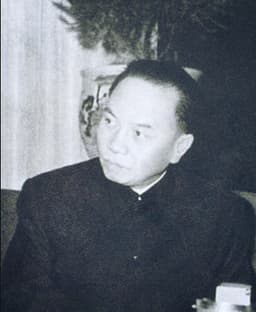
Truong Chinh
Politician · Modern
51.6Total
Basic Information
Born
1957
1907
Died
—
1988
Era
Modern
Modern
Nationality
India
Vietnam
Occupation
Politician
Politician
Civilization
Indian
Eastern
Score Comparison
Military (10%)
40.3
11.6
Political (20%)
62.7
68.0
Influence (20%)
57.2
56.4
Legacy (20%)
54.0
49.2
Leadership (15%)
80.0
68.0
Strategy (15%)
60.0
36.1
TOTAL
59.2
51.6
Nitin Gadkari — Complete Timeline
2016 AD
Faced allegations in the Purti Group loan default casePolitical Action
Gadkari's company, Purti Group, was investigated for defaulting on loans from state-run banks. He denied wrongdoing, and the case was closed by the CBI in 2018, but it raised questions about his business dealings.
CorruptionLoansBusiness
Impact: nationaldestructive
2017 AD
Launched the Bharatmala Pariyojana highway projectReform◆ Major
As Minister of Road Transport and Highways, Gadkari launched the Bharatmala Pariyojana, a
InfrastructureHighwaysDevelopment
Impact: nationalconstructive
2018 AD
Introduced ethanol blending policy for fuelReform◆ Major
Gadkari pushed for the National Policy on Biofuels, promoting ethanol blending with petrol to reduce oil imports and support farmers. The policy set a target of 20% ethanol blending by 2030, leading to increased ethanol production from sugarcane.
BiofuelsEnergyEnvironment
Impact: nationalprogressive
Truong Chinh — Complete Timeline
1941 AD
General Secretary of the Communist PartyPolitical Action◆ Major
Truong Chinh became General Secretary of the Communist Party of Vietnam, serving during the First Indochina War. He was a close ally of Ho Chi Minh and helped lead the resistance against French colonial rule.
General SecretaryFirst Indochina WarHo Chi Minh
Impact: nationalconstructive
1950 AD
Land reform theoristCultural◆ Major
Truong Chinh was a leading communist theorist who advocated for radical land reform in North Vietnam. His policies led to the redistribution of land from landlords to peasants, but also caused widespread famine and repression.
Land reformCommunist theoryFamine
Impact: nationaldestructive
1956 AD
Resignation over land reform failuresPolitical Action◆ Major
Truong Chinh resigned as General Secretary after the disastrous land reform campaign caused widespread unrest and famine. He was blamed for the excesses but remained a senior party figure.
ResignationLand reformFamine
Impact: nationaltragic
1960 AD
Chairman of the National AssemblyPolitical Action
Truong Chinh was elected Chairman of the National Assembly of Vietnam, a largely ceremonial role. He continued to influence party policy and ideology until his death.
National AssemblyChairmanCeremonial
Impact: nationalconstructive
Expert Analysis
Origins
Nitin Gadkari was born on May 27, 1957, in Nagpur, Maharashtra, India, into a middle-class family. His father was a lawyer and his mother a homemaker. He studied commerce at Nagpur University and later earned a law degree. Gadkari's early involvement in student politics led him to join the Rashtriya Swayamsevak Sangh (RSS) and later the Bharatiya Janata Party (BJP).
Truong Chinh was born on February 9, 1907, in Nam Dinh province, French Indochina, into a scholarly family. His real name was Dang Xuan Khu. He was educated at a French school in Hanoi and became involved in anti-colonial activism early. He joined the Communist Party of Vietnam and studied Marxist-Leninist theory, becoming a key ideologue.
Rise to Power
Gadkari rose through the ranks of the BJP and RSS. He served as President of the BJP from 2009 to 2013, overseeing the party's electoral gains. His major breakthrough came in 2014 when he was appointed Minister of Road Transport and Highways in Prime Minister Narendra Modi's cabinet. He launched ambitious infrastructure projects like the Bharatmala Pariyojana, which aimed to build 34,800 km of highways with an investment of ₹5.35 lakh crore.
Truong Chinh rose to prominence as a communist theorist. He became General Secretary of the Communist Party of Vietnam in 1941, succeeding Ho Chi Minh. He led the party during the First Indochina War against the French. He was a key architect of the land reform program in North Vietnam in the 1950s, which aimed to redistribute land from landlords to peasants.
Leadership & Governance
Gadkari's leadership style is pragmatic and results-oriented. He focused on infrastructure development, using innovative financing models like the Hybrid Annuity Model. He introduced ethanol blending policies to reduce oil imports and support farmers. His governance approach emphasizes speed and efficiency, with a score of 80.0 in leadership. He has been criticized for allegations in the Purti Group loan default case, but the case was closed by the CBI.
Truong Chinh's leadership was ideological and top-down. He implemented radical land reforms that led to the execution and persecution of thousands. His policies caused widespread unrest and famine, leading to his resignation in 1956. He later served as Chairman of the National Assembly but remained influential. His leadership score is 68.0, reflecting his ability to maintain power despite failures.
Triumph & Tragedy
Gadkari's greatest success is the transformation of India's highway network. Under his tenure, the length of national highways increased from 91,287 km in 2014 to 151,000 km in 2023. The Bharatmala project created thousands of jobs and boosted economic connectivity. However, his biggest failure is the Purti Group loan default case, which damaged his reputation. He also faced criticism for delays in some projects.
Truong Chinh's greatest success was his theoretical contributions to communist ideology, which shaped North Vietnam's policies. He was a close ally of Ho Chi Minh and helped consolidate party control. His greatest failure was the land reform campaign, which led to the deaths of an estimated 13,500 to 100,000 people. The failure forced his resignation and left a dark legacy.
Character & Destiny
Gadkari is known for his energy and focus on infrastructure. He is a pragmatic leader who leverages technology and innovation. His character is shaped by his RSS background, emphasizing discipline and nationalism. His destiny was to become India's highway builder, but his political ambitions were limited by factionalism within the BJP. He scored 62.7 in political influence, reflecting his role as a minister rather than a top leader.
Truong Chinh was a dogmatic ideologue. He believed in strict adherence to communist theory, which led to disastrous policies. His character was rigid and uncompromising. His destiny was to be remembered as the architect of a failed land reform, despite his earlier contributions. He scored 68.0 in political influence but only 36.1 in strategy, indicating poor decision-making.
Legacy
Gadkari's legacy is visible in India's improved road infrastructure. His policies on biofuels and green energy have lasting impact. He scored 54.0 in legacy, reflecting his tangible achievements but limited overall influence. He is remembered as the 'Highway Man of India'.
Truong Chinh's legacy is mixed. He is remembered as a communist theorist but also as the man behind the disastrous land reform. His influence on Vietnamese communism is acknowledged, but his policies are criticized. He scored 49.2 in legacy, lower than Gadkari's.
Conclusion
Nitin Gadkari had greater impact than Truong Chinh. With a total score of 59.2 compared to Truong Chinh's 51.6, Gadkari's infrastructure projects have improved millions of lives and boosted India's economy. Truong Chinh's ideological rigidity led to human suffering and policy failure. While both were influential in their domains, Gadkari's concrete achievements outweigh Truong Chinh's theoretical contributions.
Rankings
🥇
Nitin GadkariLeader
Mil: 40.3Pol: 62.7Inf: 57.2
59.2
🥈
Truong Chinh
Mil: 11.6Pol: 68.0Inf: 56.4
51.6
+7.6 behind
How This Comparison Works
Algorithm
Each figure is scored on 6 dimensions (0—100 scale) based on structured historical data: Military (10%), Political (20%), Influence (20%), Legacy (20%), Leadership (15%), Strategy (15%). The weighted total produces the final ranking.
Data Sources
Scores are computed from structured sub-indicators in the database. Scale factors adjust for era (Ancient ×0.85, Modern ×1.0) and civilization size (Eastern ×1.05, Other ×0.80) to account for differences in population and military scale.
Maximum 3 Figures
Comparisons are limited to 2—3 figures to ensure readability and statistical meaningfulness.
Error Margins
±5 points per dimension — Sub-scores are derived from historical records with inherent uncertainty. Two figures within 5 points on a dimension should be considered roughly equivalent in that area.
Total Score Accuracy
±3 points overall — The weighted combination of 6 dimensions produces a total score with approximately ±3 points of uncertainty. Differences of less than 3 points are not statistically significant— the figures are effectively tied.
Known Limitations
- Historical records are incomplete and uneven across civilizations
- Figures from oral-tradition societies may be underrepresented
- Occupation labels can misclassify multi-role figures
- Scores measure capability and impact, not moral character
- Quantitative scoring is a comparison tool, not absolute truth
Capability Radar
Military (10%) — Battles & Warfare
Battles
46
16
Win Rate
45
19
Expansion
50
19
Political (20%) — Governance & Reform
Reform
85
55
Diplomacy
60
50
Economy
90
40
Influence (20%) — Cultural & Global Reach
Cultural
30
40
Global
45
40
Legacy (20%) — Historical Impact
Historical
55
50
Longevity
50
45
Leadership (15%) — Power & Stability
Tenure
70
60
Stability
65
45
Strategy (15%) — Tactics & Innovation
Strategy
55
21
Tactics
58
29
Reform
60
27
Similar Comparisons
Comments & Discussion
No comments yet. Be the first to share your thoughts!