Loading...
Koprulu Huseyin Pasha vs Manik Sarkar
Koprulu Huseyin Pasha leads by 2.2 pts · 2 figures compared
…

Koprulu Huseyin Pasha
Politician · Modern
52.9Total
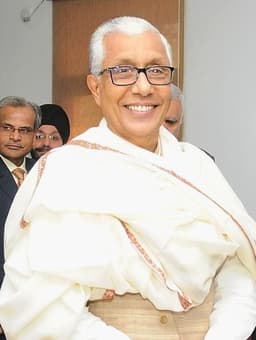
Manik Sarkar
Politician · Modern
50.7Total
Basic Information
Born
1644
1949
Died
1702
—
Era
Modern
Modern
Nationality
Ottoman Empire
India
Occupation
Politician
Politician
Civilization
Middle Eastern
Indian
Score Comparison
Military (10%)
14.9
37.6
Political (20%)
68.0
46.6
Influence (20%)
58.0
47.9
Legacy (20%)
50.0
40.0
Leadership (15%)
68.0
79.8
Strategy (15%)
39.6
60.0
TOTAL
52.9
50.7
Koprulu Huseyin Pasha — Complete Timeline
1697 AD
Appointed Grand VizierPolitical Action◆ Major
Sultan Mustafa II appointed K
AppointmentOttoman Politics
Impact: national
1698 AD
Implemented Fiscal ReformsReform
Köprülü Hüseyin Pasha introduced measures to address the Ottoman treasury deficit, including reducing the size of the Janissary corps and reforming tax collection. These reforms aimed to restore financial stability after the costly war with the Holy League.
Fiscal PolicyAdministration
Impact: nationalconstructive
1699 AD
Negotiated the Treaty of KarlowitzPolitical Action
As Grand Vizier, K
TreatyOttoman DeclineDiplomacy
Impact: regional
Manik Sarkar — Complete Timeline
1998 AD
Became Chief Minister of TripuraPolitical Action
Manik Sarkar became Chief Minister of Tripura for the first time, leading a Left Front government. He would go on to serve four consecutive terms, making him one of India's longest-serving chief ministers.
Chief MinisterTripuraLeft Front
Impact: regionalconstructive
Known for frugal lifestyleOther
Throughout his tenure, Sarkar was noted for his simple and frugal lifestyle, living in a modest government quarter and driving an old car. This earned him a reputation as an honest and accessible leader.
LifestyleHonestyTripura
Impact: regionalconstructive
2013 AD
Won 2013 Tripura Assembly electionPolitical Action◆ Major
Sarkar led the CPI(M)-led Left Front to victory in the Tripura assembly election, winning 49 of 60 seats. This was his fourth consecutive term as chief minister.
ElectionTripuraLeft Front
Impact: regionalconstructive
2018 AD
Lost 2018 Tripura Assembly electionPolitical Action
Sarkar's Left Front government was defeated by the BJP-IPFT alliance, winning only 16 seats. This ended his 20-year tenure as chief minister, marking a major political shift in the state.
ElectionTripuraDefeat
Impact: regionaltragic
Expert Analysis
Origins
Köprülü Hüseyin Pasha was born around 1644 into the prominent Köprülü family of the Ottoman Empire, a dynasty of grand viziers. His father was Köprülü Mehmed Pasha, and his uncle was Köprülü Fazıl Ahmed Pasha. He received a traditional Ottoman education in the palace schools, learning administration, military strategy, and Islamic law. His family connections propelled him into high office early.
Manik Sarkar was born on February 11, 1949, in the village of Nayapara in Tripura, India. He came from a modest Bengali Hindu family. He studied at MBB College in Agartala and became involved in leftist politics during his youth, joining the Communist Party of India (Marxist) [CPI(M)] in the 1960s. His rise was through grassroots activism rather than family connections.
Rise to Power
Köprülü Hüseyin Pasha rose through the Ottoman bureaucracy, serving as governor of various provinces. His major break came in 1697 when Sultan Mustafa II appointed him Grand Vizier during the Great Turkish War (1683–1699). The empire was in crisis after the disastrous Battle of Zenta, where Grand Vizier Elmas Mehmed Pasha was killed. Hüseyin Pasha was tasked with stabilizing the empire and negotiating peace.
Manik Sarkar's rise was gradual within the CPI(M). He became a member of the Tripura state committee in the 1970s and served as a minister in the Left Front government from 1978. He became Chief Minister for the first time in 1998 after the death of incumbent Dasarath Deb. Sarkar led the Left Front to four consecutive electoral victories (1998, 2003, 2008, 2013), winning over 40 seats each time out of 60.
Leadership & Governance
Köprülü Hüseyin Pasha's leadership was defined by pragmatic diplomacy. He prioritized ending the costly war with the Holy League. He negotiated the Treaty of Karlowitz in 1699, which ceded Hungary, Transylvania, and Podolia to the Habsburgs, Poland, and Venice. This was a significant territorial loss but secured peace. Domestically, he implemented fiscal reforms: he reduced the Janissary corps size (from 70,000 to 40,000) and reformed tax collection to address the treasury deficit. His governance score of 68.0 reflects his administrative competence.
Manik Sarkar's leadership style was frugal and hands-on. He lived in a modest government quarter, drove an old car, and was known for his simple lifestyle. He focused on social welfare programs, infrastructure development, and maintaining law and order in Tripura. His government achieved high literacy rates and improved healthcare. However, his political score of 46.6 indicates limited national influence. He was criticized for suppressing dissent and failing to attract investment.
Triumph & Tragedy
Köprülü Hüseyin Pasha's greatest triumph was the Treaty of Karlowitz. Although it ceded territory, it ended a devastating war and preserved the Ottoman state. He also stabilized the economy through fiscal reforms. His tragedy was that his peace was seen as a humiliation by hardliners; he was dismissed in 1702 and died in obscurity in 1703. His military score of 14.9 reflects his lack of battlefield success.
Manik Sarkar's triumph was his long tenure (20 years) as Chief Minister, the longest in Tripura's history. He maintained peace in a state previously plagued by insurgency. His tragedy was his defeat in 2018, when the BJP-IPFT alliance ended his rule, winning only 16 seats. His political influence score of 47.9 shows his limited reach beyond Tripura.
Character & Destiny
Köprülü Hüseyin Pasha was a pragmatist and diplomat, preferring negotiation over war. His character was shaped by his family's legacy of competent administration. However, his willingness to cede territory made him unpopular, and he was ultimately sidelined.
Manik Sarkar was known for personal integrity and frugality, earning respect even from opponents. His communist ideology guided his policies, but his inflexibility on economic reforms may have contributed to his electoral defeat. His leadership score of 79.8 is high, reflecting his effective governance within his state.
Legacy
Köprülü Hüseyin Pasha's legacy is tied to the Treaty of Karlowitz, which marked the end of Ottoman expansion and the beginning of a period of defensive modernization. His fiscal reforms set precedents for later Tanzimat reforms. His legacy score of 50.0 is moderate, as his achievements were overshadowed by the empire's decline.
Manik Sarkar's legacy is as a model of honest, frugal governance in Indian politics. His tenure saw Tripura's insurgency decline and development improve. However, his legacy score of 40.0 reflects his limited national impact. He is remembered more for his lifestyle than policy innovations.
Conclusion
Köprülü Hüseyin Pasha had greater historical impact than Manik Sarkar. Despite a lower leadership score (68.0 vs 79.8), his political (68.0 vs 46.6) and influence (58.0 vs 47.9) scores show his actions shaped the fate of an empire. The Treaty of Karlowitz altered the balance of power in Europe, while Sarkar's governance, though effective, was confined to a small Indian state. Koprulu Huseyin Pasha's total score of 52.9 edges Sarkar's 50.7, reflecting his broader significance.
Rankings
🥇
Koprulu Huseyin PashaLeader
Mil: 14.9Pol: 68.0Inf: 58.0
52.9
🥈
Manik Sarkar
Mil: 37.6Pol: 46.6Inf: 47.9
50.7
+2.2 behind
How This Comparison Works
Algorithm
Each figure is scored on 6 dimensions (0—100 scale) based on structured historical data: Military (10%), Political (20%), Influence (20%), Legacy (20%), Leadership (15%), Strategy (15%). The weighted total produces the final ranking.
Data Sources
Scores are computed from structured sub-indicators in the database. Scale factors adjust for era (Ancient ×0.85, Modern ×1.0) and civilization size (Eastern ×1.05, Other ×0.80) to account for differences in population and military scale.
Maximum 3 Figures
Comparisons are limited to 2—3 figures to ensure readability and statistical meaningfulness.
Error Margins
±5 points per dimension — Sub-scores are derived from historical records with inherent uncertainty. Two figures within 5 points on a dimension should be considered roughly equivalent in that area.
Total Score Accuracy
±3 points overall — The weighted combination of 6 dimensions produces a total score with approximately ±3 points of uncertainty. Differences of less than 3 points are not statistically significant— the figures are effectively tied.
Known Limitations
- Historical records are incomplete and uneven across civilizations
- Figures from oral-tradition societies may be underrepresented
- Occupation labels can misclassify multi-role figures
- Scores measure capability and impact, not moral character
- Quantitative scoring is a comparison tool, not absolute truth
Capability Radar
Military (10%) — Battles & Warfare
Battles
20
46
Win Rate
20
47
Expansion
10
48
Political (20%) — Governance & Reform
Reform
40
40
Diplomacy
70
45
Economy
45
30
Influence (20%) — Cultural & Global Reach
Cultural
30
15
Global
50
10
Legacy (20%) — Historical Impact
Historical
60
20
Longevity
40
20
Leadership (15%) — Power & Stability
Tenure
50
70
Stability
55
60
Strategy (15%) — Tactics & Innovation
Strategy
30
51
Tactics
25
56
Reform
15
58
Similar Comparisons
Comments & Discussion
No comments yet. Be the first to share your thoughts!