Loading...
This comparison has not been analyzed yet.
One-time AI generation (~1 minute). Scores and timeline are already available below.
Kutir-Nahhunte III vs Nectanebo I
Nectanebo I leads by 3.5 pts · 2 figures compared
…

Kutir-Nahhunte III
Emperor · Ancient
51.2Total
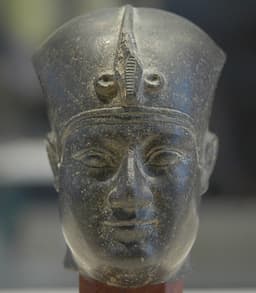
Nectanebo I
Emperor · Ancient
54.7Total
Basic Information
Born
-1155
-380
Died
-1140
-362
Era
Ancient
Ancient
Nationality
Elam
Egypt
Occupation
Emperor
Emperor
Civilization
Middle Eastern
Middle Eastern
Score Comparison
Military (10%)
70.0
55.0
Political (20%)
40.8
45.0
Influence (20%)
47.9
56.4
Legacy (20%)
43.3
48.3
Leadership (15%)
62.2
68.0
Strategy (15%)
60.0
60.7
TOTAL
51.2
54.7
Kutir-Nahhunte III — Complete Timeline
1156 BC
Campaign against the KassitesWar
Kutir-Nahhunte III led a military campaign against the remaining Kassite forces in Babylonia. He defeated the Kassite king Enlil-nadin-ahi, capturing him and ending Kassite resistance.
Kassite WarElamite VictoryEnlil-nadin-ahi
Impact: regionaldestructive
1155 BC
End of the Kassite DynastyPolitical Action◆ Major
Kutir-Nahhunte III completed the destruction of the Kassite dynasty of Babylon, which had ruled for over 400 years. He captured the Kassite king and brought the dynasty to an end, establishing Elamite dominance over Babylonia.
Kassite DynastyBabylonElamite Victory
Impact: regionaldestructive
Consolidation of Elamite Rule in BabylonPolitical Action
Following the defeat of the Kassites, Kutir-Nahhunte III established Elamite administrative control over Babylonia. He installed Elamite officials and extracted tribute, integrating the region into the Elamite Empire.
Elamite AdministrationBabyloniaTribute
Impact: regional
Nectanebo I — Complete Timeline
380 BC
Foundation of the 30th dynastyPolitical Action◆ Major
Nectanebo I overthrew the Persian-backed ruler and established the 30th dynasty, the last native Egyptian dynasty. He seized power after the death of Pharaoh Nepherites II. This marked the beginning of a period of renewed Egyptian independence from Persian rule.
DynastyIndependencePersia
Impact: globalconstructive
373 BC
Defense against Persian invasion (373 BC)War◆ Major
Nectanebo I successfully repelled a Persian invasion led by Pharnabazus and Iphicrates. The Persian army was delayed by the flooding of the Nile and Egyptian defenses. The invasion failed due to poor coordination and the Egyptians' effective use of the terrain. This victory preserved Egyptian independence.
PersiaInvasionDefense
Impact: regional
370 BC
Construction of the temple of Isis at PhilaeCultural◆ Major
Nectanebo I began the construction of the temple of Isis at Philae, one of the most important religious sites in Egypt. The temple complex was expanded by later rulers and became a major center of the cult of Isis. This project demonstrated his patronage of traditional Egyptian religion.
TempleIsisReligion
Impact: regionalconstructive
Building program across EgyptCultural
Nectanebo I undertook an extensive building program, including additions to the temples at Karnak, Luxor, and Heliopolis. He also constructed a large naos for the temple of Amun at Karnak. These projects revived Egyptian monumental architecture after a period of decline.
ArchitectureTemplesRevival
Impact: nationalconstructive
This comparison has not been analyzed yet.
One-time AI generation (~1 minute). Scores and timeline are already available below.
Rankings
🥇
Nectanebo ILeader
Mil: 55.0Pol: 45.0Inf: 56.4
54.7
🥈
Kutir-Nahhunte III
Mil: 70.0Pol: 40.8Inf: 47.9
51.2
+3.5 behind
How This Comparison Works
Algorithm
Each figure is scored on 6 dimensions (0—100 scale) based on structured historical data: Military (10%), Political (20%), Influence (20%), Legacy (20%), Leadership (15%), Strategy (15%). The weighted total produces the final ranking.
Data Sources
Scores are computed from structured sub-indicators in the database. Scale factors adjust for era (Ancient ×0.85, Modern ×1.0) and civilization size (Eastern ×1.05, Other ×0.80) to account for differences in population and military scale.
Maximum 3 Figures
Comparisons are limited to 2—3 figures to ensure readability and statistical meaningfulness.
Error Margins
±5 points per dimension — Sub-scores are derived from historical records with inherent uncertainty. Two figures within 5 points on a dimension should be considered roughly equivalent in that area.
Total Score Accuracy
±3 points overall — The weighted combination of 6 dimensions produces a total score with approximately ±3 points of uncertainty. Differences of less than 3 points are not statistically significant— the figures are effectively tied.
Known Limitations
- Historical records are incomplete and uneven across civilizations
- Figures from oral-tradition societies may be underrepresented
- Occupation labels can misclassify multi-role figures
- Scores measure capability and impact, not moral character
- Quantitative scoring is a comparison tool, not absolute truth
Capability Radar
Military (10%) — Battles & Warfare
Battles
55
45
Win Rate
60
50
Expansion
60
40
Political (20%) — Governance & Reform
Reform
35
60
Diplomacy
45
65
Economy
30
55
Influence (20%) — Cultural & Global Reach
Cultural
25
45
Global
20
35
Legacy (20%) — Historical Impact
Historical
40
50
Longevity
30
40
Leadership (15%) — Power & Stability
Tenure
40
55
Stability
40
50
Strategy (15%) — Tactics & Innovation
Strategy
55
60
Tactics
50
55
Reform
30
65
Similar Comparisons
Comments & Discussion
No comments yet. Be the first to share your thoughts!