Loading...
Leonid Brezhnev vs Palmiro Togliatti
Palmiro Togliatti leads by 12.7 pts · 2 figures compared
…

Leonid Brezhnev
Politician · Modern
49.9Total
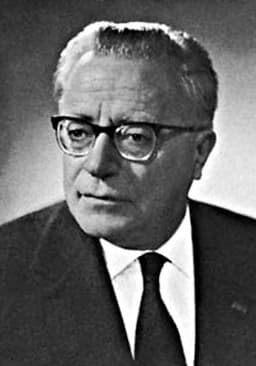
Palmiro Togliatti
Politician · Modern
62.6Total
Basic Information
Born
1906
1893
Died
1982
1964
Era
Modern
Modern
Nationality
Russia
Italy
Occupation
Politician
Politician
Civilization
Western
Western
Score Comparison
Military (10%)
14.9
50.0
Political (20%)
40.8
70.0
Influence (20%)
60.0
72.0
Legacy (20%)
44.2
52.0
Leadership (15%)
72.0
78.0
Strategy (15%)
54.1
43.5
TOTAL
49.9
62.6
Leonid Brezhnev — Complete Timeline
1964 AD
Assumption of Leadership as General SecretaryPolitical Action◆ Major
Brezhnev succeeded Khrushchev as General Secretary of the Communist Party of the Soviet Union, leading a collective leadership. His rise marked the beginning of an 18-year rule characterized by political stability and economic stagnation.
LeadershipSoviet UnionStagnation
Impact: global
1968 AD
Invasion of CzechoslovakiaWar◆ Major
Brezhnev ordered the Warsaw Pact invasion of Czechoslovakia to suppress the Prague Spring reforms. The invasion crushed liberalization efforts and established the Brezhnev Doctrine, asserting Soviet control over satellite states.
InvasionPrague SpringCold War
Impact: globaldestructive
1970 AD
Era of StagnationOther◆ Major
Brezhnev's rule saw economic slowdown, technological backwardness, and political corruption, later termed the 'Era of Stagnation'. Industrial growth declined, and the Soviet Union fell behind the West in innovation and living standards.
EconomyStagnationSoviet Union
Impact: nationaldestructive
1975 AD
Signing of the Helsinki AccordsPolitical Action◆ Major
Brezhnev signed the Helsinki Final Act, recognizing post-World War II borders and committing to human rights principles. The accords reduced Cold War tensions but also provided a basis for dissident movements in Eastern Europe.
TreatyCold WarHuman Rights
Impact: globalconstructive
1979 AD
Soviet-Afghan War InvasionWar
Brezhnev authorized the Soviet invasion of Afghanistan to prop up a communist government. The war became a costly quagmire, lasting a decade and contributing to the eventual collapse of the Soviet Union.
InvasionAfghanistanCold War
Impact: globaldestructive
Palmiro Togliatti — Complete Timeline
1921 AD
Founding of the Italian Communist PartyPolitical Action◆ Major
Togliatti was a founding member of the Italian Communist Party (PCI) at its congress in Livorno. The party split from the Socialist Party over adherence to the Comintern. Togliatti became a central leader, guiding the party through the Fascist period and exile.
CommunismPartyComintern
Impact: nationalconstructive
1944 AD
Salerno TurnPolitical Action◆ Major
Togliatti, returning from exile in the Soviet Union, announced the 'Salerno Turn'
CommunismCoalitionWorld War II
Impact: nationalconstructive
1948 AD
Assassination Attempt on TogliattiPolitical Action◆ Major
Togliatti was shot and seriously wounded by a right-wing student outside the Italian Parliament. The attack triggered a general strike and widespread protests, but the PCI leadership called for calm to avoid civil war. Togliatti survived and returned to lead the party.
Assassination AttemptCold WarStrike
Impact: nationaltragic
1956 AD
Togliatti's Doctrine of PolycentrismPolitical Action◆ Major
After Khrushchev's secret speech denouncing Stalin, Togliatti developed the theory of 'polycentrism' in the communist movement. He argued for national paths to socialism independent of Moscow. This doctrine influenced the Eurocommunist movement and distanced the PCI from Soviet control.
CommunismEurocommunismSoviet Union
Impact: globalconstructive
Expert Analysis
Origins
Leonid Brezhnev was born on December 19, 1906, in Kamenskoye, Russian Empire (now Dnipro, Ukraine), to a working-class Russian family. His father was a metalworker. Brezhnev studied at the Kamenskoye Metallurgical Institute and joined the Communist Party in 1931. He worked as an engineer and rose through party ranks during Stalin's purges.
Palmiro Togliatti was born on March 26, 1893, in Genoa, Italy, into a middle-class family. His father was a school teacher. Togliatti studied law at the University of Turin, graduating in 1915. He became involved in socialist activism and was a founding member of the Italian Communist Party (PCI) in 1921.
Rise to Power
Brezhnev's rise came through patronage and bureaucratic maneuvering. He became a protégé of Nikita Khrushchev and was appointed First Secretary of the Communist Party of Moldova in 1950. He later served as Chairman of the Presidium of the Supreme Soviet (nominal head of state) in 1960. In 1964, he helped oust Khrushchev and assumed the role of General Secretary of the Communist Party of the Soviet Union, leading a collective leadership.
Togliatti rose to prominence as a communist intellectual. After the PCI's founding, he worked for the Comintern in Moscow, where he survived Stalin's purges. He returned to Italy in 1944 after Mussolini's fall and announced the 'Salerno Turn', a decision to cooperate with bourgeois parties in a unity government. This pragmatic move secured the PCI's legal status and broad appeal.
Leadership & Governance
Brezhnev's leadership style was conservative and bureaucratic. He emphasized stability and collective decision-making, avoiding bold reforms. His governance led to the 'Era of Stagnation', characterized by economic slowdown (annual growth fell from 6% in the 1950s to 2% in the late 1970s), technological backwardness, and corruption. He maintained power through patronage networks and suppressed dissent, exemplified by the 1968 invasion of Czechoslovakia to crush the Prague Spring.
Togliatti's leadership was strategic and ideological. He advocated for 'polycentrism', arguing that communist parties should adapt to national conditions rather than follow Moscow blindly. This allowed the PCI to become the largest communist party in the West, with 1.5 million members by 1960. He pursued a 'historic compromise' with Christian Democrats, seeking gradual reform within parliamentary democracy. However, his willingness to compromise alienated leftist factions.
Triumph & Tragedy
Brezhnev's greatest triumph was achieving détente with the West, symbolized by the 1975 Helsinki Accords, which recognized post-WWII borders and committed to human rights. However, his tragic failure was the 1979 Soviet invasion of Afghanistan, which cost over 15,000 Soviet lives and billions of rubles, exacerbating economic stagnation and international isolation.
Togliatti's triumph was building the PCI into a major political force, winning 26% of the vote in 1976. His polycentrism influenced Eurocommunism. His tragedy was the 1948 assassination attempt by a right-wing student, which triggered a general strike but failed to spark revolution, revealing the limits of communist power in Italy.
Character & Destiny
Brezhnev was cautious, status-conscious, and increasingly lethargic. He avoided risk and surrounded himself with loyalists, leading to stagnation. His character mirrored the ossification of the Soviet system. Historians note his vanity, awarding himself the Order of Victory four times, and his inability to address systemic problems.
Togliatti was pragmatic, intellectual, and secretive. He navigated Stalin's purges by staying in Moscow and toeing the line, yet later advocated for national communism. His character combined ideological commitment with tactical flexibility, allowing the PCI to survive and thrive in a hostile environment.
Legacy
Brezhnev's legacy is predominantly negative: the 'Era of Stagnation' defined his rule. His policies contributed to the Soviet Union's eventual collapse. The Helsinki Accords, however, provided a framework for human rights advocacy that later undermined communist regimes.
Togliatti's legacy is more positive. The PCI evolved into the Democratic Party of the Left, influencing Italian politics for decades. His polycentrism laid groundwork for later communist adaptations. However, his collaboration with Stalin during the 1930s remains controversial.
Conclusion
Palmiro Togliatti had greater impact relative to his context. With a total score of 62.6 versus Brezhnev's 49.9, Togliatti's political and influence scores (70.0 and 72.0) significantly outpaced Brezhnev's (40.8 and 60.0). While Brezhnev led a superpower, his rule accelerated its decline. Togliatti, leading a minority party, shaped a unique path for Western communism, demonstrating ideological flexibility. Togliatti's polycentrism proved more enduring than Brezhnev's stagnation.
Rankings
🥇
Palmiro TogliattiLeader
Mil: 50.0Pol: 70.0Inf: 72.0
62.6
🥈
Leonid Brezhnev
Mil: 14.9Pol: 40.8Inf: 60.0
49.9
+12.7 behind
How This Comparison Works
Algorithm
Each figure is scored on 6 dimensions (0—100 scale) based on structured historical data: Military (10%), Political (20%), Influence (20%), Legacy (20%), Leadership (15%), Strategy (15%). The weighted total produces the final ranking.
Data Sources
Scores are computed from structured sub-indicators in the database. Scale factors adjust for era (Ancient ×0.85, Modern ×1.0) and civilization size (Eastern ×1.05, Other ×0.80) to account for differences in population and military scale.
Maximum 3 Figures
Comparisons are limited to 2—3 figures to ensure readability and statistical meaningfulness.
Error Margins
±5 points per dimension — Sub-scores are derived from historical records with inherent uncertainty. Two figures within 5 points on a dimension should be considered roughly equivalent in that area.
Total Score Accuracy
±3 points overall — The weighted combination of 6 dimensions produces a total score with approximately ±3 points of uncertainty. Differences of less than 3 points are not statistically significant— the figures are effectively tied.
Known Limitations
- Historical records are incomplete and uneven across civilizations
- Figures from oral-tradition societies may be underrepresented
- Occupation labels can misclassify multi-role figures
- Scores measure capability and impact, not moral character
- Quantitative scoring is a comparison tool, not absolute truth
Capability Radar
Military (10%) — Battles & Warfare
Battles
10
26
Win Rate
10
29
Expansion
30
36
Political (20%) — Governance & Reform
Reform
15
75
Diplomacy
60
80
Economy
20
60
Influence (20%) — Cultural & Global Reach
Cultural
30
65
Global
60
60
Legacy (20%) — Historical Impact
Historical
40
70
Longevity
25
65
Leadership (15%) — Power & Stability
Tenure
85
85
Stability
40
55
Strategy (15%) — Tactics & Innovation
Strategy
15
38
Tactics
5
42
Reform
20
45
Similar Comparisons
Comments & Discussion
No comments yet. Be the first to share your thoughts!