Loading...
Palmiro Togliatti vs V. V. Giri
Palmiro Togliatti leads by 11.2 pts · 2 figures compared
…
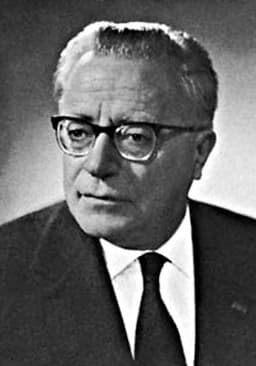
Palmiro Togliatti
Politician · Modern
62.6Total

V. V. Giri
Politician · Modern
51.4Total
Basic Information
Born
1893
1894
Died
1964
1980
Era
Modern
Modern
Nationality
Italy
India
Occupation
Politician
Politician
Civilization
Western
Indian
Score Comparison
Military (10%)
50.0
49.6
Political (20%)
70.0
45.1
Influence (20%)
72.0
52.5
Legacy (20%)
52.0
43.3
Leadership (15%)
78.0
65.0
Strategy (15%)
43.5
60.0
TOTAL
62.6
51.4
Palmiro Togliatti — Complete Timeline
1921 AD
Founding of the Italian Communist PartyPolitical Action◆ Major
Togliatti was a founding member of the Italian Communist Party (PCI) at its congress in Livorno. The party split from the Socialist Party over adherence to the Comintern. Togliatti became a central leader, guiding the party through the Fascist period and exile.
CommunismPartyComintern
Impact: nationalconstructive
1944 AD
Salerno TurnPolitical Action◆ Major
Togliatti, returning from exile in the Soviet Union, announced the 'Salerno Turn'
CommunismCoalitionWorld War II
Impact: nationalconstructive
1948 AD
Assassination Attempt on TogliattiPolitical Action◆ Major
Togliatti was shot and seriously wounded by a right-wing student outside the Italian Parliament. The attack triggered a general strike and widespread protests, but the PCI leadership called for calm to avoid civil war. Togliatti survived and returned to lead the party.
Assassination AttemptCold WarStrike
Impact: nationaltragic
1956 AD
Togliatti's Doctrine of PolycentrismPolitical Action◆ Major
After Khrushchev's secret speech denouncing Stalin, Togliatti developed the theory of 'polycentrism' in the communist movement. He argued for national paths to socialism independent of Moscow. This doctrine influenced the Eurocommunist movement and distanced the PCI from Soviet control.
CommunismEurocommunismSoviet Union
Impact: globalconstructive
V. V. Giri — Complete Timeline
1956 AD
Appointed Governor of Uttar PradeshPolitical Action
V. V. Giri was appointed as the Governor of Uttar Pradesh, serving from 1956 to 1960. He later served as Governor of Kerala and Mysore, handling administrative responsibilities in various states.
GovernorUttar PradeshConstitutional
Impact: regionalconstructive
1967 AD
Appointed Vice President of IndiaPolitical Action◆ Major
V. V. Giri was elected as the Vice President of India, serving from 1967 to 1969. He also served as Chairman of the Rajya Sabha, presiding over the upper house.
Vice PresidentRajya SabhaConstitutional
Impact: nationalconstructive
1969 AD
Nationalization of banksReform◆ Major
President V. V. Giri supported the nationalization of 14 major commercial banks in India in 1969, a key socialist policy of the Indira Gandhi government. This aimed to increase credit access for agriculture and small industries.
Bank NationalizationEconomic ReformSocialism
Impact: nationalconstructive
Acting President of IndiaPolitical Action◆ Major
V. V. Giri served as Acting President of India following the death of President Zakir Husain in May 1969. He held the office until the election of a new president.
Acting PresidentConstitutionalTransition
Impact: national
Elected President of IndiaPolitical Action◆ Major
V. V. Giri was elected as the 4th President of India in a contested election, defeating the official Congress candidate. He served from 1969 to 1974, promoting socialist policies and labor rights.
PresidencyElectionSocialist
Impact: nationalconstructive
Expert Analysis
Origins
Palmiro Togliatti was born on March 26, 1893, in Genoa, Italy, into a middle-class family. His father was a school teacher and his mother a homemaker. He studied law at the University of Turin, where he became involved in socialist circles and met Antonio Gramsci. Togliatti joined the Italian Socialist Party in 1914 and was a founding member of the Italian Communist Party (PCI) in 1921 at the Livorno congress. His early experiences in the labor movement and his intellectual formation in Marxist theory shaped his lifelong commitment to communism.
Varahagiri Venkata Giri, commonly known as V. V. Giri, was born on August 10, 1894, in Berhampur, Odisha, India, into a Brahmin family. His father was a lawyer and a political activist. Giri studied at the University of Madras and later went to Ireland to study law at University College Dublin, where he was influenced by the Irish independence movement. He returned to India and joined the Indian National Congress, participating in the non-cooperation movement. His early career as a labor leader and trade unionist in the 1920s and 1930s defined his focus on workers' rights.
Rise to Power
Togliatti's rise began within the Italian Communist Party. After the fascist takeover in 1922, he went into exile in the Soviet Union, where he worked for the Comintern. He became the leader of the PCI in 1927, following the arrest of Gramsci. During World War II, he returned to Italy in 1944 and announced the 'Salerno Turn'—a decision to cooperate with other anti-fascist parties, including the monarchy. This strategic move allowed the PCI to participate in post-war governments. Togliatti served as Minister of Justice and later as Deputy Prime Minister, but the PCI was excluded from government in 1947. He continued as party leader until his death.
Giri's rise was through the Indian labor movement and Congress party. He was elected to the Central Legislative Assembly in 1934 and served as Minister of Labour in the interim government of 1946. After independence, he became a member of the Constituent Assembly. He served as Governor of Uttar Pradesh (1956-1960), Kerala (1960-1965), and Mysore (1965-1967). In 1967, he was elected Vice President of India. Following President Zakir Husain's death in May 1969, Giri became Acting President. He then contested the presidential election as an independent candidate, defeating the official Congress candidate, and served as President from 1969 to 1974.
Leadership & Governance
Togliatti's leadership style was pragmatic and strategic. He maintained a tight grip on the PCI, ensuring party discipline while adapting to Italian political realities. He advocated for 'polycentrism' within the communist movement, arguing that each national party should have autonomy from Moscow. This was a response to Khrushchev's de-Stalinization and allowed the PCI to distance itself from Soviet excesses. Under his leadership, the PCI became the largest communist party in the West, with a strong electoral base. He emphasized a 'democratic road to socialism' and sought alliances with other leftist parties.
Giri's governance as President was largely ceremonial, but he exercised influence through his support for socialist policies. He backed Prime Minister Indira Gandhi's decision to nationalize 14 major commercial banks in 1969, a move that boosted her popularity. He also used his position to mediate political crises, such as the 1970 Congress split. His leadership was characterized by a commitment to social justice and labor rights, but his lack of executive power limited his direct impact.
Triumph & Tragedy
Togliatti's greatest triumph was building the PCI into a mass party with 2 million members and 30% of the vote in some elections. His polycentrism doctrine was influential in shaping Eurocommunism. He also survived an assassination attempt in 1948, which triggered a general strike but did not lead to civil war. His tragedy was that the PCI never achieved governing power; it remained in opposition throughout his life. Additionally, his association with Stalinism, despite later criticism, tainted his legacy. He died in 1964 in the Soviet Union, under mysterious circumstances.
Giri's triumph was being elected President as an independent against the Congress establishment, a rare feat in Indian politics. His support for bank nationalization helped consolidate socialist economic policies. His tragedy was that his presidency was overshadowed by Indira Gandhi's dominance. He also faced criticism for his role in the 1969 presidential election, which deepened the Congress split. After his term, he faded from prominence.
Character & Destiny
Togliatti was a disciplined, secretive, and calculating leader. He was known as 'Il Migliore' (The Best) for his loyalty to Stalin and the Soviet Union, but he later showed flexibility with polycentrism. His character—pragmatic and cautious—prevented the PCI from engaging in revolutionary adventures, but also kept it from power. He scored 78.3 in leadership and 43.5 in strategy, reflecting his ability to maintain party unity but limited strategic vision.
Giri was a principled but moderate figure. His background as a labor leader gave him a strong sense of social justice. He was not a power-seeker; he accepted the presidency reluctantly. His character—honest and unambitious—made him a respected figure but not a transformative leader. He scored 65.0 in leadership and 60.0 in strategy.
Legacy
Togliatti's legacy is the enduring influence of the PCI, which remained a major force in Italian politics until its dissolution in 1991. His polycentrism theory influenced communist parties worldwide, particularly in Europe. The PCI's later evolution into the Democratic Party can be traced to his strategies. He is remembered as a key figure in 20th-century communism. His total score of 62.6 reflects his political and influence scores of 70.0 and 72.0.
Giri's legacy is more modest. He is remembered as a president who upheld socialist values and as a symbol of labor rights. The bank nationalization he supported had a lasting impact on India's economy. However, his influence is limited to his presidency and labor activism. He scored 52.5 in influence and 43.3 in legacy, reflecting his lower impact.
Conclusion
Comparing Togliatti and Giri, Togliatti had a significantly greater impact on political history. His total score of 62.6 versus Giri's 51.4 reflects this. Togliatti built a mass communist party that shaped Italian politics for decades and contributed to the development of Eurocommunism. Giri, while a respected president, operated within a constrained role and did not leave a lasting political movement. Togliatti's strategic innovations, such as polycentrism, had international repercussions, whereas Giri's influence was largely national and temporary. Therefore, Togliatti is the more consequential figure.
Rankings
🥇
Palmiro TogliattiLeader
Mil: 50.0Pol: 70.0Inf: 72.0
62.6
🥈
V. V. Giri
Mil: 49.6Pol: 45.1Inf: 52.5
51.4
+11.2 behind
How This Comparison Works
Algorithm
Each figure is scored on 6 dimensions (0—100 scale) based on structured historical data: Military (10%), Political (20%), Influence (20%), Legacy (20%), Leadership (15%), Strategy (15%). The weighted total produces the final ranking.
Data Sources
Scores are computed from structured sub-indicators in the database. Scale factors adjust for era (Ancient ×0.85, Modern ×1.0) and civilization size (Eastern ×1.05, Other ×0.80) to account for differences in population and military scale.
Maximum 3 Figures
Comparisons are limited to 2—3 figures to ensure readability and statistical meaningfulness.
Error Margins
±5 points per dimension — Sub-scores are derived from historical records with inherent uncertainty. Two figures within 5 points on a dimension should be considered roughly equivalent in that area.
Total Score Accuracy
±3 points overall — The weighted combination of 6 dimensions produces a total score with approximately ±3 points of uncertainty. Differences of less than 3 points are not statistically significant— the figures are effectively tied.
Known Limitations
- Historical records are incomplete and uneven across civilizations
- Figures from oral-tradition societies may be underrepresented
- Occupation labels can misclassify multi-role figures
- Scores measure capability and impact, not moral character
- Quantitative scoring is a comparison tool, not absolute truth
Capability Radar
Military (10%) — Battles & Warfare
Battles
26
44
Win Rate
29
44
Expansion
36
49
Political (20%) — Governance & Reform
Reform
75
35
Diplomacy
80
45
Economy
60
30
Influence (20%) — Cultural & Global Reach
Cultural
65
25
Global
60
20
Legacy (20%) — Historical Impact
Historical
70
30
Longevity
65
20
Leadership (15%) — Power & Stability
Tenure
85
40
Stability
55
40
Strategy (15%) — Tactics & Innovation
Strategy
38
52
Tactics
42
57
Reform
45
57
Similar Comparisons
Comments & Discussion
No comments yet. Be the first to share your thoughts!