Loading...
This comparison has not been analyzed yet.
One-time AI generation (~1 minute). Scores and timeline are already available below.
Li Hongzhang vs Sihanouk Norodom
Li Hongzhang leads by 5.2 pts · 2 figures compared
…

Li Hongzhang
Politician · Modern
60.7Total
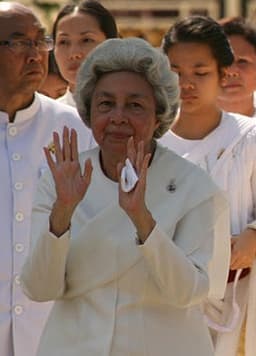
Sihanouk Norodom
Politician · Modern
55.5Total
Basic Information
Born
1823
1922
Died
1901
—
Era
Modern
Modern
Nationality
China
Cambodia
Occupation
Politician
Politician
Civilization
Eastern
Eastern
Score Comparison
Military (10%)
50.0
14.8
Political (20%)
72.0
68.0
Influence (20%)
58.3
62.0
Legacy (20%)
54.0
52.0
Leadership (15%)
72.0
74.0
Strategy (15%)
60.0
42.6
TOTAL
60.7
55.5
Li Hongzhang — Complete Timeline
1861 AD
Leadership of the Self-Strengthening MovementReform◆ Major
Li Hongzhang became a leading figure in the Self-Strengthening Movement, promoting modernization of China's military and industry. He established arsenals, shipyards, and telegraph lines, and modernized the Beiyang Fleet to counter foreign threats.
Self-StrengtheningModernization
Impact: nationalconstructive
1864 AD
Suppression of the Taiping RebellionWar◆ Major
Li Hongzhang commanded the Huai Army in campaigns against the Taiping rebels, recapturing Suzhou and other cities. His military efforts helped crush the rebellion and restore Qing control over eastern China.
Taiping RebellionMilitary campaign
Impact: national
1888 AD
Creation of the Beiyang FleetReform◆ Major
Li Hongzhang oversaw the creation of the Beiyang Fleet, the most modern naval force in Asia at the time. The fleet was intended to defend China's coasts but was largely destroyed in the First Sino-Japanese War in 1894.
Naval modernizationSelf-Strengthening
Impact: national
1895 AD
Signing of the Treaty of ShimonosekiPolitical Action
Li Hongzhang negotiated and signed the Treaty of Shimonoseki with Japan, ending the First Sino-Japanese War. The treaty ceded Taiwan and the Pescadores to Japan, recognized Korean independence, and imposed a large indemnity on China.
TreatyDiplomacyTerritorial loss
Impact: globaltragic
1901 AD
Signing of the Boxer ProtocolPolitical Action◆ Major
Li Hongzhang was the chief Qing negotiator for the Boxer Protocol, which ended the Boxer Rebellion. The agreement imposed a massive indemnity on China, allowed foreign troops in Beijing, and further weakened Qing sovereignty.
TreatyDiplomacyForeign intervention
Impact: globaltragic
Sihanouk Norodom — Complete Timeline
1955 AD
Abdicated the throne in favor of his fatherPolitical Action◆ Major
Sihanouk abdicated as King of Cambodia to pursue a political career. He formed the Sangkum Reastr Niyum political movement, winning the 1955 election and becoming Prime Minister, a position he held while remaining the dominant political figure.
AbdicationPolitical CareerSangkum
Impact: national
Declared neutrality during the Vietnam WarPolitical Action◆ Major
Sihanouk adopted a policy of neutrality and non-alignment for Cambodia during the escalating Vietnam War. He sought to avoid entanglement in the conflict between the US and communist forces, balancing relations with China, the US, and North Vietnam.
NeutralityVietnam WarForeign Policy
Impact: regional
1970 AD
Overthrown in a US-backed coupPolitical Action
While abroad, Sihanouk was deposed by a coup led by General Lon Nol, supported by the United States. This ended his 15-year rule and forced him into exile in China, where he formed a government-in-exile and allied with the Khmer Rouge.
CoupExileLon NolUS Involvement
Impact: nationaldestructive
1993 AD
Returned as King under the Paris Peace AccordsPolitical Action◆ Major
Following the UN-sponsored elections and the Paris Peace Accords, Sihanouk was reinstated as King of Cambodia. He returned from exile to a constitutional monarchy, serving as a unifying figurehead after decades of civil war and the Khmer Rouge regime.
RestorationPeace AccordsConstitutional Monarchy
Impact: nationalconstructive
2004 AD
Abdicated for the second timePolitical Action
Sihanouk abdicated the throne for health reasons, citing his age and desire for a peaceful retirement. His son, Norodom Sihamoni, succeeded him as King, marking the end of Sihanouk's direct political role in Cambodia.
AbdicationSuccessionRetirement
Impact: national
This comparison has not been analyzed yet.
One-time AI generation (~1 minute). Scores and timeline are already available below.
Rankings
🥇
Li HongzhangLeader
Mil: 50.0Pol: 72.0Inf: 58.3
60.7
🥈
Sihanouk Norodom
Mil: 14.8Pol: 68.0Inf: 62.0
55.5
+5.2 behind
How This Comparison Works
Algorithm
Each figure is scored on 6 dimensions (0—100 scale) based on structured historical data: Military (10%), Political (20%), Influence (20%), Legacy (20%), Leadership (15%), Strategy (15%). The weighted total produces the final ranking.
Data Sources
Scores are computed from structured sub-indicators in the database. Scale factors adjust for era (Ancient ×0.85, Modern ×1.0) and civilization size (Eastern ×1.05, Other ×0.80) to account for differences in population and military scale.
Maximum 3 Figures
Comparisons are limited to 2—3 figures to ensure readability and statistical meaningfulness.
Error Margins
±5 points per dimension — Sub-scores are derived from historical records with inherent uncertainty. Two figures within 5 points on a dimension should be considered roughly equivalent in that area.
Total Score Accuracy
±3 points overall — The weighted combination of 6 dimensions produces a total score with approximately ±3 points of uncertainty. Differences of less than 3 points are not statistically significant— the figures are effectively tied.
Known Limitations
- Historical records are incomplete and uneven across civilizations
- Figures from oral-tradition societies may be underrepresented
- Occupation labels can misclassify multi-role figures
- Scores measure capability and impact, not moral character
- Quantitative scoring is a comparison tool, not absolute truth
Capability Radar
Military (10%) — Battles & Warfare
Battles
45
14
Win Rate
30
15
Expansion
20
21
Political (20%) — Governance & Reform
Reform
75
40
Diplomacy
65
75
Economy
70
30
Influence (20%) — Cultural & Global Reach
Cultural
55
55
Global
55
55
Legacy (20%) — Historical Impact
Historical
65
60
Longevity
50
50
Leadership (15%) — Power & Stability
Tenure
70
65
Stability
40
20
Strategy (15%) — Tactics & Innovation
Strategy
55
24
Tactics
40
29
Reform
75
29
Similar Comparisons
Comments & Discussion
No comments yet. Be the first to share your thoughts!