Loading...
Li Longji vs Sarki Muhammadu Korau
Li Longji leads by 1.6 pts · 2 figures compared
…
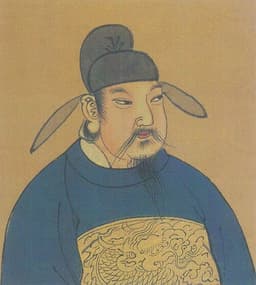
Li Longji
Emperor · Medieval
54.2Total

Sarki Muhammadu Korau
Emperor · Medieval
52.6Total
Basic Information
Born
685
1490
Died
762
1540
Era
Medieval
Medieval
Nationality
China
Katsina
Occupation
Emperor
Emperor
Civilization
Eastern
Other
Score Comparison
Military (10%)
61.7
45.0
Political (20%)
82.0
45.1
Influence (20%)
40.0
54.9
Legacy (20%)
40.0
47.5
Leadership (15%)
68.0
65.0
Strategy (15%)
55.0
60.0
TOTAL
54.2
52.6
Li Longji — Complete Timeline
713 AD
Kaiyuan era reformsReform◆ Major
Emperor Xuanzong implemented administrative, fiscal, and military reforms during the Kaiyuan era. These reforms reduced corruption, improved tax collection, and strengthened the Tang state, leading to a golden age.
Tang dynastyReformGolden age
Impact: nationalconstructive
755 AD
An Lushan Rebellion beganWar
General An Lushan rebelled in the northeast, capturing Luoyang and Chang'an. Xuanzong fled to Sichuan, and the rebellion devastated the Tang empire, causing millions of deaths and permanent decline.
Tang dynastyRebellionAn Lushan
Impact: globaltragic
756 AD
Abdicated after Mawei Station incidentPolitical Action◆ Major
During the flight to Sichuan, Xuanzong's guards mutinied at Mawei Station, forcing him to order the death of his favorite consort Yang Guifei. Xuanzong abdicated to his son Suzong shortly after.
Tang dynastyAbdicationYang Guifei
Impact: nationaltragic
Sarki Muhammadu Korau — Complete Timeline
1513 AD
Conquest of Katsina by SonghaiWar◆ Major
Sarki Muhammadu Korau, the warrior king of Katsina, was defeated by the Songhai Empire under Askia Mohammed I. Katsina was incorporated into the Songhai Empire as a vassal state, ending its independence.
ConquestSonghaiKatsina
Impact: regionaltragic
1520 AD
Rebellion Against Songhai RuleWar◆ Major
Sarki Muhammadu Korau led a rebellion against Songhai rule in Katsina. The rebellion was suppressed by the Songhai forces, and Korau was likely killed or captured, solidifying Songhai control over the region.
RebellionSonghaiKatsina
Impact: regionaldestructive
Expert Analysis
Origins
Li Longji (685–762), born Li Longji, was the third son of Emperor Ruizong of the Tang dynasty. His early life was marked by political intrigue at the Tang court, where his grandmother Empress Wu Zetian had seized power. After her death, a palace coup in 705 restored the Li family, but instability continued. Li Longji received a classical Confucian education and military training, preparing him for leadership. He emerged as a decisive figure in the 710 rebellion against Empress Wei, placing his father on the throne and eventually becoming emperor himself in 712.
Sarki Muhammadu Korau (dates uncertain, fl. early 16th century) was a warrior king of the Hausa city-state of Katsina in what is now northern Nigeria. Little is known of his early life, but he rose from the ranks of the Katsina nobility to seize power during a period of regional conflict. The Hausa states were fragmented, often warring with each other and facing external threats from the Songhai Empire to the west. Korau is remembered as a strong military leader who sought to expand Katsina's influence and resist foreign domination.
Rise to Power
Li Longji's rise was swift and strategic. In 710, Empress Wei, who had poisoned Emperor Zhongzong, attempted to install a puppet. Li Longji, then Prince of Linzi, led a coup with the help of his aunt Princess Taiping, killing Empress Wei and her faction. His father, Emperor Ruizong, was restored, but Li Longji became crown prince. By 712, Ruizong abdicated, and Li Longji ascended the throne as Emperor Xuanzong. He consolidated power by eliminating rivals like Princess Taiping, who was forced to commit suicide in 713.
Korau's path to power is less documented but typical of Hausa warrior kings. He likely seized control of Katsina through military prowess and alliances, possibly after a period of internal strife. His reign coincided with the expansion of the Songhai Empire under Askia Mohammed I, who conquered several Hausa states, including Katsina, around 1513–1515. Korau's rise may have been a response to this external threat, as he sought to unite Katsina against Songhai.
Leadership & Governance
Li Longji's early reign, known as the Kaiyuan era (713–741), was a period of effective governance. He implemented administrative reforms to reduce corruption, reorganized the tax system to improve collection, and established a more efficient bureaucracy. He also reformed the military, creating border commands (jiedushi) to defend the frontiers. However, his later years saw a decline: he became infatuated with his consort Yang Guifei, promoted her corrupt relatives, and neglected state affairs. This allowed ambitious generals like An Lushan to build independent power bases. His political score of 82.0 reflects his early successes, but his governance ultimately faltered.
Korau's leadership was more militaristic. He ruled Katsina as a warrior king, likely relying on a council of nobles and a personal retinue. His governance would have focused on tribute collection, defense, and raids against neighboring states. The Hausa states had complex trade networks and Islamic institutions, but Korau's reign was cut short by Songhai conquest. His leadership score of 65.0 indicates capable military command but limited administrative depth compared to Li Longji.
Triumph & Tragedy
Li Longji's greatest triumph was the Kaiyuan era, which brought stability, prosperity, and cultural flourishing to Tang China. The empire reached its territorial zenith, with a population of about 80 million, and art, poetry, and commerce thrived. His greatest tragedy was the An Lushan Rebellion (755–763), which erupted due to his neglect and over-reliance on frontier generals. The rebellion killed millions, destroyed the capital, and permanently weakened the Tang dynasty. Li Longji fled Chang'an, and at Mawei Station, his guards mutinied, forcing him to order Yang Guifei's death. He abdicated in 756 and died in obscurity.
Korau's triumph was his resistance against the Songhai Empire. He led a rebellion after the initial conquest, temporarily reclaiming Katsina. However, his tragedy was defeat: the Songhai forces under Askia Mohammed I crushed the uprising, and Korau was likely killed. His military score of 45.0 reflects that despite his efforts, he could not withstand the superior Songhai army.
Character & Destiny
Li Longji was initially a capable and energetic ruler, but his character changed with age and success. He became complacent, indulgent, and paranoid, which led to poor decisions. His strategy score of 55.0 indicates that his early strategic reforms gave way to flawed judgment. His destiny was shaped by his inability to adapt to the changing military landscape and his personal weaknesses.
Korau was a determined warrior king who prioritized independence. His strategy score of 60.0 suggests he understood the need to resist Songhai, but he lacked the resources and allies to succeed. His character was marked by courage and defiance, but his fate was sealed by the overwhelming power of the Songhai Empire. He died fighting for his city's freedom.
Legacy
Li Longji's legacy is mixed. He is remembered for the cultural golden age of the Kaiyuan era, which produced poets like Li Bai and Du Fu, and for setting the stage for the Tang dynasty's decline. His administrative reforms influenced later Chinese dynasties, but the jiedushi system he strengthened contributed to future fragmentation. His influence score of 40.0 reflects that despite his early achievements, his long-term impact was diminished by the rebellion.
Korau's legacy is more localized. He is celebrated in Hausa oral traditions as a symbol of resistance against foreign domination. The city of Katsina remained a political and cultural center in Hausaland, and later rulers invoked his memory. His legacy score of 47.5 is modest but enduring within the region.
Conclusion
Li Longji had a greater impact on world history than Sarki Muhammadu Korau, as evidenced by his higher total score of 54.2 compared to Korau's 52.6. The gap is narrow, but Li Longji's influence extended across a vast empire and a cultural renaissance that shaped Chinese civilization. Korau's resistance was heroic but ultimately unsuccessful and limited to a single region. Li Longji's political and military reforms, while flawed, had consequences for a global power, whereas Korau's story is a footnote in the history of the Songhai Empire. Thus, Li Longji stands as the more significant historical figure.
Rankings
🥇
Li LongjiLeader
Mil: 61.7Pol: 82.0Inf: 40.0
54.2
🥈
Sarki Muhammadu Korau
Mil: 45.0Pol: 45.1Inf: 54.9
52.6
+1.6 behind
How This Comparison Works
Algorithm
Each figure is scored on 6 dimensions (0—100 scale) based on structured historical data: Military (10%), Political (20%), Influence (20%), Legacy (20%), Leadership (15%), Strategy (15%). The weighted total produces the final ranking.
Data Sources
Scores are computed from structured sub-indicators in the database. Scale factors adjust for era (Ancient ×0.85, Modern ×1.0) and civilization size (Eastern ×1.05, Other ×0.80) to account for differences in population and military scale.
Maximum 3 Figures
Comparisons are limited to 2—3 figures to ensure readability and statistical meaningfulness.
Error Margins
±5 points per dimension — Sub-scores are derived from historical records with inherent uncertainty. Two figures within 5 points on a dimension should be considered roughly equivalent in that area.
Total Score Accuracy
±3 points overall — The weighted combination of 6 dimensions produces a total score with approximately ±3 points of uncertainty. Differences of less than 3 points are not statistically significant— the figures are effectively tied.
Known Limitations
- Historical records are incomplete and uneven across civilizations
- Figures from oral-tradition societies may be underrepresented
- Occupation labels can misclassify multi-role figures
- Scores measure capability and impact, not moral character
- Quantitative scoring is a comparison tool, not absolute truth
Capability Radar
Military (10%) — Battles & Warfare
Battles
65
45
Win Rate
60
50
Expansion
80
55
Political (20%) — Governance & Reform
Reform
90
40
Diplomacy
80
45
Economy
95
40
Influence (20%) — Cultural & Global Reach
Cultural
90
40
Global
75
30
Legacy (20%) — Historical Impact
Historical
85
45
Longevity
70
40
Leadership (15%) — Power & Stability
Tenure
85
50
Stability
40
50
Strategy (15%) — Tactics & Innovation
Strategy
70
45
Tactics
55
40
Reform
75
35
Similar Comparisons
Comments & Discussion
No comments yet. Be the first to share your thoughts!