Loading...
Li Longji vs Wang Shichong
Li Longji leads by 7.2 pts · 2 figures compared
…
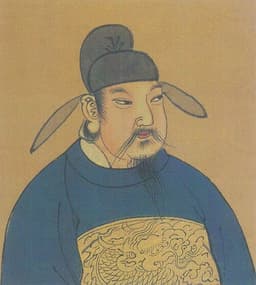
Li Longji
Emperor · Medieval
54.2Total
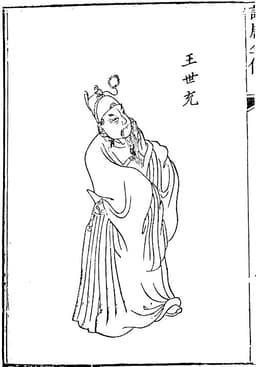
Wang Shichong
Emperor · Medieval
47.0Total
Basic Information
Born
685
570
Died
762
621
Era
Medieval
Medieval
Nationality
China
China
Occupation
Emperor
Emperor
Civilization
Eastern
Eastern
Score Comparison
Military (10%)
61.7
60.0
Political (20%)
82.0
35.1
Influence (20%)
40.0
50.2
Legacy (20%)
40.0
40.8
Leadership (15%)
68.0
48.4
Strategy (15%)
55.0
57.5
TOTAL
54.2
47.0
Li Longji — Complete Timeline
713 AD
Kaiyuan era reformsReform◆ Major
Emperor Xuanzong implemented administrative, fiscal, and military reforms during the Kaiyuan era. These reforms reduced corruption, improved tax collection, and strengthened the Tang state, leading to a golden age.
Tang dynastyReformGolden age
Impact: nationalconstructive
755 AD
An Lushan Rebellion beganWar
General An Lushan rebelled in the northeast, capturing Luoyang and Chang'an. Xuanzong fled to Sichuan, and the rebellion devastated the Tang empire, causing millions of deaths and permanent decline.
Tang dynastyRebellionAn Lushan
Impact: globaltragic
756 AD
Abdicated after Mawei Station incidentPolitical Action◆ Major
During the flight to Sichuan, Xuanzong's guards mutinied at Mawei Station, forcing him to order the death of his favorite consort Yang Guifei. Xuanzong abdicated to his son Suzong shortly after.
Tang dynastyAbdicationYang Guifei
Impact: nationaltragic
Wang Shichong — Complete Timeline
618 AD
Rebellion at LuoyangPolitical Action◆ Major
Wang Shichong, a Sui general, staged a coup in Luoyang, killing the Sui regent and declaring himself emperor of the short-lived Zheng dynasty. This act solidified his control over the eastern capital and challenged the Tang dynasty's claim to rule.
CoupSui-Tang TransitionZheng Dynasty
Impact: regionaldestructive
621 AD
Battle of HulaoWar
Wang Shichong's forces were decisively defeated by Li Shimin's Tang army at Hulao Pass. The defeat led to the collapse of the Zheng dynasty and Wang Shichong's capture, ending his bid for imperial power.
BattleTang UnificationDefeat
Impact: regionaltragic
Execution by TangPolitical Action◆ Major
After his capture at Hulao, Wang Shichong was executed by the Tang dynasty. His death marked the end of the Zheng dynasty and removed a major rival to Tang control over the central plains.
ExecutionTang Unification
Impact: regionaltragic
Expert Analysis
Origins
Li Longji (685-762), known as Emperor Xuanzong of Tang, was born into the imperial Li family, the third son of Emperor Ruizong. His early life was marked by political intrigue; he grew up during the reign of Empress Wu Zetian, who suppressed Tang imperial princes. He received a thorough Confucian education and developed skills in governance and military strategy. Wang Shichong (died 621) was born into a Sui official family in Wugui (modern Gansu). His father served as a commandery governor, and Wang inherited a military post. He rose through the ranks due to his intelligence and ruthlessness, becoming a key general under Emperor Yang of Sui.
Rise to Power
Li Longji orchestrated a coup in 710 against Empress Wei, who had poisoned Emperor Zhongzong. He installed his father Ruizong as emperor and was named crown prince. In 712, Ruizong abdicated, and Li Longji became emperor. He consolidated power by eliminating rivals, including Princess Taiping, and initiated the Kaiyuan era (713-741), a period of reform and stability. Wang Shichong rose as a Sui general during the turmoil of the late Sui dynasty. In 617, he defended Luoyang against rebel forces and gained control of the city. After Emperor Yang's death in 618, Wang staged a coup, killing the Sui regent and declaring himself emperor of the Zheng dynasty in 619.
Leadership & Governance
Li Longji implemented the Kaiyuan reforms, which included fiscal reorganization, land redistribution via the equal-field system, and military reforms such as the recruitment of professional soldiers. He reduced corruption by appointing capable ministers like Yao Chong and Song Jing. His governance scored 82.0 in political effectiveness. Wang Shichong's leadership was autocratic and short-sighted. He ruled Luoyang through fear and bribery, alienating both officials and the populace. He scored 35.1 in political acumen. His military strategy scored 57.5, but his inability to secure alliances or inspire loyalty led to his downfall.
Triumph & Tragedy
Li Longji's triumph was the Kaiyuan era, a golden age of prosperity, culture, and expansion. Tang China reached its peak in territorial extent and cosmopolitan influence. His tragedy was the An Lushan Rebellion (755-763), which exposed his late-era decadence and poor judgment. He fled Chang'an, forced to execute his consort Yang Guifei at Mawei Station, and abdicated in 756. His military score of 61.7 reflects his mixed record. Wang Shichong's triumph was establishing the Zheng dynasty and ruling Luoyang for two years. His tragedy was the decisive defeat at the Battle of Hulao (621) by Li Shimin. He was captured and executed, ending his dynasty. His military score of 60.0 is slightly below Li Longji's.
Character & Destiny
Li Longji was energetic and reform-minded in his early reign but became complacent and indulgent later, entrusting power to corrupt favorites. His character shaped his fate: early decisiveness brought success; later neglect caused disaster. Wang Shichong was cunning and ruthless but lacked strategic vision. His distrust of subordinates and reliance on terror isolated him. His character sealed his defeat, as he could not unite rivals against the rising Tang.
Legacy
Li Longji's legacy is complex: he presided over the Tang golden age but also its decline. The An Lushan Rebellion weakened the Tang, leading to regional warlordism. His cultural patronage supported poets like Li Bai and Du Fu. His political reforms influenced later dynasties. Wang Shichong's legacy is minimal; he is remembered as a failed warlord. His short-lived Zheng dynasty left no lasting institutions. His defeat helped Li Shimin consolidate the Tang.
Conclusion
Li Longji had greater impact, with a total score of 54.2 vs Wang Shichong's 47.0. While Wang Shichong was a capable general, his political incompetence and brief rule pale against Li Longji's decades-long reign that shaped Tang China's trajectory. Li Longji's reforms and cultural achievements outweigh his catastrophic rebellion. However, Wang Shichong's role as a Sui successor briefly challenged Tang unity. Ultimately, Li Longji's influence on Chinese history is far more significant.
Rankings
🥇
Li LongjiLeader
Mil: 61.7Pol: 82.0Inf: 40.0
54.2
🥈
Wang Shichong
Mil: 60.0Pol: 35.1Inf: 50.2
47.0
+7.2 behind
How This Comparison Works
Algorithm
Each figure is scored on 6 dimensions (0—100 scale) based on structured historical data: Military (10%), Political (20%), Influence (20%), Legacy (20%), Leadership (15%), Strategy (15%). The weighted total produces the final ranking.
Data Sources
Scores are computed from structured sub-indicators in the database. Scale factors adjust for era (Ancient ×0.85, Modern ×1.0) and civilization size (Eastern ×1.05, Other ×0.80) to account for differences in population and military scale.
Maximum 3 Figures
Comparisons are limited to 2—3 figures to ensure readability and statistical meaningfulness.
Error Margins
±5 points per dimension — Sub-scores are derived from historical records with inherent uncertainty. Two figures within 5 points on a dimension should be considered roughly equivalent in that area.
Total Score Accuracy
±3 points overall — The weighted combination of 6 dimensions produces a total score with approximately ±3 points of uncertainty. Differences of less than 3 points are not statistically significant— the figures are effectively tied.
Known Limitations
- Historical records are incomplete and uneven across civilizations
- Figures from oral-tradition societies may be underrepresented
- Occupation labels can misclassify multi-role figures
- Scores measure capability and impact, not moral character
- Quantitative scoring is a comparison tool, not absolute truth
Capability Radar
Military (10%) — Battles & Warfare
Battles
65
65
Win Rate
60
45
Expansion
80
50
Political (20%) — Governance & Reform
Reform
90
25
Diplomacy
80
35
Economy
95
30
Influence (20%) — Cultural & Global Reach
Cultural
90
20
Global
75
10
Legacy (20%) — Historical Impact
Historical
85
30
Longevity
70
15
Leadership (15%) — Power & Stability
Tenure
85
40
Stability
40
20
Strategy (15%) — Tactics & Innovation
Strategy
70
55
Tactics
55
60
Reform
75
30
Similar Comparisons
Comments & Discussion
No comments yet. Be the first to share your thoughts!