Loading...
Li Yuan vs Qin Shi Huang
Qin Shi Huang leads by 11.5 pts · 2 figures compared
…
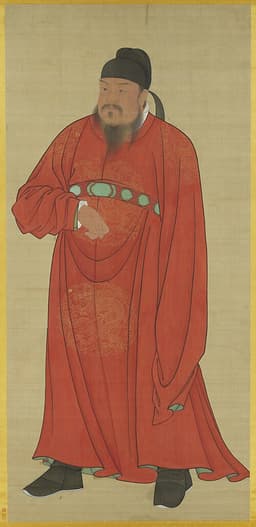
Li Yuan
Emperor · Medieval
73.7Total
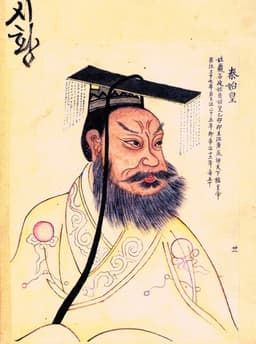
Qin Shi Huang
Emperor · Ancient
85.2Total
Basic Information
Born
566
-259
Died
635
-210
Era
Medieval
Ancient
Nationality
China
China
Occupation
Emperor
Emperor
Civilization
Eastern
Eastern
Score Comparison
Military (10%)
78.0
80.0
Political (20%)
70.0
90.0
Influence (20%)
80.0
85.0
Legacy (20%)
71.4
90.0
Leadership (15%)
72.0
78.0
Strategy (15%)
67.2
82.0
TOTAL
73.7
85.2
Li Yuan — Complete Timeline
618 AD
Founded the Tang dynastyPolitical Action
Li Yuan, Duke of Tang, rebelled against the Sui dynasty and captured Chang'an. He declared himself Emperor Gaozu, founding the Tang dynasty that would rule China for nearly 300 years.
Tang dynastyFoundingSui-Tang transition
Impact: globalconstructive
621 AD
Battle of Hulao PassWar◆ Major
Li Yuan's son Li Shimin defeated the rival warlord Dou Jiande at Hulao Pass. This victory eliminated a major competitor and secured Tang control over the central plains.
Tang unificationBattleLi Shimin
Impact: national
626 AD
Abdicated in favor of Li ShiminPolitical Action◆ Major
After the Xuanwu Gate Incident where Li Shimin killed his brothers, Li Yuan abdicated the throne to his son. He became Taishang Huang (retired emperor) and lived in retirement.
Tang dynastySuccessionXuanwu Gate
Impact: national
Qin Shi Huang — Complete Timeline
246 BC
Construction of the Mausoleum and Terracotta ArmyOther◆ Major
Qin Shi Huang commissioned a vast mausoleum complex near Xi'an, guarded by thousands of life-sized terracotta soldiers, horses, and chariots. The project employed hundreds of thousands of workers and reflected his obsession with immortality and imperial power.
Impact: global
230 BC
Conquest of the Six Warring StatesWar
From 230 to 221 BCE, Ying Zheng led the Qin state in a series of campaigns that conquered the Han, Zhao, Wei, Chu, Yan, and Qi states. This unified China under a single ruler for the first time, ending the Warring States period.
Impact: global
221 BC
Standardization of Writing, Currency, and MeasurementsReform◆ Major
Qin Shi Huang ordered the standardization of Chinese script, currency, and weights and measures across the unified empire. This facilitated administration, trade, and cultural integration, laying a foundation for future dynasties.
Impact: globalconstructive
Proclamation of the Qin DynastyPolitical Action
After conquering the last independent state, Ying Zheng declared himself Shi Huangdi (First Emperor), founding the Qin Dynasty. He adopted a new title to signify his supreme authority and initiated centralized imperial rule.
Impact: global
214 BC
Initiation of the Great Wall ConstructionOther◆ Major
Qin Shi Huang ordered the connection and extension of existing northern fortifications to create a unified defensive wall against nomadic Xiongnu raids. This project involved massive conscripted labor and became the precursor to the later Great Wall.
Impact: regional
213 BC
Burning of Books and Burying of ScholarsPolitical Action◆ Major
On the advice of Li Si, Qin Shi Huang ordered the burning of historical records and philosophical texts not aligned with Legalist doctrine. He also had 460 Confucian scholars buried alive to suppress dissent and consolidate ideological control.
Impact: nationaldestructive
Expert Analysis
li-yuan-vs-qin-shi-huang
### The First Emperor and the Tang Founder: Two Paths to Immortality
In the winter of 210 BC, a vast procession snaked its way east across the Chinese plains, carrying the body of the man who had called himself the First Emperor. To hide his death, his entourage packed carts with rotting fish to mask the smell of decay. Less than nine centuries later, in 635 AD, another emperor died in his bed, a retired Grand Emperor who had watched his son transform a fledgling dynasty into a golden age. One man had tried to conquer death; the other had learned to let go of power. Their lives, separated by eight hundred years, tell two very different stories of how to build—and how to lose—an empire.
### Origins: The Orphan and the Aristocrat
Qin Shi Huang was born in 259 BC into a world of chaos. The Warring States period had torn China apart for two centuries, and his father was a hostage in another kingdom before ascending the throne of Qin. Ying Zheng, as he was then known, grew up in a court rife with conspiracy, his mother’s lover plotting to seize power. This was a childhood that taught him one lesson: trust no one. The Legalist philosophy of the Qin state, which prioritized order and punishment over humanity, became the only gospel he knew.
Li Yuan, born in 566 AD, came from a very different world. He was a hereditary aristocrat, a Duke of Tang whose family had served the Sui dynasty for generations. His father had been a general, his mother a princess. Where Qin Shi Huang’s world was defined by survival, Li Yuan’s was defined by duty. Yet the Sui dynasty, like the Warring States, was collapsing into rebellion by the time Li Yuan reached middle age. The difference was that Li Yuan had something Qin Shi Huang never possessed: a brilliant second son named Li Shimin, who would both save and overshadow him.
### Rise to Power: Conquest and Coup
Qin Shi Huang’s rise was a methodical, terrifying masterpiece of military strategy. From 230 to 221 BC, he conquered the six rival states in a series of campaigns that showed both genius and ruthlessness. He did not merely defeat his enemies; he annihilated their ruling families, destroyed their fortifications, and melted down their weapons. When he proclaimed himself Shi Huangdi—First Emperor—in 221 BC, he meant it literally. There would be no rivals, no equals, no future.
Li Yuan’s path was more hesitant. In 617 AD, with the Sui dynasty crumbling, he initially resisted rebellion until his son Li Shimin forced his hand. His capture of Chang’an that year was a political masterstroke: he installed a puppet Sui emperor and waited for the right moment. When he finally declared himself Emperor Gaozu of the Tang dynasty in 618 AD, he did so not as a conqueror smashing the old world, but as a restorer of order. His greatest victory, the Battle of Hulao Pass in 621 AD, was won not by his own hand but by Li Shimin, who crushed the rival Dou Jiande. Li Yuan was an emperor, but he was never the sole architect of his power.
### Leadership & Governance: The Tyrant and the Builder
Qin Shi Huang governed with the cold precision of a machine. He standardized writing, currency, and measurements across his empire, creating a unified China that had never existed before. He linked the northern fortifications into the Great Wall, a project that cost countless lives. But his rule was also paranoid and brutal. In 213 BC, on the advice of his chancellor Li Si, he ordered the burning of all books not related to medicine, agriculture, or divination, and the burying alive of scholars who resisted. This was not reform; it was cultural genocide. His mausoleum, guarded by the Terracotta Army, was a monument not to his achievements but to his terror of death.
Li Yuan ruled differently. As Emperor Gaozu, he restored the civil service examinations, reduced taxes, and rebuilt the bureaucracy that the Sui had destroyed. He was a consolidator, not a revolutionary. His Tang dynasty would become famous for its openness, its poetry, its cosmopolitan culture—but that was the work of his successors. Li Yuan himself was a transitional figure, a bridge between the chaos of the Sui collapse and the splendor of the Tang golden age. Where Qin Shi Huang demanded total submission, Li Yuan tolerated dissent. Where the First Emperor burned books, the Tang founder preserved them.
### Triumph & Tragedy: Immortality and Abdication
Qin Shi Huang’s greatest triumph was also his greatest tragedy: the unification of China. He had achieved what no one before him had done, but he could not hold it. His obsession with immortality—he sent expeditions for the elixir of life and died from mercury poisoning, ironically, from his own immortality pills—led to a succession crisis. Within three years of his death in 210 BC, the Qin dynasty had collapsed, consumed by rebellion. His empire was too rigid, too cruel, too dependent on his own iron will.
Li Yuan’s tragedy was more personal. In 626 AD, his sons Li Jiancheng and Li Shimin fought for the succession. At the Xuanwu Gate in Chang’an, Li Shimin killed his own brothers and then forced Li Yuan to abdicate. The father became Taishang Huang—Grand Emperor—a powerless figurehead watching his son take the throne as Emperor Taizong. Yet this abdication was the Tang dynasty’s salvation. Li Shimin would become one of China’s greatest emperors, and Li Yuan lived another nine years in comfortable retirement, a witness to his own obsolescence.
### Character & Destiny: The Paranoiac and the Pragmatist
Qin Shi Huang’s personality was his destiny. His paranoia drove him to unify China, but it also made him incapable of trusting anyone to govern after him. He centralized all power in his own hands, leaving no room for succession, no institutions that could survive his death. His famous saying, “I have unified the world, and I will rule it forever,” was not ambition—it was desperation.
Li Yuan, by contrast, was a pragmatist. He knew when to fight and when to yield. His abdication, however painful, saved his dynasty. He understood that power was not a personal possession but a trust to be passed on. Where Qin Shi Huang built a tomb of terracotta soldiers to guard him in death, Li Yuan built a family that would rule for three centuries.
### Legacy: The Ghost and the Founder
Qin Shi Huang’s legacy is haunting. He is remembered as the man who created China, but also as the tyrant who nearly destroyed it. The Great Wall, the Terracotta Army, the unified script—these are his monuments. But so are the burned books and the buried scholars. His dynasty lasted only fifteen years, yet his imperial model lasted two thousand. He is both father and monster.
Li Yuan’s legacy is quieter but more enduring. He founded the Tang dynasty, which would become China’s golden age of poetry, trade, and cosmopolitan culture. His son Taizong is the more famous emperor, but without Li Yuan’s cautious hand, there would have been no Tang at all. He is remembered as a founder who knew when to step aside—a rare wisdom in the annals of power.
### Conclusion
One man built an empire of iron and fire, and it shattered with his death. The other built a family and a system, and it flourished for centuries. Qin Shi Huang’s story is a warning: that the strongest ruler can be the weakest foundation. Li Yuan’s story is a lesson: that true power lies not in crushing all rivals, but in creating something that can outlast you. The First Emperor tried to conquer death; the Tang founder learned to accept it. In the end, the man who feared death built a tomb of soldiers, while the man who embraced life built a dynasty of poets.
Rankings
🥇
Qin Shi HuangLeader
Mil: 80.0Pol: 90.0Inf: 85.0
85.2
🥈
Li Yuan
Mil: 78.0Pol: 70.0Inf: 80.0
73.7
+11.5 behind
How This Comparison Works
Algorithm
Each figure is scored on 6 dimensions (0—100 scale) based on structured historical data: Military (10%), Political (20%), Influence (20%), Legacy (20%), Leadership (15%), Strategy (15%). The weighted total produces the final ranking.
Data Sources
Scores are computed from structured sub-indicators in the database. Scale factors adjust for era (Ancient ×0.85, Modern ×1.0) and civilization size (Eastern ×1.05, Other ×0.80) to account for differences in population and military scale.
Maximum 3 Figures
Comparisons are limited to 2—3 figures to ensure readability and statistical meaningfulness.
Error Margins
±5 points per dimension — Sub-scores are derived from historical records with inherent uncertainty. Two figures within 5 points on a dimension should be considered roughly equivalent in that area.
Total Score Accuracy
±3 points overall — The weighted combination of 6 dimensions produces a total score with approximately ±3 points of uncertainty. Differences of less than 3 points are not statistically significant— the figures are effectively tied.
Known Limitations
- Historical records are incomplete and uneven across civilizations
- Figures from oral-tradition societies may be underrepresented
- Occupation labels can misclassify multi-role figures
- Scores measure capability and impact, not moral character
- Quantitative scoring is a comparison tool, not absolute truth
Capability Radar
Military (10%) — Battles & Warfare
Battles
75
85
Win Rate
80
90
Expansion
80
90
Political (20%) — Governance & Reform
Reform
75
95
Diplomacy
80
75
Economy
75
90
Influence (20%) — Cultural & Global Reach
Cultural
85
95
Global
85
85
Legacy (20%) — Historical Impact
Historical
90
95
Longevity
90
95
Leadership (15%) — Power & Stability
Tenure
70
70
Stability
70
65
Strategy (15%) — Tactics & Innovation
Strategy
85
85
Tactics
70
80
Reform
65
95
Similar Comparisons
Comments & Discussion
Qin-Era Architect6/17/2026
Comparing Li Yuan to Qin Shi Huang is like comparing a master renovator to a demolition man. Qin built the Great Wall with forced labor and buried scholars alive—his unification was a scorched-earth campaign. Li Yuan, by contrast, used diplomacy and family ties to stitch the empire back together after Sui’s collapse. The fish cart ruse shows Qin’s paranoia; Li Yuan’s peaceful retirement shows shrewd succession planning. Give me the Tang founder any day.
数字迷6/17/2026
光数据说话:秦朝统一后仅15年就崩溃,而唐朝持续了289年。秦始皇的三公九卿制虽然创新,但它建立在酷刑和徭役之上,不可持续;李渊的均田制和府兵制才是真正的制度红利。数据不撒谎——短命不是偶然,长寿不是运气。别拿暴君的“功绩”洗白他统治的失败。
Sinology Nerd6/17/2026
Everyone fawns over Qin Shi Huang’s terra-cotta army, but Li Yuan’s legacy is the Tang legal code, which influenced East Asia for centuries. The First Emperor standardized script and measures, sure—but he also torched the百家 (Hundred Schools of Thought). Li Yuan revived Confucian scholarship and opened the civil service exams wider. One man burned books; the other let them be written. I know which side of history I’d choose.
守旧派史官6/17/2026
你们这些现代人总爱翻案。秦始皇是开天辟地的祖龙,李渊不过是捡了隋炀帝的烂摊子。秦制奠定了郡县制2000年基础,秦律之精密远超当时世界;李渊呢?他靠突厥骑兵起家,玄武门之变更是家丑外扬。没有始皇帝的车同轨书同文,哪来李家的盛世?别拿仁政当借口否定开创之功。