Loading...
Ahuitzotl vs Li Zhi
Ahuitzotl leads by 0.8 pts · 2 figures compared
…
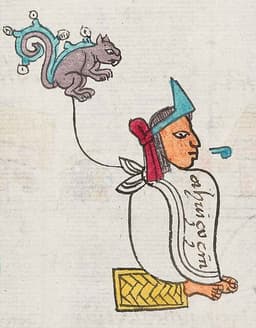
Ahuitzotl
Emperor · Medieval
62.6Total
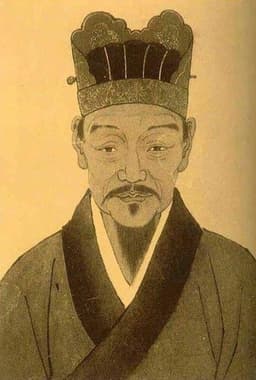
Li Zhi
Emperor · Medieval
61.8Total
Basic Information
Born
1440
628
Died
1502
683
Era
Medieval
Medieval
Nationality
Aztec Empire
China
Occupation
Emperor
Emperor
Civilization
Other
Eastern
Score Comparison
Military (10%)
78.5
85.0
Political (20%)
55.0
55.0
Influence (20%)
61.0
58.3
Legacy (20%)
54.0
52.0
Leadership (15%)
72.0
72.0
Strategy (15%)
70.0
66.3
TOTAL
62.6
61.8
Ahuitzotl — Complete Timeline
1486 AD
Expanded the Aztec Empire to its Greatest ExtentWar
Ahuitzotl launched extensive military campaigns that expanded the Aztec Empire to its maximum territorial extent, conquering regions from the Gulf of Mexico to the Pacific coast, including parts of modern-day Guatemala. He subjugated over 50 city-states.
Aztec ExpansionMilitary ConquestImperial Peak
Impact: regional
1487 AD
Dedicated the Great Temple of TenochtitlanCultural◆ Major
Ahuitzotl presided over the rededication of the Templo Mayor in Tenochtitlan, a massive ceremony involving the sacrifice of thousands of captives. The event reinforced Aztec religious authority and demonstrated the empire's military power.
Human SacrificeReligious CeremonyAztec Religion
Impact: regionaldestructive
1490 AD
Conquest of the Mixtec and Zapotec RegionsWar◆ Major
Ahuitzotl led campaigns into Oaxaca, conquering Mixtec and Zapotec strongholds such as Coixtlahuaca and Tehuantepec. These victories secured control over key trade routes and tribute sources, including gold and cotton.
Military CampaignOaxacaTribute
Impact: regional
Li Zhi — Complete Timeline
640 AD
Establishment of the Protectorate General to Pacify the WestReform◆ Major
Li Zhi established the Anxi Protectorate to administer the newly conquered territories in Central Asia. This administrative structure governed the Tarim Basin and parts of modern Xinjiang, securing Tang control over the Silk Road trade routes.
AdministrationCentral AsiaSilk Road
Impact: regionalconstructive
657 AD
Conquest of the Western TurksWar◆ Major
Under Li Zhi's reign, Tang forces under Su Dingfang defeated the Western Turkic Khaganate, destroying their power in Central Asia. This victory extended Tang control over the Silk Road and established Chinese hegemony in the region for decades.
Tang ExpansionWestern TurksCentral Asia
Impact: regionalconstructive
660 AD
Conquest of Baekje and GoguryeoWar◆ Major
Tang forces allied with Silla to conquer the Korean kingdom of Baekje in 660, then Goguryeo in 668. These campaigns brought the Korean Peninsula under Tang suzerainty for a time, marking the greatest territorial extent of the Tang dynasty.
Korean CampaignsTang ExpansionSilla Alliance
Impact: regional
Illness and Regency of Wu ZetianPolitical Action
Li Zhi suffered a stroke that impaired his vision and ability to govern. His empress, Wu Zetian, began to handle state affairs, gradually accumulating power. This marked the beginning of her rise to de facto rule, which would later lead to her becoming emperor.
Wu ZetianRegencyPower Shift
Impact: national
Expert Analysis
Origins
Ahuitzotl, born around 1486, was the eighth Aztec emperor (tlatoani) of Tenochtitlan, succeeding his brother Tizoc. He was a member of the Acamapichtli dynasty, the ruling family of the Mexica. His early life was steeped in the militaristic and religious traditions of the Aztecs, where warfare was a means to acquire tribute and captives for sacrifice. He likely underwent rigorous training in combat and ritual, preparing him for leadership.
Li Zhi, born in 628 as the ninth son of Emperor Taizong of Tang, was not the initial heir. His mother was Empress Zhangsun. He received a Confucian education and was known for his filial piety. His early life was marked by palace intrigue; he was appointed crown prince after his elder brother Li Chengqian was deposed for plotting rebellion. Li Zhi was seen as gentle and indecisive, contrasting with his father's forceful character.
Rise to Power
Ahuitzotl came to power in 1486 after the suspicious death of Tizoc, who was possibly poisoned. As a proven military commander, Ahuitzotl was chosen by the council of nobles and priests to lead. His coronation campaign immediately targeted the city of Tlatelolco, securing its submission. He then embarked on a series of conquests that would define his reign.
Li Zhi ascended the throne in 649 upon Taizong's death. Despite being the designated heir, his rise was smoothed by his father's advisors, particularly the chancellor Zhangsun Wuji. However, Li Zhi's authority was initially weak, and he relied heavily on his uncle and other officials. His reign would later be overshadowed by his empress, Wu Zetian.
Leadership & Governance
Ahuitzotl ruled as an autocratic war leader. He personally led campaigns, such as the conquest of the Mixtec and Zapotec regions in Oaxaca (1490s). His governance focused on extracting tribute from conquered provinces, which flowed into Tenochtitlan. He also oversaw massive public works, including the reconstruction of the Templo Mayor, dedicated in 1487 with a reported 20,000 sacrifices. His military score of 78.5 reflects his effectiveness, while his political score of 55.0 indicates a centralized, tribute-based system.
Li Zhi's leadership was less hands-on due to his stroke in 660, which left him partially incapacitated. He delegated governance to his empress, Wu Zetian, who effectively ruled. Administratively, Li Zhi continued the Tang legal code and expanded the examination system. He established the Anxi Protectorate to govern Central Asia, showing strategic foresight. His political score of 55.0 matches Ahuitzotl's, but his military score of 85.0 reflects the successes of his generals.
Triumph & Tragedy
Ahuitzotl's greatest triumph was expanding the Aztec Empire to its maximum territorial extent, from the Gulf of Mexico to the Pacific. His conquests brought immense wealth and tribute. However, his reign also saw the brutal suppression of rebellions and the massive sacrifice of captives, which sowed resentment among subject peoples. This contributed to the empire's instability, exploited later by Cortés. His legacy score of 54.0 reflects the empire's collapse after his death.
Li Zhi's reign saw the greatest territorial expansion of the Tang dynasty, with conquests of the Western Turks (657), Baekje (660), and Goguryeo (668). These victories extended Tang influence across Central Asia and Korea. However, his personal tragedy was his illness and the consequent rise of Wu Zetian, who later usurped the throne. The cost of these wars strained the treasury, and the empire faced rebellions later. His legacy score of 52.0 is slightly lower, as his achievements are often credited to his generals and empress.
Character & Destiny
Ahuitzotl was aggressive, decisive, and ruthless. He personally led armies and demanded absolute obedience. His character drove the empire's expansion but also its overreach. He died in 1502 during a flood in Tenochtitlan, a fitting end for a ruler who reshaped the city. His destiny was to expand the empire to its peak, but also to set the stage for its fall.
Li Zhi was gentle, scholarly, and indecisive. His character made him reliant on others, first his uncles, then his wife. His stroke in 660 sealed his fate, as Wu Zetian took control. He died in 683, with his dynasty in transition to female rule. His destiny was to be a figurehead for an expansionist era, but his personal weakness allowed Wu Zetian's rise.
Legacy
Ahuitzotl's legacy is the Aztec Empire at its zenith. He is remembered as a great conqueror, but also as a symbol of the empire's brutality. The Templo Mayor and the tribute system he expanded persisted until the Spanish conquest. His military achievements scored 78.5, but his political and legacy scores are lower due to the empire's collapse.
Li Zhi's legacy is the Tang dynasty's golden age of expansion. The conquests he oversaw integrated Central Asia into the Chinese sphere. The Protectorate General to Pacify the West lasted until the An Lushan Rebellion. However, his reign is often overshadowed by his father Taizong and his wife Wu Zetian. His military score of 85.0 is the highest, but his influence and legacy scores (58.3 and 52.0) are moderate.
Conclusion
Li Zhi had a greater impact on world history. While Ahuitzotl expanded the Aztec Empire to its greatest extent, his achievements were confined to Mesoamerica and reversed within decades. Li Zhi's conquests permanently integrated Central Asia into the Chinese cultural and political sphere, influencing trade routes and geopolitics for centuries. His military score of 85.0 surpasses Ahuitzotl's 78.5, and the Tang dynasty's long-term influence outweighs the Aztec Empire's short-lived peak. Despite his personal weakness, Li Zhi's reign set the stage for the Tang's enduring legacy.
Rankings
🥇
AhuitzotlLeader
Mil: 78.5Pol: 55.0Inf: 61.0
62.6
🥈
Li Zhi
Mil: 85.0Pol: 55.0Inf: 58.3
61.8
+0.8 behind
How This Comparison Works
Algorithm
Each figure is scored on 6 dimensions (0—100 scale) based on structured historical data: Military (10%), Political (20%), Influence (20%), Legacy (20%), Leadership (15%), Strategy (15%). The weighted total produces the final ranking.
Data Sources
Scores are computed from structured sub-indicators in the database. Scale factors adjust for era (Ancient ×0.85, Modern ×1.0) and civilization size (Eastern ×1.05, Other ×0.80) to account for differences in population and military scale.
Maximum 3 Figures
Comparisons are limited to 2—3 figures to ensure readability and statistical meaningfulness.
Error Margins
±5 points per dimension — Sub-scores are derived from historical records with inherent uncertainty. Two figures within 5 points on a dimension should be considered roughly equivalent in that area.
Total Score Accuracy
±3 points overall — The weighted combination of 6 dimensions produces a total score with approximately ±3 points of uncertainty. Differences of less than 3 points are not statistically significant— the figures are effectively tied.
Known Limitations
- Historical records are incomplete and uneven across civilizations
- Figures from oral-tradition societies may be underrepresented
- Occupation labels can misclassify multi-role figures
- Scores measure capability and impact, not moral character
- Quantitative scoring is a comparison tool, not absolute truth
Capability Radar
Military (10%) — Battles & Warfare
Battles
85
85
Win Rate
90
80
Expansion
90
90
Political (20%) — Governance & Reform
Reform
70
65
Diplomacy
65
80
Economy
80
70
Influence (20%) — Cultural & Global Reach
Cultural
60
55
Global
45
65
Legacy (20%) — Historical Impact
Historical
65
70
Longevity
50
60
Leadership (15%) — Power & Stability
Tenure
75
75
Stability
70
65
Strategy (15%) — Tactics & Innovation
Strategy
85
85
Tactics
80
70
Reform
70
60
Similar Comparisons
Comments & Discussion
No comments yet. Be the first to share your thoughts!