Loading...
Li Zhi vs Toghrul Beg
Toghrul Beg leads by 9.6 pts · 2 figures compared
…
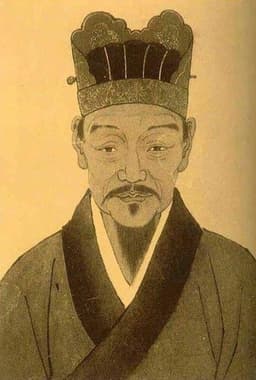
Li Zhi
Emperor · Medieval
61.8Total
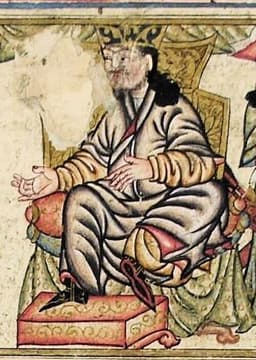
Toghrul Beg
Emperor · Medieval
71.4Total
Basic Information
Born
628
990
Died
683
1063
Era
Medieval
Medieval
Nationality
China
Seljuk Empire
Occupation
Emperor
Emperor
Civilization
Eastern
Middle Eastern
Score Comparison
Military (10%)
85.0
78.5
Political (20%)
55.0
70.0
Influence (20%)
58.3
65.0
Legacy (20%)
52.0
72.0
Leadership (15%)
72.0
79.8
Strategy (15%)
66.3
68.0
TOTAL
61.8
71.4
Li Zhi — Complete Timeline
640 AD
Establishment of the Protectorate General to Pacify the WestReform◆ Major
Li Zhi established the Anxi Protectorate to administer the newly conquered territories in Central Asia. This administrative structure governed the Tarim Basin and parts of modern Xinjiang, securing Tang control over the Silk Road trade routes.
AdministrationCentral AsiaSilk Road
Impact: regionalconstructive
657 AD
Conquest of the Western TurksWar◆ Major
Under Li Zhi's reign, Tang forces under Su Dingfang defeated the Western Turkic Khaganate, destroying their power in Central Asia. This victory extended Tang control over the Silk Road and established Chinese hegemony in the region for decades.
Tang ExpansionWestern TurksCentral Asia
Impact: regionalconstructive
660 AD
Conquest of Baekje and GoguryeoWar◆ Major
Tang forces allied with Silla to conquer the Korean kingdom of Baekje in 660, then Goguryeo in 668. These campaigns brought the Korean Peninsula under Tang suzerainty for a time, marking the greatest territorial extent of the Tang dynasty.
Korean CampaignsTang ExpansionSilla Alliance
Impact: regional
Illness and Regency of Wu ZetianPolitical Action
Li Zhi suffered a stroke that impaired his vision and ability to govern. His empress, Wu Zetian, began to handle state affairs, gradually accumulating power. This marked the beginning of her rise to de facto rule, which would later lead to her becoming emperor.
Wu ZetianRegencyPower Shift
Impact: national
Toghrul Beg — Complete Timeline
1040 AD
Battle of DandanaqanWar
Toghrul Beg led the Seljuk Turks to victory over the Ghaznavid Empire at Dandanaqan in Khorasan. This defeat forced the Ghaznavids to retreat eastward, granting the Seljuks control of Khorasan and establishing their power base in Persia.
Seljuk ExpansionGhaznavid DefeatKhorasan
Impact: regional
1054 AD
Campaign against the Byzantine EmpireWar◆ Major
Toghrul Beg launched a major raid into Byzantine Anatolia, reaching as far as the city of Manzikert. Although he did not capture the city, the campaign demonstrated Seljuk military strength and foreshadowed future conflicts that would lead to the Battle of Manzikert in 1071.
Byzantine-Seljuk WarsAnatoliaManzikert
Impact: regional
1055 AD
Conquest of BaghdadWar
Toghrul Beg entered Baghdad at the invitation of the Abbasid Caliph al-Qa'im, who sought protection from the Buyid dynasty. Toghrul deposed the Buyid ruler, married the caliph's daughter, and was granted the title 'Sultan', becoming the de facto ruler of the Islamic world.
BaghdadAbbasid CaliphateSultanate
Impact: global
1058 AD
Suppression of the Rebellion of Ibrahim InalWar◆ Major
Toghrul's half-brother Ibrahim Inal rebelled against his authority, allying with the Fatimid Caliphate. Toghrul defeated and executed Ibrahim Inal, consolidating his power and eliminating a major internal threat to Seljuk unity.
Civil WarInternal ConflictIbrahim Inal
Impact: nationaldestructive
Expert Analysis
Origins
Li Zhi (628–683), known posthumously as Emperor Gaozong of Tang, was the ninth son of Emperor Taizong. Born into the imperial Li clan, he received a Confucian education and was initially deemed too gentle for rule. His mother, Empress Zhangsun, ensured his position. Li Zhi became crown prince after his elder brothers fell from favor. His early life was sheltered within the palace, and he relied heavily on his father's advisors.
Toghrul Beg (c. 990–1063) was born into the Seljuk clan of the Oghuz Turks. His grandfather, Seljuk, had converted to Islam and clashed with the Ghaznavids. Toghrul and his brother Chaghri Beg grew up in the steppes of Central Asia, learning warfare and tribal leadership. Their father, Mikail, died in battle against the Ghaznavids. The brothers inherited a small band of nomadic warriors, lacking the resources of the Tang prince.
Rise to Power
Li Zhi ascended the throne in 649 after Taizong's death. His early reign was dominated by powerful ministers like Zhangsun Wuji and Chu Suiliang, who had been appointed by his father. He struggled to assert authority until 655, when he deposed Empress Wang and installed his favored consort, Wu Zetian. This move shattered the influence of the old guard. Li Zhi then gradually consolidated power, but his authority remained limited compared to his father.
Toghrul Beg's rise was more active. In the 1030s, he and Chaghri led their tribe into Khorasan, seeking pasture and plunder. In 1037, they captured Merv and Nishapur from the Ghaznavids. The decisive Battle of Dandanaqan in 1040 saw Toghrul's 16,000 horsemen defeat a Ghaznavid army of 50,000. This victory established Seljuk control over Khorasan. Toghrul then expanded westward, absorbing local dynasties. In 1055, he entered Baghdad at the invitation of the Abbasid Caliph al-Qa'im, deposed the Buyid shiites, and was granted the title 'Sultan' by the caliph. This legitimized his rule over Sunni Islam.
Leadership & Governance
Li Zhi governed through a centralized bureaucracy inherited from his father. He continued the Tang legal code and expanded the examination system. However, his reliance on Wu Zetian for decision-making after his stroke in 660 weakened his personal control. He did initiate major administrative reforms, such as the establishment of the Protectorate General to Pacify the West (Anxi Protectorate) to govern Central Asia. Under his reign, the Tang empire reached its maximum territorial extent, but governance was often delegated to generals and officials.
Toghrul Beg's leadership was rooted in tribal confederation. He maintained the loyalty of diverse Turkic and Persian groups through a combination of military success, marriage alliances, and patronage of Sunni Islam. He established the Seljuk administrative system, which blended Persian bureaucratic traditions with Turkic military organization. He appointed Persian viziers like al-Kunduri to manage taxation and justice. Unlike Li Zhi, Toghrul remained actively involved in military campaigns and personally led his army.
Triumph & Tragedy
Li Zhi's greatest triumph was the expansion of Tang territory to its zenith. His generals conquered the Western Turks (657), destroying their khaganate and extending Chinese control to the Caspian Sea. The conquests of Baekje (660) and Goguryeo (668) brought the Korean Peninsula under Tang suzerainty. These campaigns were masterfully executed by Su Dingfang and other commanders. However, Li Zhi's major tragedy was his physical decline and resulting dependence on Wu Zetian. His stroke in 660 led to her regency, and after his death, she usurped the throne, ending the Tang dynasty temporarily. His failure to secure a stable succession allowed a woman to seize power, tarnishing his legacy.
Toghrul Beg's triumph was founding the Great Seljuk Empire, which stretched from Central Asia to Anatolia. His victory at Dandanaqan broke Ghaznavid power, and his entry into Baghdad made him the protector of the caliphate. He defeated the Byzantine Empire in raids, paving the way for later Seljuk conquests. His tragedy was the rebellion of his half-brother Ibrahim Inal (1058), which forced Toghrul to fight a brutal civil war. Though he suppressed it, the conflict weakened the empire and resulted in the execution of his own brother. Toghrul also died without a son, leading to a succession crisis after his death.
Character & Destiny
Li Zhi was described as gentle, indecisive, and prone to illness. He relied on strong figures—first his father's ministers, then his wife. His character was shaped by his desire to live up to his father's legacy, but he lacked the ruthlessness needed to maintain control. His destiny was to be overshadowed by Wu Zetian, who is often considered the de facto ruler of his later years. Historians rate his political skill at 55.0, far below his military score of 85.0, reflecting his passive governance.
Toghrul Beg was ambitious, charismatic, and a skilled military commander. He was patient in building alliances and ruthless in eliminating rivals. His leadership score of 79.8 reflects his ability to hold together a multi-ethnic empire. His destiny was to create a dynasty that would dominate the Middle East for centuries. He died at age 73, having achieved his goals, but his lack of a direct heir led to instability. His total score of 71.4 surpasses Li Zhi's 61.8 by 9.6 points.
Legacy
Li Zhi's legacy is mixed. He expanded Tang territory to its greatest extent, but his empire collapsed after his death due to weak central control. The Anxi Protectorate lasted until the An Lushan Rebellion (755), and the Korean conquests were reversed by Silla. He is remembered primarily as the husband of Wu Zetian, not as a great emperor in his own right. His influence score of 58.3 reflects this diminished status.
Toghrul Beg's legacy is more enduring. He founded the Seljuk Empire, which controlled the Islamic heartland for over a century. His entry into Baghdad established the sultanate as the de facto ruler of the Abbasid Caliphate, a model later used by the Ottomans. The Seljuks also defended Sunni Islam against Shiite Fatimids and Byzantines. Toghrul's military and political systems influenced later Turkic dynasties. His legacy score of 72.0 is significantly higher than Li Zhi's 52.0.
Conclusion
Toghrul Beg had a greater impact on history than Li Zhi. Although Li Zhi's Tang dynasty reached its peak under him, his personal weakness allowed his wife to usurp power, and his conquests were not sustained. Toghrul, despite a lower military score (78.5 vs. 85.0), founded a dynasty that shaped the Middle East for centuries. His political (70.0 vs. 55.0), leadership (79.8 vs. 72.0), and legacy (72.0 vs. 52.0) scores are all higher. Toghrul Beg's total score of 71.4 decisively beats Li Zhi's 61.8. The Seljuk Empire's establishment as the protector of Sunni Islam and its role in the Crusades and Byzantine conflicts gave it lasting significance, while Li Zhi's achievements were ephemeral.
Rankings
🥇
Toghrul BegLeader
Mil: 78.5Pol: 70.0Inf: 65.0
71.4
🥈
Li Zhi
Mil: 85.0Pol: 55.0Inf: 58.3
61.8
+9.6 behind
How This Comparison Works
Algorithm
Each figure is scored on 6 dimensions (0—100 scale) based on structured historical data: Military (10%), Political (20%), Influence (20%), Legacy (20%), Leadership (15%), Strategy (15%). The weighted total produces the final ranking.
Data Sources
Scores are computed from structured sub-indicators in the database. Scale factors adjust for era (Ancient ×0.85, Modern ×1.0) and civilization size (Eastern ×1.05, Other ×0.80) to account for differences in population and military scale.
Maximum 3 Figures
Comparisons are limited to 2—3 figures to ensure readability and statistical meaningfulness.
Error Margins
±5 points per dimension — Sub-scores are derived from historical records with inherent uncertainty. Two figures within 5 points on a dimension should be considered roughly equivalent in that area.
Total Score Accuracy
±3 points overall — The weighted combination of 6 dimensions produces a total score with approximately ±3 points of uncertainty. Differences of less than 3 points are not statistically significant— the figures are effectively tied.
Known Limitations
- Historical records are incomplete and uneven across civilizations
- Figures from oral-tradition societies may be underrepresented
- Occupation labels can misclassify multi-role figures
- Scores measure capability and impact, not moral character
- Quantitative scoring is a comparison tool, not absolute truth
Capability Radar
Military (10%) — Battles & Warfare
Battles
85
85
Win Rate
80
90
Expansion
90
90
Political (20%) — Governance & Reform
Reform
65
75
Diplomacy
80
85
Economy
70
70
Influence (20%) — Cultural & Global Reach
Cultural
55
65
Global
65
75
Legacy (20%) — Historical Impact
Historical
70
80
Longevity
60
70
Leadership (15%) — Power & Stability
Tenure
75
80
Stability
65
70
Strategy (15%) — Tactics & Innovation
Strategy
85
85
Tactics
70
80
Reform
60
75
Similar Comparisons
Comments & Discussion
No comments yet. Be the first to share your thoughts!