Loading...
This comparison has not been analyzed yet.
One-time AI generation (~1 minute). Scores and timeline are already available below.
Lim Guan Eng vs Lin Zexu
Lin Zexu leads by 7.4 pts · 2 figures compared
…

Lim Guan Eng
Politician · Modern
47.4Total
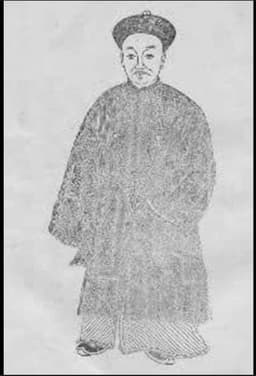
Lin Zexu
Politician · Modern
54.8Total
Basic Information
Born
1960
1785
Died
—
1850
Era
Modern
Modern
Nationality
Malaysia
China
Occupation
Politician
Politician
Civilization
Eastern
Eastern
Score Comparison
Military (10%)
15.7
34.9
Political (20%)
53.8
54.7
Influence (20%)
55.7
62.0
Legacy (20%)
45.0
56.0
Leadership (15%)
66.0
62.2
Strategy (15%)
26.9
42.3
TOTAL
47.4
54.8
Lim Guan Eng — Complete Timeline
2004 AD
Elected Secretary-General of the Democratic Action PartyPolitical Action◆ Major
Lim Guan Eng was elected Secretary-General of the DAP, a major opposition party in Malaysia. This position made him a key leader in the Pakatan Rakyat coalition, leading the party through a period of electoral gains and increased influence.
DAPOppositionMalaysian Politics
Impact: nationalconstructive
2008 AD
Appointed Chief Minister of PenangPolitical Action◆ Major
Following the 2008 general election, Lim Guan Eng became Chief Minister of Penang, leading the first opposition state government in Malaysia. His administration focused on transparency, anti-corruption, and economic development, transforming Penang into a high-tech hub.
PenangChief Minister2008 Election
Impact: regionalconstructive
2018 AD
Appointed Minister of FinancePolitical Action◆ Major
After the historic 2018 general election victory of the Pakatan Harapan coalition, Lim Guan Eng was appointed Minister of Finance. He oversaw fiscal reforms, including the introduction of the Sales and Services Tax and efforts to reduce national debt.
Finance MinisterPakatan HarapanFiscal Policy
Impact: nationalconstructive
Acquitted of Corruption ChargesPolitical Action
Lim Guan Eng was acquitted of corruption charges related to the purchase of a bungalow, which had been a major political issue. The acquittal removed a legal barrier to his political career and was seen as a vindication by his supporters.
CorruptionAcquittalLegal
Impact: nationalconstructive
Lin Zexu — Complete Timeline
1839 AD
Triggered the First Opium WarWar
Lin Zexu's destruction of opium and his letter to Queen Victoria demanding an end to the trade led Britain to declare war in 1839. The First Opium War resulted in China's defeat, the Treaty of Nanjing, and the cession of Hong Kong, marking the start of the 'Century of Humiliation'.
Opium WarBritish EmpireTreaty of Nanjing
Impact: globaltragic
Destroyed Opium at HumenPolitical Action◆ Major
As Imperial Commissioner in Guangzhou, Lin Zexu confiscated and destroyed over 20,000 chests of British opium at Humen (Bogue) in June 1839. This direct action against the illegal drug trade was intended to halt the opium crisis but provoked British military retaliation.
Opium WarAnti-Drug CampaignHumen
Impact: global
1841 AD
Exiled to XinjiangPolitical Action
Following China's defeat in the Opium War, Lin Zexu was scapegoated by the Qing court and exiled to Xinjiang in 1841. During his exile, he studied local conditions and advocated for frontier defense, but his removal from power weakened the anti-opium faction.
ExileQing CourtXinjiang
Impact: nationaltragic
Compiled the Gazetteer of the Four ContinentsCultural
During his exile, Lin Zexu compiled the 'Gazetteer of the Four Continents' (Sizhou Zhi), a collection of translated Western texts on geography, politics, and military technology. This work introduced Chinese scholars to global affairs and influenced later reform movements.
TranslationGeographyReform
Impact: nationalconstructive
This comparison has not been analyzed yet.
One-time AI generation (~1 minute). Scores and timeline are already available below.
Rankings
🥇
Lin ZexuLeader
Mil: 34.9Pol: 54.7Inf: 62.0
54.8
🥈
Lim Guan Eng
Mil: 15.7Pol: 53.8Inf: 55.7
47.4
+7.4 behind
How This Comparison Works
Algorithm
Each figure is scored on 6 dimensions (0—100 scale) based on structured historical data: Military (10%), Political (20%), Influence (20%), Legacy (20%), Leadership (15%), Strategy (15%). The weighted total produces the final ranking.
Data Sources
Scores are computed from structured sub-indicators in the database. Scale factors adjust for era (Ancient ×0.85, Modern ×1.0) and civilization size (Eastern ×1.05, Other ×0.80) to account for differences in population and military scale.
Maximum 3 Figures
Comparisons are limited to 2—3 figures to ensure readability and statistical meaningfulness.
Error Margins
±5 points per dimension — Sub-scores are derived from historical records with inherent uncertainty. Two figures within 5 points on a dimension should be considered roughly equivalent in that area.
Total Score Accuracy
±3 points overall — The weighted combination of 6 dimensions produces a total score with approximately ±3 points of uncertainty. Differences of less than 3 points are not statistically significant— the figures are effectively tied.
Known Limitations
- Historical records are incomplete and uneven across civilizations
- Figures from oral-tradition societies may be underrepresented
- Occupation labels can misclassify multi-role figures
- Scores measure capability and impact, not moral character
- Quantitative scoring is a comparison tool, not absolute truth
Capability Radar
Military (10%) — Battles & Warfare
Battles
13
10
Win Rate
15
5
Expansion
21
5
Political (20%) — Governance & Reform
Reform
60
60
Diplomacy
55
30
Economy
60
35
Influence (20%) — Cultural & Global Reach
Cultural
40
60
Global
35
50
Legacy (20%) — Historical Impact
Historical
40
65
Longevity
30
55
Leadership (15%) — Power & Stability
Tenure
65
40
Stability
50
20
Strategy (15%) — Tactics & Innovation
Strategy
22
20
Tactics
28
15
Reform
30
30
Similar Comparisons
Comments & Discussion
No comments yet. Be the first to share your thoughts!