Loading...
Liu Penzi vs Maeonius
Maeonius leads by 16.0 pts · 2 figures compared
…

Liu Penzi
Emperor · Ancient
40.7Total
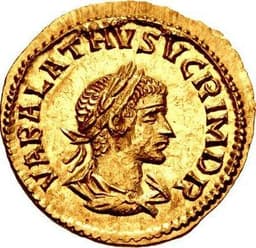
Maeonius
Emperor · Ancient
56.7Total
Basic Information
Born
10
230
Died
27
267
Era
Ancient
Ancient
Nationality
China
Palmyrene Empire
Occupation
Emperor
Emperor
Civilization
Eastern
Middle Eastern
Score Comparison
Military (10%)
47.5
38.2
Political (20%)
39.4
63.6
Influence (20%)
42.4
56.5
Legacy (20%)
32.5
56.0
Leadership (15%)
49.9
63.5
Strategy (15%)
38.6
57.1
TOTAL
40.7
56.7
Liu Penzi — Complete Timeline
25 AD
Installed as Emperor by Red EyebrowsPolitical Action◆ Major
Liu Penzi, a young boy from the Liu imperial clan, was installed as emperor by the Red Eyebrows rebel army. He served as a figurehead ruler while the Red Eyebrows controlled the government. His reign was nominal, with real power held by rebel leaders.
Puppet EmperorRed EyebrowsRebellion
Impact: national
27 AD
Captured by Liu XiuWar
After the Red Eyebrows were defeated by Liu Xiu's forces, Liu Penzi was captured. He was spared by Liu Xiu and given a minor post, living out his life in obscurity. His capture marked the end of the Red Eyebrows' rebellion.
CaptureRed EyebrowsHan Restoration
Impact: national
Maeonius — Complete Timeline
267 AD
Murder of OdaenathusPolitical Action◆ Major
Maeonius assassinated his cousin Odaenathus, the King of Palmyra and ruler of the Palmyrene Empire, during a celebration. The motive was likely personal ambition or jealousy. Maeonius then proclaimed himself emperor but was killed by soldiers shortly after, ending his brief reign.
AssassinationPalmyrene EmpireUsurpation
Impact: regionaldestructive
Expert Analysis
Origins
**Liu Penzi** (c. 10 AD – after 27 AD) was a young boy from the Han imperial clan, possibly a descendant of Liu Fa, Prince Ding of Changsha. Little is known of his early life; he was likely a peasant or minor noble. The Red Eyebrows, a rebel army opposing Wang Mang’s Xin dynasty, sought a figurehead from the Liu family to legitimize their cause. They chose Liu Penzi, then around 15 years old, due to his bloodline.
**Maeonius** (died 267 AD) was a cousin of Odaenathus, the King of Palmyra. His origins are obscure, but he belonged to the aristocratic elite of Palmyra. He served as a military commander under Odaenathus but grew ambitious, resenting his cousin’s authority. His early life was shaped by the Palmyrene expansion under Odaenathus, who had carved out a de facto independent empire from Roman territories in the East.
Rise to Power
**Liu Penzi** was installed as emperor by the Red Eyebrows in 25 AD, after they captured the capital Chang’an. He was a puppet ruler, with real power held by rebel leaders. His reign lasted only a few months as the Red Eyebrows faced famine and military pressure from Liu Xiu, the future Emperor Guangwu of the Eastern Han. Liu Penzi’s rise was entirely passive; he was chosen for his name, not his abilities.
**Maeonius** rose to power through assassination. In 267 AD, during a celebration, he murdered Odaenathus and his eldest son Herodianus. The motive was personal jealousy, as Odaenathus had reportedly rebuked Maeonius for hunting without permission. After the murder, Maeonius briefly declared himself emperor (Augustus) but failed to secure support. His reign lasted only a few weeks before he was killed by loyalist troops or by Zenobia, Odaenathus’s widow.
Leadership & Governance
**Liu Penzi** had no real leadership role. He was a figurehead, and his governance score of 39.4 reflects his lack of agency. The Red Eyebrows used him to rally support, but they themselves were poorly organized, looting and pillaging. Liu Penzi reportedly tried to abdicate, sensing the futility of his position. He had no reforms or policies.
**Maeonius** scored 63.5 in leadership, but his tenure was too short to implement any governance. He likely intended to consolidate power, but his murder of a popular ruler alienated the army and nobility. His political score of 63.6 suggests potential, but his actions destabilized Palmyra, leading to Zenobia’s rise. His leadership was defined by a single, drastic act.
Triumph & Tragedy
**Liu Penzi’s** greatest triumph was surviving. After the Red Eyebrows’ defeat by Liu Xiu in 27 AD, Liu Penzi was captured. Liu Xiu, showing mercy, spared his life and appointed him as a minor official, allowing him to live out his days. This was a rare fate for a deposed claimant. His tragedy was being a pawn in a doomed rebellion, with no real power or legacy.
**Maeonius’s** triumph was successfully assassinating a powerful king, a feat requiring planning and audacity. His tragedy was his utter failure to capitalize on it. He was killed almost immediately, and his name was erased from official records by Zenobia. His legacy is that of a usurper who weakened Palmyra at a critical moment.
Character & Destiny
**Liu Penzi** was passive and resigned. He accepted his role as puppet and later his demotion. His character of obedience and humility likely saved his life. He scored 49.9 in leadership, but this reflects his potential, not his actions. His destiny was to be a footnote in the Han restoration.
**Maeonius** was ambitious and impulsive. His decision to kill Odaenathus without a power base was reckless. He scored 57.1 in strategy, but his tactical success in assassination was undone by strategic failure. His character sealed his fate: a brief, violent rise and fall.
Legacy
**Liu Penzi** left no lasting impact. His reign was a minor episode in the chaos between the Xin and Eastern Han dynasties. He scores 32.5 in legacy, reflecting his obscurity. He is remembered only as a child emperor used by rebels.
**Maeonius** had a more significant, albeit negative, legacy. His assassination ended Odaenathus’s line and allowed Zenobia to seize power, leading to the Palmyrene Empire’s war with Rome. He scores 56.0 in legacy, as his action changed history, even if unintentionally. He is cited as an example of treacherous ambition.
Conclusion
Maeonius had greater impact than Liu Penzi. Despite his brief reign, his assassination triggered a chain of events that reshaped the Roman East. Liu Penzi was a passive figure whose existence mattered only as a symbol. Maeonius, with a total score of 56.7 vs. Liu Penzi’s 40.7, actively altered history, even if his personal failure was total. The usurper’s dagger proved more consequential than the child emperor’s crown.
Rankings
🥇
MaeoniusLeader
Mil: 38.2Pol: 63.6Inf: 56.5
56.7
🥈
Liu Penzi
Mil: 47.5Pol: 39.4Inf: 42.4
40.7
+16.0 behind
How This Comparison Works
Algorithm
Each figure is scored on 6 dimensions (0—100 scale) based on structured historical data: Military (10%), Political (20%), Influence (20%), Legacy (20%), Leadership (15%), Strategy (15%). The weighted total produces the final ranking.
Data Sources
Scores are computed from structured sub-indicators in the database. Scale factors adjust for era (Ancient ×0.85, Modern ×1.0) and civilization size (Eastern ×1.05, Other ×0.80) to account for differences in population and military scale.
Maximum 3 Figures
Comparisons are limited to 2—3 figures to ensure readability and statistical meaningfulness.
Error Margins
±5 points per dimension — Sub-scores are derived from historical records with inherent uncertainty. Two figures within 5 points on a dimension should be considered roughly equivalent in that area.
Total Score Accuracy
±3 points overall — The weighted combination of 6 dimensions produces a total score with approximately ±3 points of uncertainty. Differences of less than 3 points are not statistically significant— the figures are effectively tied.
Known Limitations
- Historical records are incomplete and uneven across civilizations
- Figures from oral-tradition societies may be underrepresented
- Occupation labels can misclassify multi-role figures
- Scores measure capability and impact, not moral character
- Quantitative scoring is a comparison tool, not absolute truth
Capability Radar
Military (10%) — Battles & Warfare
Battles
5
37
Win Rate
5
43
Expansion
0
44
Political (20%) — Governance & Reform
Reform
0
45
Diplomacy
5
47
Economy
0
54
Influence (20%) — Cultural & Global Reach
Cultural
5
70
Global
5
76
Legacy (20%) — Historical Impact
Historical
10
74
Longevity
5
73
Leadership (15%) — Power & Stability
Tenure
10
43
Stability
5
53
Strategy (15%) — Tactics & Innovation
Strategy
5
45
Tactics
5
49
Reform
0
52
Similar Comparisons
Comments & Discussion
No comments yet. Be the first to share your thoughts!