Loading...
Constans II vs Maeonius
Maeonius leads by 1.5 pts · 2 figures compared
…
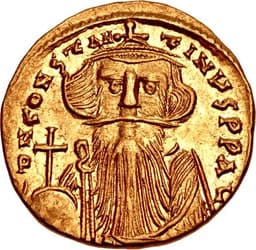
Constans II
Emperor · Ancient
55.2Total
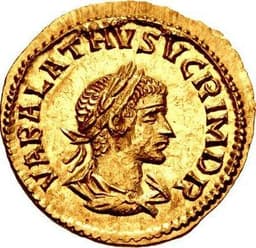
Maeonius
Emperor · Ancient
56.7Total
Basic Information
Born
-630
230
Died
—
267
Era
Ancient
Ancient
Nationality
Byzantine Empire
Palmyrene Empire
Occupation
Emperor
Emperor
Civilization
Western
Middle Eastern
Score Comparison
Military (10%)
55.0
38.2
Political (20%)
68.0
63.6
Influence (20%)
51.0
56.5
Legacy (20%)
44.2
56.0
Leadership (15%)
65.0
63.5
Strategy (15%)
60.0
57.1
TOTAL
55.2
56.7
Constans II — Complete Timeline
648 AD
Issued the Typos of ConstansPolitical Action
Constans II issued the Typos, an edict that forbade discussion of the Monothelite controversy. The edict aimed to end religious strife but was condemned by the Papacy and failed to restore unity.
Religious PolicyChurch ControversyByzantine Empire
Impact: regional
663 AD
Visited RomePolitical Action◆ Major
Constans II became the last Byzantine emperor to visit Rome. He was received by Pope Vitalian and spent twelve days in the city, stripping it of many bronze ornaments and statues to be sent to Constantinople.
Imperial VisitRomeByzantine Empire
Impact: regional
668 AD
Murdered in SyracusePolitical Action◆ Major
While residing in Syracuse, Sicily, Constans II was assassinated in his bath by a chamberlain. His death was part of a conspiracy, and his son Constantine IV succeeded him after suppressing the usurper Mezezius.
AssassinationByzantine EmpireSuccession Crisis
Impact: nationaltragic
674 AD
Defended Constantinople against the Arab siegeWar◆ Major
Constans II's son, Constantine IV, was actually the emperor during the first Arab siege of Constantinople. Constans II himself faced Arab raids but did not command the defense of the capital during the major siege.
Arab-Byzantine WarsSiegeByzantine Empire
Impact: regional
Maeonius — Complete Timeline
267 AD
Murder of OdaenathusPolitical Action◆ Major
Maeonius assassinated his cousin Odaenathus, the King of Palmyra and ruler of the Palmyrene Empire, during a celebration. The motive was likely personal ambition or jealousy. Maeonius then proclaimed himself emperor but was killed by soldiers shortly after, ending his brief reign.
AssassinationPalmyrene EmpireUsurpation
Impact: regionaldestructive
Expert Analysis
Origins
Constans II (born 630 CE) was the son of Emperor Constantine III and grandson of Heraclius. He ascended the Byzantine throne at age 11 after his father's death in 641, amid a dynastic struggle that saw his uncle Heraklonas deposed. Raised in Constantinople, he was educated in imperial administration and military affairs, but his youth left him reliant on regents and advisors.
Maeonius (dates unknown) was a Palmyrene nobleman, cousin of Odaenathus, the King of Palmyra and ruler of the Palmyrene Empire. Little is known of his early life, but he likely held a position of trust within Odaenathus's court. His background was provincial, not imperial, and his rise was purely through assassination.
Rise to Power
Constans II became emperor in 641 after a coup that removed Heraklonas. His reign was marked by the ongoing Arab-Byzantine wars, with Arab forces raiding Anatolia and Armenia. He consolidated power by exiling his mother and other rivals. In 648, he issued the Typos, an edict forbidding discussion of the Monothelite controversy, aiming to end religious strife but alienating both sides.
Maeonius rose to power solely through the murder of Odaenathus in 267 CE during a celebration. The motive was likely personal ambition or jealousy. After the assassination, Maeonius proclaimed himself emperor, but his rule lasted only a few months before he was killed by Odaenathus's loyalists or by his own troops.
Leadership & Governance
Constans II faced multiple crises: Arab raids, religious division, and loss of territory. He attempted to stabilize the empire through the Typos, which failed to unify the church. He also moved his court to Syracuse in 663, a controversial decision that reduced Constantinople's influence. His governance was reactive, not proactive, and he lost control of key provinces like Egypt and Syria.
Maeonius, as a usurper, had no time to implement policies. His leadership consisted of the assassination itself and a brief, contested rule. He scored 63.6 in political skill, indicating some cunning, but his governance score (not directly given) would be negligible due to his short tenure.
Triumph & Tragedy
Constans II's greatest success was defending the Byzantine heartland against Arab incursions, though the major Arab siege of Constantinople occurred under his son. His visit to Rome in 663 was a symbolic triumph, the last by a Byzantine emperor. However, his stripping of Rome's monuments for transport to Constantinople angered the Pope and locals. His greatest failure was the Typos, which deepened religious conflict and led to the condemnation of Pope Martin I and Maximus the Confessor. He was murdered in his bath in Syracuse in 668, a tragic end for a ruler who had lost touch with his capital.
Maeonius's triumph was the successful assassination of a powerful ruler, but his tragedy was immediate: he failed to secure power and was killed within months. His score of 56.0 in legacy reflects not his own achievements but the impact of his act on Palmyrene history.
Character & Destiny
Constans II was pragmatic but indecisive, often alienating allies. His decision to move to Syracuse showed poor judgment, as it left Constantinople vulnerable. He was willing to compromise on religion but lacked the political skill to enforce compromise. His destiny was shaped by the empire's decline, but his personal actions accelerated his downfall.
Maeonius was ambitious and ruthless, but his character suggests short-sightedness. He killed a successful ruler without securing support, leading to his own death. His destiny was defined by a single act of violence.
Legacy
Constans II's legacy is mixed: he is remembered as the last emperor to visit Rome, but his Typos failed, and his reign saw continued territorial loss. His military score of 55.0 reflects average performance. His influence (51.0) is modest; his reign is a footnote in Byzantine history.
Maeonius's legacy is even smaller. He is known only for the murder of Odaenathus, which temporarily destabilized Palmyra but did not change its trajectory. His legacy score of 56.0 is slightly higher due to the dramatic nature of his act.
Conclusion
Despite scoring slightly lower overall (55.2 vs 56.7), Constans II had greater impact on history. He ruled for 27 years, faced existential threats, and made decisions affecting millions. Maeonius's rule was a flash in the pan, with no lasting influence on governance or culture. Constans II's visit to Rome and his religious policies outshine Maeonius's single assassination. Therefore, Constans II, despite his flaws, was the more significant historical figure.
Rankings
🥇
MaeoniusLeader
Mil: 38.2Pol: 63.6Inf: 56.5
56.7
🥈
Constans II
Mil: 55.0Pol: 68.0Inf: 51.0
55.2
+1.5 behind
How This Comparison Works
Algorithm
Each figure is scored on 6 dimensions (0—100 scale) based on structured historical data: Military (10%), Political (20%), Influence (20%), Legacy (20%), Leadership (15%), Strategy (15%). The weighted total produces the final ranking.
Data Sources
Scores are computed from structured sub-indicators in the database. Scale factors adjust for era (Ancient ×0.85, Modern ×1.0) and civilization size (Eastern ×1.05, Other ×0.80) to account for differences in population and military scale.
Maximum 3 Figures
Comparisons are limited to 2—3 figures to ensure readability and statistical meaningfulness.
Error Margins
±5 points per dimension — Sub-scores are derived from historical records with inherent uncertainty. Two figures within 5 points on a dimension should be considered roughly equivalent in that area.
Total Score Accuracy
±3 points overall — The weighted combination of 6 dimensions produces a total score with approximately ±3 points of uncertainty. Differences of less than 3 points are not statistically significant— the figures are effectively tied.
Known Limitations
- Historical records are incomplete and uneven across civilizations
- Figures from oral-tradition societies may be underrepresented
- Occupation labels can misclassify multi-role figures
- Scores measure capability and impact, not moral character
- Quantitative scoring is a comparison tool, not absolute truth
Capability Radar
Military (10%) — Battles & Warfare
Battles
55
37
Win Rate
50
43
Expansion
30
44
Political (20%) — Governance & Reform
Reform
55
45
Diplomacy
50
47
Economy
45
54
Influence (20%) — Cultural & Global Reach
Cultural
40
70
Global
25
76
Legacy (20%) — Historical Impact
Historical
45
74
Longevity
30
73
Leadership (15%) — Power & Stability
Tenure
65
43
Stability
35
53
Strategy (15%) — Tactics & Innovation
Strategy
50
45
Tactics
45
49
Reform
40
52
Similar Comparisons
Comments & Discussion
No comments yet. Be the first to share your thoughts!