Loading...
Lord Xinling of Wei vs Yue Yi
Lord Xinling of Wei leads by 0.4 pts · 2 figures compared
…

Lord Xinling of Wei
General · Ancient
50.2Total
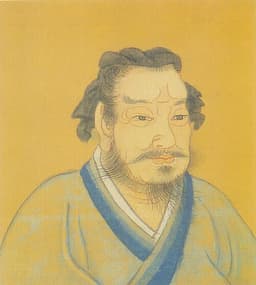
Yue Yi
General · Ancient
49.8Total
Basic Information
Born
-320
-310
Died
-243
-259
Era
Ancient
Ancient
Nationality
Wei
China
Occupation
General
General
Civilization
Eastern
Eastern
Score Comparison
Military (10%)
65.0
75.0
Political (20%)
36.5
26.4
Influence (20%)
56.4
53.3
Legacy (20%)
48.3
50.0
Leadership (15%)
43.8
36.9
Strategy (15%)
55.0
70.0
TOTAL
50.2
49.8
Lord Xinling of Wei — Complete Timeline
257 BC
Theft of the Wei seal to save ZhaoPolitical Action◆ Major
Lord Xinling (Wuji) stole the commander's seal from King Anxi of Wei to mobilize Wei troops to relieve the siege of Handan. This unauthorized action saved Zhao from Qin conquest but caused a rift with the Wei king, forcing Lord Xinling into exile.
WeiSeal TheftHandan
Impact: regional
247 BC
Defeat of Qin at the Battle of HewaiWar◆ Major
Lord Xinling, commanding a coalition of five states (Wei, Zhao, Han, Chu, Yan), defeated Qin forces at the Battle of Hewai. This victory pushed Qin back and temporarily restored the balance of power in the Warring States.
WeiCoalitionQin Defeat
Impact: regional
Yue Yi — Complete Timeline
284 BC
Alliance of Five StatesWar◆ Major
Yue Yi formed a coalition of five states
CoalitionDiplomacyWarring States
Impact: regional
Conquest of Qi CitiesWar◆ Major
Yue Yi led the coalition forces to a series of victories, capturing over 70 cities of Qi, including the capital Linzi. Qi was reduced to only two remaining cities, Ju and Jimo, and was on the verge of total annihilation.
Qi ConquestMilitary CampaignYan Victory
Impact: regional
Appointment as General of YanPolitical Action◆ Major
King Zhao of Yan appointed Yue Yi as general to lead a campaign against the state of Qi. Yue Yi had previously served in Wei and Zhao, but his talents were recognized by King Zhao, who trusted him with the command of the Yan army.
Yan StateAppointmentQi Campaign
Impact: regional
279 BC
Exile to ZhaoPolitical Action◆ Major
After King Zhao of Yan died, his successor King Hui distrusted Yue Yi due to slander from Qi spies. Yue Yi fled to the state of Zhao to avoid execution. His departure allowed Qi to recover under Tian Dan and recapture its lost cities.
ExileYan StateQi Recovery
Impact: regionaltragic
Expert Analysis
Origins
Lord Xinling, born Wuji, was a prince of the state of Wei, son of King Zhao of Wei and younger brother of King Anxi. His birth year is uncertain but likely around 300 BCE. As a member of the royal family, he was educated in statecraft and military strategy, and became known for his humility and willingness to consort with men of talent from all social classes. In contrast, Yue Yi was a native of the state of Zhao, born around 310 BCE. He initially served in Zhao, then moved to Wei, and finally found his opportunity in Yan under King Zhao. His family background was modest; he was not of royal blood. His early career was marked by seeking a ruler who would appreciate his strategic abilities.
Rise to Power
Lord Xinling's rise came through his reputation as a patron of talented retainers. He gathered over 3,000 disciples, including the famous hermit Hou Ying. His pivotal moment came in 257 BCE when the state of Zhao was besieged by Qin at Handan. The king of Wei ordered no aid, but Lord Xinling, following Hou Ying's advice, stole the commander's seal from the king's bedchamber to mobilize Wei troops. This audacious act saved Zhao and made him a hero. Yue Yi's rise began when King Zhao of Yan, seeking revenge against Qi, appointed him as general in 284 BCE. Yue Yi had previously served in Wei and Zhao but was unrecognized. King Zhao trusted him fully, granting him command of a coalition of five states: Yan, Zhao, Chu, Wei, and Han.
Leadership & Governance
Lord Xinling's leadership was charismatic and personal. He led by example, sharing hardships with his soldiers and treating subordinates with respect. His governance style was hands-on, but his unauthorized actions strained his relationship with his brother the king. After saving Zhao, he remained in Zhao for ten years, only returning to Wei when threatened by Qin. Yue Yi's leadership was strategic and disciplined. He forged a coalition through diplomacy and maintained unity among disparate states. His governance of conquered Qi cities was initially harsh, but he later implemented policies to win over the population. However, his reliance on King Zhao's support proved fatal when the king died.
Triumph & Tragedy
Lord Xinling's greatest triumph was the theft of the seal and the relief of Handan, which scored 65.0 in military. He later defeated Qin at the Battle of Hewai in 247 BCE, leading a five-state coalition that pushed Qin back. However, his tragedy was political: after his brother's death, the new king of Wei suspected him, and he was removed from command. He died in disgrace, possibly by poison, with a political score of 36.5. Yue Yi's triumph was the near-destruction of Qi. In 284 BCE, he captured over 70 cities, including Linzi, reducing Qi to two strongholds. His strategy score of 70.0 reflects this. But his tragedy came when King Zhao died; his successor, King Hui, fell for Qi's slander and recalled Yue Yi. Fearing execution, he fled to Zhao, leaving his campaign unfinished. Qi then retook its cities.
Character & Destiny
Lord Xinling was bold, compassionate, and loyal, but his impulsiveness and disregard for authority led to his downfall. He valued personal honor over political prudence. Historical assessments note his selflessness but criticize his naivete. Yue Yi was meticulous, diplomatic, and patient, but his fate was tied to a single patron. When that patron died, he had no political base to fall back on. His character was cautious; he chose exile over confrontation. Both men were undone by political changes beyond their control, but Yue Yi's downfall was more a result of circumstance, while Lord Xinling's was partly self-inflicted.
Legacy
Lord Xinling is remembered as the greatest of the Four Lords of the Warring States, embodying the ideal of the righteous nobleman. His story is celebrated in Chinese literature, such as Sima Qian's Records of the Grand Historian. His legacy score is 48.3. Yue Yi's legacy is more ambiguous: he is remembered as a brilliant general who came close to destroying Qi, but his failure to finish the job tarnishes his reputation. His influence score is 53.3, partly due to his diplomatic achievements. However, neither figure had lasting institutional impact; their achievements were personal and ephemeral.
Conclusion
Who had greater impact? Based on scores, Lord Xinling edges ahead with a total of 50.2 versus Yue Yi's 49.8. However, the margin is tiny. Lord Xinling's actions directly saved a state and temporarily halted Qin expansion, while Yue Yi's campaign, though spectacular, ultimately failed to permanently subdue Qi. Lord Xinling's story has had greater cultural resonance, inspiring tales of loyalty and sacrifice. Therefore, Lord Xinling of Wei had a slightly greater impact, but both were ultimately overshadowed by the rise of Qin.
Rankings
🥇
Lord Xinling of WeiLeader
Mil: 65.0Pol: 36.5Inf: 56.4
50.2
🥈
Yue Yi
Mil: 75.0Pol: 26.4Inf: 53.3
49.8
+0.4 behind
How This Comparison Works
Algorithm
Each figure is scored on 6 dimensions (0—100 scale) based on structured historical data: Military (10%), Political (20%), Influence (20%), Legacy (20%), Leadership (15%), Strategy (15%). The weighted total produces the final ranking.
Data Sources
Scores are computed from structured sub-indicators in the database. Scale factors adjust for era (Ancient ×0.85, Modern ×1.0) and civilization size (Eastern ×1.05, Other ×0.80) to account for differences in population and military scale.
Maximum 3 Figures
Comparisons are limited to 2—3 figures to ensure readability and statistical meaningfulness.
Error Margins
±5 points per dimension — Sub-scores are derived from historical records with inherent uncertainty. Two figures within 5 points on a dimension should be considered roughly equivalent in that area.
Total Score Accuracy
±3 points overall — The weighted combination of 6 dimensions produces a total score with approximately ±3 points of uncertainty. Differences of less than 3 points are not statistically significant— the figures are effectively tied.
Known Limitations
- Historical records are incomplete and uneven across civilizations
- Figures from oral-tradition societies may be underrepresented
- Occupation labels can misclassify multi-role figures
- Scores measure capability and impact, not moral character
- Quantitative scoring is a comparison tool, not absolute truth
Capability Radar
Military (10%) — Battles & Warfare
Battles
55
75
Win Rate
60
80
Expansion
30
70
Political (20%) — Governance & Reform
Reform
30
20
Diplomacy
75
50
Economy
35
25
Influence (20%) — Cultural & Global Reach
Cultural
50
40
Global
40
30
Legacy (20%) — Historical Impact
Historical
55
60
Longevity
45
50
Leadership (15%) — Power & Stability
Tenure
40
40
Stability
40
30
Strategy (15%) — Tactics & Innovation
Strategy
65
90
Tactics
70
85
Reform
20
30
Similar Comparisons
Comments & Discussion
No comments yet. Be the first to share your thoughts!