Loading...
Wang Ping vs Yue Yi
Yue Yi leads by 6.0 pts · 2 figures compared
…

Wang Ping
General · Ancient
43.8Total
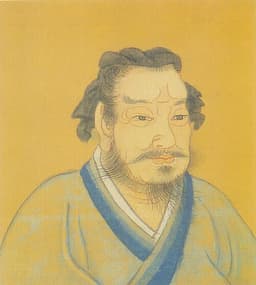
Yue Yi
General · Ancient
49.8Total
Basic Information
Born
196
-310
Died
248
-259
Era
Ancient
Ancient
Nationality
China
China
Occupation
General
General
Civilization
Eastern
Eastern
Score Comparison
Military (10%)
52.5
75.0
Political (20%)
32.1
26.4
Influence (20%)
46.3
53.3
Legacy (20%)
42.5
50.0
Leadership (15%)
43.8
36.9
Strategy (15%)
50.0
70.0
TOTAL
43.8
49.8
Wang Ping — Complete Timeline
218 AD
Defense of HanzhongWar◆ Major
Wang Ping served as a subordinate to Wei Yan during the defense of Hanzhong against Cao Cao's invasion. His tactical advice helped secure the region for Shu, establishing him as a capable commander.
Shu-HanBattleHanzhong Campaign
Impact: regional
234 AD
Suppression of Wei Yan's RebellionPolitical Action◆ Major
After Zhuge Liang's death, Wei Yan attempted to seize command. Wang Ping, acting on orders from Yang Yi, confronted Wei Yan and defeated his forces, preventing a coup within Shu.
Shu-HanInternal ConflictSuccession Crisis
Impact: national
Appointment as Inspector of HanzhongPolitical Action
Following the suppression of Wei Yan's rebellion, Wang Ping was appointed Inspector of Hanzhong, responsible for the defense of Shu's northern frontier. He held this post until his death.
Shu-HanAppointmentFrontier Defense
Impact: regionalconstructive
Yue Yi — Complete Timeline
284 BC
Alliance of Five StatesWar◆ Major
Yue Yi formed a coalition of five states
CoalitionDiplomacyWarring States
Impact: regional
Conquest of Qi CitiesWar◆ Major
Yue Yi led the coalition forces to a series of victories, capturing over 70 cities of Qi, including the capital Linzi. Qi was reduced to only two remaining cities, Ju and Jimo, and was on the verge of total annihilation.
Qi ConquestMilitary CampaignYan Victory
Impact: regional
Appointment as General of YanPolitical Action◆ Major
King Zhao of Yan appointed Yue Yi as general to lead a campaign against the state of Qi. Yue Yi had previously served in Wei and Zhao, but his talents were recognized by King Zhao, who trusted him with the command of the Yan army.
Yan StateAppointmentQi Campaign
Impact: regional
279 BC
Exile to ZhaoPolitical Action◆ Major
After King Zhao of Yan died, his successor King Hui distrusted Yue Yi due to slander from Qi spies. Yue Yi fled to the state of Zhao to avoid execution. His departure allowed Qi to recover under Tian Dan and recapture its lost cities.
ExileYan StateQi Recovery
Impact: regionaltragic
Expert Analysis
Origins
Wang Ping (born circa 190 AD) was from Dangqu in Baxi commandery (modern Sichuan). Orphaned early, he was raised by his maternal uncle and joined the Cao Wei army as a junior officer. During a rebellion, he defected to Shu Han and became a subordinate of the general Wang Lian. His background was humble, and he lacked formal education but gained military experience through service.
Yue Yi (born circa 310 BC) was a native of Lingshou in Zhongshan (modern Hebei). He originally served the state of Zhao, then Wei, before finding his true patron in King Zhao of Yan. His father Yue Yang had been a prominent general under the Marquis of Zhongshan. Yue Yi was known for his strategic mind and integrity, which earned him the trust of King Zhao.
Rise to Power
Wang Ping rose slowly. His first major opportunity came during the Battle of Jieting (228 AD) when he served as a subordinate to Ma Su. Wang Ping repeatedly warned Ma Su against deploying troops on a hill without water supply, but his advice was ignored. After Ma Su's disastrous defeat, Wang Ping was one of the few Shu officers to organize an orderly retreat, saving his unit. This caught Zhuge Liang's attention, and Wang Ping was promoted to command a separate army.
Yue Yi's rise was meteoric. King Zhao of Yan, seeking revenge against Qi for past invasions, conducted a talent search and appointed Yue Yi as his chief general around 284 BC. Yue Yi quickly forged a coalition of five states—Yan, Zhao, Chu, Wei, and Han—by leveraging diplomatic ties and mutual interests. This alliance isolated Qi and set the stage for a massive invasion.
Leadership & Governance
Wang Ping was a cautious, disciplined commander. He focused on defensive tactics and troop morale. When Wei Yan attempted a coup after Zhuge Liang's death (234 AD), Wang Ping confronted him with a calm speech that caused Wei Yan's troops to desert. Wang Ping's governance of Hanzhong emphasized fortifications and supply lines, but he initiated no major reforms or offensives. His leadership score of 43.8 reflects his competence without brilliance.
Yue Yi was a strategic visionary. He not only led armies but also managed the coalition's politics. After capturing over 70 Qi cities, he implemented a policy of leniency, reducing taxes and winning over local populations. However, his governance style was top-down and relied heavily on King Zhao's support. When King Zhao died, Yue Yi's lack of political maneuvering (political score 26.4) left him vulnerable to slander.
Triumph & Tragedy
Wang Ping's greatest triumph was the defense of Hanzhong against Cao Cao's invasion (219 AD). As a subordinate to Wei Yan, his tactical advice helped secure the region. His suppression of Wei Yan's rebellion was decisive, preventing civil war in Shu. His tragedy was limited ambition; he never led a major offensive. His military score of 52.5 reflects a solid but unspectacular career.
Yue Yi's triumph was spectacular: the near-annihilation of Qi, one of the strongest states. His capture of 70 cities in a single campaign is a rare feat. However, his tragedy was equally great. After King Zhao's death, Qi's remaining cities (Ju and Jimo) held out, and Yue Yi was replaced by the inept Qi Jie. He fled to Zhao, where he lived in exile, never again commanding an army. His military score of 75.0 reflects his peak performance, but his legacy score (50.0) is tempered by his incomplete victory.
Character & Destiny
Wang Ping was loyal, steady, and unassuming. He rarely sought personal glory and accepted orders without complaint. His character made him a reliable subordinate but not a leader of grand campaigns. His destiny was to be a pillar of Shu's defense, but never a conqueror.
Yue Yi was ambitious, charismatic, and strategic. He dreamed of great conquests and achieved them, but his success depended on a supportive monarch. When that support vanished, his character—pride and inability to adapt—led to his downfall. Historians like Sima Qian praised his military genius but noted his political naivety.
Legacy
Wang Ping is remembered as a capable defender of Shu's northern frontier. His methods influenced later Shu commanders, but his name is obscure outside specialist circles. His influence score of 46.3 reflects his limited reach.
Yue Yi's legacy is far greater. His campaign against Qi is studied as a classic example of coalition warfare and strategic conquest. The phrase "Yue Yi's conquest of Qi" became a byword for overwhelming success. His strategic score of 70.0 underscores his impact on military thought. However, his incomplete victory also serves as a cautionary tale about the limits of military power without political acumen.
Conclusion
Yue Yi had greater impact. His coalition campaign and capture of 70 cities represent a higher level of strategic achievement than Wang Ping's defensive steadfastness. Yue Yi's total score of 49.8 versus Wang Ping's 43.8 reflects this, but the gap understates Yue Yi's superiority in military and strategic domains (75.0 and 70.0 vs 52.5 and 50.0). While Wang Ping was a reliable officer, Yue Yi was a transformative general who nearly destroyed a major state. History rightly ranks Yue Yi higher.
Rankings
🥇
Yue YiLeader
Mil: 75.0Pol: 26.4Inf: 53.3
49.8
🥈
Wang Ping
Mil: 52.5Pol: 32.1Inf: 46.3
43.8
+6.0 behind
How This Comparison Works
Algorithm
Each figure is scored on 6 dimensions (0—100 scale) based on structured historical data: Military (10%), Political (20%), Influence (20%), Legacy (20%), Leadership (15%), Strategy (15%). The weighted total produces the final ranking.
Data Sources
Scores are computed from structured sub-indicators in the database. Scale factors adjust for era (Ancient ×0.85, Modern ×1.0) and civilization size (Eastern ×1.05, Other ×0.80) to account for differences in population and military scale.
Maximum 3 Figures
Comparisons are limited to 2—3 figures to ensure readability and statistical meaningfulness.
Error Margins
±5 points per dimension — Sub-scores are derived from historical records with inherent uncertainty. Two figures within 5 points on a dimension should be considered roughly equivalent in that area.
Total Score Accuracy
±3 points overall — The weighted combination of 6 dimensions produces a total score with approximately ±3 points of uncertainty. Differences of less than 3 points are not statistically significant— the figures are effectively tied.
Known Limitations
- Historical records are incomplete and uneven across civilizations
- Figures from oral-tradition societies may be underrepresented
- Occupation labels can misclassify multi-role figures
- Scores measure capability and impact, not moral character
- Quantitative scoring is a comparison tool, not absolute truth
Capability Radar
Military (10%) — Battles & Warfare
Battles
45
75
Win Rate
50
80
Expansion
30
70
Political (20%) — Governance & Reform
Reform
15
20
Diplomacy
35
50
Economy
25
25
Influence (20%) — Cultural & Global Reach
Cultural
25
40
Global
10
30
Legacy (20%) — Historical Impact
Historical
35
60
Longevity
30
50
Leadership (15%) — Power & Stability
Tenure
40
40
Stability
40
30
Strategy (15%) — Tactics & Innovation
Strategy
60
90
Tactics
55
85
Reform
20
30
Similar Comparisons
Comments & Discussion
No comments yet. Be the first to share your thoughts!