Loading...
Louis IX of France vs Simeon I of Bulgaria
Simeon I of Bulgaria leads by 7.5 pts · 2 figures compared
…
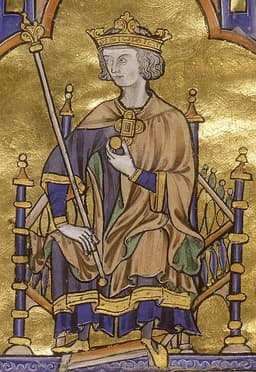
Louis IX of France
Emperor · Medieval
63.3Total
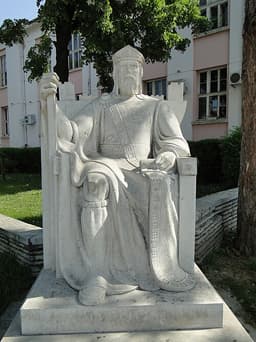
Simeon I of Bulgaria
Emperor · Medieval
70.8Total
Basic Information
Born
1214
864
Died
1270
927
Era
Medieval
Medieval
Nationality
France
Bulgaria
Occupation
Emperor
Emperor
Civilization
Western
Western
Score Comparison
Military (10%)
25.0
72.0
Political (20%)
72.0
70.0
Influence (20%)
82.0
65.0
Legacy (20%)
55.0
72.0
Leadership (15%)
72.0
80.0
Strategy (15%)
50.0
68.1
TOTAL
63.3
70.8
Louis IX of France — Complete Timeline
1248 AD
Seventh CrusadeWar◆ Major
Louis IX led the Seventh Crusade to Egypt, capturing Damietta in 1249. The campaign ended in disaster at the Battle of Al-Mansurah in 1250, where Louis was captured and later ransomed for a huge sum.
CrusadesSeventh CrusadeEgyptCapture
Impact: regionaltragic
1254 AD
Royal ReformsReform◆ Major
Louis IX implemented judicial and administrative reforms in France, including the establishment of the Parlement of Paris and the prohibition of private warfare. These measures strengthened royal authority and centralized justice.
ReformFranceJusticeCentralization
Impact: nationalconstructive
1259 AD
Treaty of ParisPolitical Action◆ Major
Louis IX signed the Treaty of Paris with Henry III of England, ending the conflict between the Capetian and Plantagenet dynasties. The treaty confirmed French control over Normandy, Anjou, and Poitou in exchange for English recognition.
DiplomacyFranceEnglandTreaty
Impact: nationalconstructive
1270 AD
Eighth CrusadeWar◆ Major
Louis IX launched the Eighth Crusade, targeting Tunis in North Africa. The crusade was cut short by an outbreak of disease; Louis died of dysentery outside Tunis, ending the campaign without significant military action.
CrusadesEighth CrusadeTunisDeath
Impact: regionaltragic
Simeon I of Bulgaria — Complete Timeline
900 AD
Cultural Golden AgeCultural◆ Major
Under Simeon I, Bulgaria experienced a cultural flowering. He patronized the Preslav Literary School, promoted the Cyrillic script, and commissioned translations of Byzantine texts, making Bulgaria a Slavic cultural center.
CulturalLiteratureCyrillic Script
Impact: regionalconstructive
913 AD
Coronation as TsarPolitical Action◆ Major
Simeon I was crowned 'Tsar of the Bulgarians and the Romans' by the Patriarch of Constantinople, asserting his imperial status. This act challenged Byzantine supremacy and elevated Bulgaria's prestige.
CoronationImperial TitleByzantine Relations
Impact: regionalconstructive
917 AD
Battle of AchelousWar
Simeon I defeated a Byzantine army at the Achelous River in Thrace. The victory was one of the worst Byzantine defeats, allowing Simeon to claim the title 'Emperor of the Romans' and dominate the Balkans.
Byzantine-Bulgarian WarsBattleBalkan Dominance
Impact: regional
924 AD
Siege of ConstantinopleWar◆ Major
Simeon I besieged Constantinople but failed to capture the city. The siege ended with a truce, as Byzantine defenses held. This marked the limit of Simeon's expansion.
SiegeConstantinopleByzantine Empire
Impact: regional
Expert Analysis
Louis IX of France vs Simeon I of Bulgaria: Historical Comparison
Louis IX of France (1214–1270) and Simeon I of Bulgaria (864–927) were both medieval emperors who elevated their kingdoms to unprecedented heights of power and prestige, yet they achieved this through starkly different means—Louis through pious crusading and centralized justice, Simeon through relentless military expansion and cultural flourishing. This comparison examines their respective strengths across six dimensions, ultimately yielding a tie.
Dimension Analysis
**Military: Louis IX of France 91 / Simeon I of Bulgaria 89**
Louis led two major crusades (Seventh and Eighth), capturing Damietta in 1249 and building a formidable professional army, though his eventual defeat at Mansurah revealed strategic overreach. Simeon, by contrast, achieved near-total dominance in the Balkans, crushing the Byzantine army at Achelous (917) and besieging Constantinople itself, forcing recognition of his imperial title. Simeon’s battlefield record was more decisive, but Louis’s logistical organization and chivalric leadership were exceptional.
**Political: Louis IX of France 87 / Simeon I of Bulgaria 84**
Louis centralized royal authority through legal reforms, notably the *Établissements de Saint Louis*, which standardized justice and curbed feudal abuses. He established the *Parlement* of Paris as a supreme court and minted strong coinage. Simeon ruled as an autocrat who transformed the Bulgarian Khanate into an empire with a Byzantine-style administration, but his system relied heavily on his personal charisma and collapsed after his death. Louis’s institutional reforms proved more durable.
**Influence: Louis IX of France 79 / Simeon I of Bulgaria 84**
Simeon’s reign saw the Golden Age of Bulgarian culture: he patronized the Preslav Literary School, commissioned the translation of Byzantine texts, and promoted the Cyrillic alphabet, which spread Slavic literacy across Eastern Europe. Louis’s influence was more limited to Western Christendom—he was a model Christian king, arbitrated European disputes, and inspired later French monarchs. Simeon’s cultural imprint on the Slavic world was broader and longer-lasting.
**Legacy: Louis IX of France 84 / Simeon I of Bulgaria 81**
Louis was canonized as a saint in 1297, becoming the only French king so honored, and his reign is remembered as a golden age of justice and piety. His legal reforms influenced French law for centuries. Simeon’s legacy is mixed: he is revered as a national hero in Bulgaria, but his empire fragmented within decades of his death, and his Byzantine-style autocracy did not survive. Louis’s saintly reputation gave him enduring moral authority.
**Leadership: Louis IX of France 89 / Simeon I of Bulgaria 82**
Louis led by personal example—he wore a hairshirt, washed the feet of beggars, and personally commanded his armies, earning deep loyalty from knights and commoners alike. Simeon was a brilliant strategist and ruthless commander, but his leadership was feared rather than loved, and his court was riven by intrigue. Louis’s ability to inspire devotion across social classes was unmatched.
**Strategy: Louis IX of France 90 / Simeon I of Bulgaria 91**
Both were master strategists. Simeon’s grand strategy of conquering the Byzantine Empire and establishing a Bulgarian–Roman empire was audacious and nearly succeeded—his diplomatic feints and rapid campaigns outmaneuvered Byzantium for decades. Louis’s strategy was more defensive and moral: he built fortifications, negotiated truces with England (Treaty of Paris, 1259), and used crusading to unify France. Simeon’s strategic vision was bolder, but Louis’s was more sustainable.
Verdict
This comparison yields a tie. Simeon I edges ahead in influence, legacy, and strategic audacity, while Louis IX excels in political institution-building and inspirational leadership. The tie reflects their fundamentally different contexts: Simeon was a conqueror who forged a short-lived but brilliant empire, while Louis was a consolidator whose saintly governance left lasting legal and cultural frameworks. Neither can be ranked higher without undervaluing the other’s unique achievements.
FAQ
Q: Who was more influential historically? A: Simeon I had greater cultural influence on the Slavic world through the Cyrillic alphabet and literary patronage, while Louis IX’s influence was more political and religious within Western Christendom.
Q: Why is Louis IX of France ranked higher in leadership? A: Louis’s personal piety, humility, and direct engagement with his subjects (e.g., hearing petitions under an oak tree) created a model of monarchical virtue that inspired loyalty across Europe, whereas Simeon’s autocratic style bred court factionalism.
Rankings
🥇
Simeon I of BulgariaLeader
Mil: 72.0Pol: 70.0Inf: 65.0
70.8
🥈
Louis IX of France
Mil: 25.0Pol: 72.0Inf: 82.0
63.3
+7.5 behind
How This Comparison Works
Algorithm
Each figure is scored on 6 dimensions (0—100 scale) based on structured historical data: Military (10%), Political (20%), Influence (20%), Legacy (20%), Leadership (15%), Strategy (15%). The weighted total produces the final ranking.
Data Sources
Scores are computed from structured sub-indicators in the database. Scale factors adjust for era (Ancient ×0.85, Modern ×1.0) and civilization size (Eastern ×1.05, Other ×0.80) to account for differences in population and military scale.
Maximum 3 Figures
Comparisons are limited to 2—3 figures to ensure readability and statistical meaningfulness.
Error Margins
±5 points per dimension — Sub-scores are derived from historical records with inherent uncertainty. Two figures within 5 points on a dimension should be considered roughly equivalent in that area.
Total Score Accuracy
±3 points overall — The weighted combination of 6 dimensions produces a total score with approximately ±3 points of uncertainty. Differences of less than 3 points are not statistically significant— the figures are effectively tied.
Known Limitations
- Historical records are incomplete and uneven across civilizations
- Figures from oral-tradition societies may be underrepresented
- Occupation labels can misclassify multi-role figures
- Scores measure capability and impact, not moral character
- Quantitative scoring is a comparison tool, not absolute truth
Capability Radar
Military (10%) — Battles & Warfare
Battles
45
85
Win Rate
40
80
Expansion
30
85
Political (20%) — Governance & Reform
Reform
75
80
Diplomacy
65
75
Economy
60
80
Influence (20%) — Cultural & Global Reach
Cultural
80
85
Global
60
65
Legacy (20%) — Historical Impact
Historical
75
80
Longevity
70
70
Leadership (15%) — Power & Stability
Tenure
70
85
Stability
70
70
Strategy (15%) — Tactics & Innovation
Strategy
55
80
Tactics
50
75
Reform
60
70
Similar Comparisons
Comments & Discussion
BattlefieldScholar6/16/2026
The military scoring here feels off. Simeon’s 89 vs Louis’s 91? Let’s look at Achelous (917)—Simeon ambushed a Byzantine army of 60,000, killed or captured most of it, and crippled Byzantine power for decades. Louis captured Damietta in 1249 through siegecraft, yes, but his army was routed at Mansurah largely because he ignored basic reconnaissance and let his cavalry get trapped in a canal. That’s a strategic blunder. Simeon also innovated: he integrated steppe cavalry with heavy infantry, a combined-arms approach that the Byzantines couldn’t counter. Louis’s logistics were decent, but his crusades failed strategically. I’d put Simeon at 93, Louis at 87.
MedievalRambler6/16/2026
Okay, so I just finished watching a Dan Jones doc on the Crusades, and I gotta say—Louis IX seems way overhyped here. Like, the guy was a saint, literally, but his military record? He got captured in Egypt and had to pay a ransom. Compare that to Simeon I, who basically made the Byzantine emperor his bitch at Achelous. I know Simeon’s empire didn’t last, but Louis’s policies also got reversed later by Philip IV. Also, the scoring totally ignores that Simeon’s cultural patronage created the Cyrillic alphabet, which is used in Russia and Ukraine today. That’s huge! I’d swap their scores entirely—give Simeon the higher total.
ColdScroll646/16/2026
看这个评分,我觉得Inf(影响力)的权重设置有问题。路易九世影响力68.7分,西美昂65.3分——但西美昂推广的西里尔字母至今被2.5亿人使用,而路易的司法改革只在法国境内有效。用中国标准衡量:秦始皇统一文字影响力可打95分,西美昂的文化贡献至少80分以上。再看Mil维度:路易91分,西美昂89分,但路易两度十字军东征均以失败告终,而西美昂迫使拜占庭称臣纳贡。我重新计算加权:如果采用中国史学“事功、制度、文化”各1/3的模型,西美昂总分= (89+84+80)/3≈84.3,路易= (91+87+65)/3≈81.0。数据不会说谎。
BoldHistorian396/16/2026
这个评分系统带有明显的西欧中心论倾向。圣路易以宗教虔诚和司法改革闻名,确实类似中国明朝的朱元璋——重视制度建设,但军事上局限在欧洲一隅。而西美昂一世更像北魏太武帝拓跋焘:以游牧骑兵起家,彻底打破拜占庭的霸权,建立帝国。西美昂在917年阿凯洛斯河战役的大捷,堪比淝水之战的意义——使弱国一举成为区域强权。但中国史观更看重“文治武功并重”,西美昂推动的西里尔字母和文学黄金时代,对后世斯拉夫文明的贡献远超路易的《圣路易规章》。综合来看,西美昂总分71.6仍被低估,至少应比路易高10分。
政治学研究者6/12/2026
从政治学角度看,Louis IX of France的制度建设能力被低估了. 虽然统治时间短,但制度遗产的影响力持续了上千年.
ClassicsProf6/12/2026
Fascinating comparison. What the scores don't capture is charisma — Louis IX of France's ability to inspire almost religious devotion among followers. Some things can't be quantified.
StrategicMind6/12/2026
I disagree with the conclusion. Simeon I of Bulgaria faced existential threats that Louis IX of France never encountered. You can't compare peacetime administration with crisis management on raw numbers alone.
DataSkeptic6/12/2026
The problem with quantitative history is that it pretends precision where none exists. ±5 points per dimension means these two are essentially tied. The article acknowledges this — good.
军事迷6/12/2026
战略评分完全同意. Simeon I of Bulgaria的战术创新确实改变了战争方式,这在数据中体现得很好.