Loading...
Louis VI the Fat vs Pepin the Short
Pepin the Short leads by 4.1 pts · 2 figures compared
…
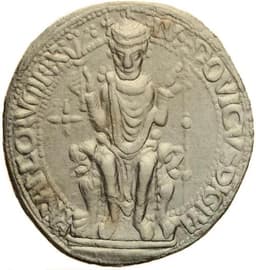
Louis VI the Fat
Emperor · Medieval
48.8Total
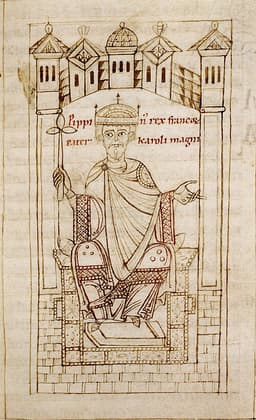
Pepin the Short
Emperor · Medieval
52.9Total
Basic Information
Born
1081
714
Died
1137
768
Era
Medieval
Medieval
Nationality
France
Frankish Empire
Occupation
Emperor
Emperor
Civilization
Western
Western
Score Comparison
Military (10%)
45.0
70.0
Political (20%)
61.3
53.8
Influence (20%)
53.3
55.0
Legacy (20%)
47.5
40.0
Leadership (15%)
40.0
53.2
Strategy (15%)
38.6
60.7
TOTAL
48.8
52.9
Louis VI the Fat — Complete Timeline
1108 AD
Consolidation of Royal Power in the Ile-de-FrancePolitical Action◆ Major
Louis VI succeeded his father Philip I as King of the Franks. He focused on consolidating royal authority in the Ile-de-France, subduing rebellious nobles and securing the region as the core of the Capetian domain.
KingshipConsolidationIle-de-France
Impact: regionalconstructive
1119 AD
Battle of BrémuleWar◆ Major
Louis VI was defeated by Henry I of England at the Battle of Br
BattleNormandyDefeat
Impact: regionaltragic
1122 AD
Alliance with the Church and SugerPolitical Action
Louis VI formed a close alliance with the Church, particularly with Abbot Suger of Saint-Denis. Suger became a key advisor and chronicler, helping to legitimize Capetian rule and promote royal authority.
AllianceChurchSuger
Impact: nationalconstructive
1128 AD
War with the County of BloisWar
Louis VI fought a war against the County of Blois, which had allied with England. The conflict ended with a truce, but it demonstrated Louis's determination to expand royal influence beyond the Ile-de-France.
WarBloisExpansion
Impact: regional
Pepin the Short — Complete Timeline
751 AD
Anointment as King of the FranksPolitical Action
Pepin deposed the last Merovingian king, Childeric III, with the support of Pope Zachary. He was anointed king by Boniface, establishing the Carolingian dynasty and legitimizing his rule through papal approval.
Carolingian DynastyPapacyAnointment
Impact: regionalconstructive
755 AD
Siege of PaviaWar
Pepin besieged the Lombard capital of Pavia, forcing King Aistulf to surrender and cede territories. This campaign secured Frankish dominance in Italy and fulfilled Pepin's alliance with the papacy.
Lombard WarItalySiege
Impact: regional
756 AD
Donation of PepinPolitical Action◆ Major
Pepin granted the Pope control over territories in central Italy, including Ravenna and the Pentapolis, after defeating the Lombards. This created the Papal States and established the temporal power of the papacy.
Papal StatesLombardsDonation
Impact: regionalconstructive
Expert Analysis
Origins
Louis VI, born in 1081, was the son of King Philip I of France and Bertrade de Montfort. His upbringing was overshadowed by his father's controversial marriage and conflicts with the Church. Louis received education from the Abbey of Saint-Denis, where he developed a close relationship with Abbot Suger. His early years were marked by struggles against rebellious barons in the Île-de-France, shaping his focus on royal authority.
Pepin the Short, born in 714, was the son of Charles Martel, the Frankish mayor of the palace who halted the Umayyad advance. Pepin was raised in a military environment, learning administration and warfare. His father's death in 741 left the Merovingian kings as figureheads, with real power in the hands of Pepin and his brother Carloman. Pepin's ambition to legitimize his rule drove his actions.
Rise to Power
Louis VI became king in 1108 at age 27, inheriting a weak monarchy. His initial focus was subduing robber barons like Hugh du Puiset and the lords of Montlhéry. He methodically captured their castles, extending royal control. A key turning point was the Battle of Brémule in 1119, where Louis was defeated by Henry I of England. This forced him to abandon claims to Normandy, but he redirected efforts to internal consolidation. By 1124, Louis assembled a large army against Emperor Henry V, demonstrating growing royal prestige.
Pepin's rise was more direct. After Carloman retired to a monastery in 747, Pepin became sole mayor. With Pope Zachary's approval, he deposed Childeric III in 751 and was anointed king by Boniface. This marked the end of Merovingian rule and the start of the Carolingian dynasty. Pepin secured legitimacy through papal support, a strategy his son Charlemagne would expand.
Leadership & Governance
Louis VI governed through personal leadership and alliance with the Church. He relied on Suger, who chronicled his reign and advised on administration. Louis granted charters to towns, fostering trade, and established the prévôt system to enforce royal justice. However, his military score of 45.0 reflects limited success in warfare; his political score of 61.3 indicates adeptness at internal politics. He avoided major reforms, focusing on incremental centralization.
Pepin the Short combined military prowess (score 70.0) with strategic governance. He codified laws, supported the Church, and expanded Frankish influence. His Donation of Pepin in 756 granted papal territories in Italy, creating the Papal States. Pepin's political score of 53.8 shows he was less adept at internal politics than Louis, but his military campaigns secured his legacy. He led campaigns against the Lombards, Saxons, and Aquitanians, extending Frankish borders.
Triumph & Tragedy
Louis VI's greatest triumph was consolidating royal power in the Île-de-France, ending baronial independence. He also secured the marriage of his son Louis VII to Eleanor of Aquitaine, though this later led to conflict. His tragedy was his inability to defeat Henry I of England, leaving Norman claims unresolved. His health declined due to obesity, limiting his later effectiveness.
Pepin's triumph was founding the Carolingian dynasty and securing papal support. The Donation of Pepin established the Papal States, a legacy lasting over a millennium. His tragedy was his relatively short reign; he died in 768, leaving his sons Charlemagne and Carloman a divided kingdom. His influence score (55.0) reflects this incomplete unification.
Character & Destiny
Louis VI was determined and pious but physically limited by obesity. He was a hands-on ruler, leading troops despite his weight. His alliance with Suger shows strategic intelligence. His character shaped a destiny of slow consolidation, not expansion. He died in 1137, having strengthened the monarchy but leaving foreign ambitions unfulfilled.
Pepin was ambitious and pragmatic, willing to depose a king and ally with the Pope. His military leadership (score 70.0) was decisive. He balanced force with diplomacy, as seen in his Italian campaigns. His destiny was to create a dynasty that would dominate Europe, but he died before achieving full control.
Legacy
Louis VI's legacy is the strengthening of the French monarchy. His methods of castle capture and administrative reforms laid groundwork for later Capetian kings. Suger's writings provided a model for royal chroniclers. His influence score (53.3) and legacy score (47.5) reflect his role as a consolidator rather than a transformer.
Pepin's legacy is immense: he founded the Carolingian dynasty, which under Charlemagne would revive the Roman Empire. The Donation of Pepin shaped medieval papacy and Italian politics. His military campaigns set the stage for Frankish dominance. However, his legacy score (40.0) is lower than Louis's, perhaps because his achievements are overshadowed by Charlemagne.
Conclusion
Pepin the Short had a greater overall impact, with a total score of 52.9 compared to Louis VI's 48.8. Pepin's founding of a dynasty and creation of the Papal States were transformative events that shaped European history for centuries. Louis VI's consolidation was important but limited to France. While Louis scored higher in political (61.3 vs 53.8) and legacy (47.5 vs 40.0) categories, Pepin's military (70.0 vs 45.0) and strategy (60.7 vs 38.6) scores demonstrate a more decisive and far-reaching influence. Pepin's actions directly enabled Charlemagne's empire, whereas Louis's work was undone partly by his son's failures. Thus, Pepin the Short emerges as the more significant historical figure.
Rankings
🥇
Pepin the ShortLeader
Mil: 70.0Pol: 53.8Inf: 55.0
52.9
🥈
Louis VI the Fat
Mil: 45.0Pol: 61.3Inf: 53.3
48.8
+4.1 behind
How This Comparison Works
Algorithm
Each figure is scored on 6 dimensions (0—100 scale) based on structured historical data: Military (10%), Political (20%), Influence (20%), Legacy (20%), Leadership (15%), Strategy (15%). The weighted total produces the final ranking.
Data Sources
Scores are computed from structured sub-indicators in the database. Scale factors adjust for era (Ancient ×0.85, Modern ×1.0) and civilization size (Eastern ×1.05, Other ×0.80) to account for differences in population and military scale.
Maximum 3 Figures
Comparisons are limited to 2—3 figures to ensure readability and statistical meaningfulness.
Error Margins
±5 points per dimension — Sub-scores are derived from historical records with inherent uncertainty. Two figures within 5 points on a dimension should be considered roughly equivalent in that area.
Total Score Accuracy
±3 points overall — The weighted combination of 6 dimensions produces a total score with approximately ±3 points of uncertainty. Differences of less than 3 points are not statistically significant— the figures are effectively tied.
Known Limitations
- Historical records are incomplete and uneven across civilizations
- Figures from oral-tradition societies may be underrepresented
- Occupation labels can misclassify multi-role figures
- Scores measure capability and impact, not moral character
- Quantitative scoring is a comparison tool, not absolute truth
Capability Radar
Military (10%) — Battles & Warfare
Battles
25
55
Win Rate
30
65
Expansion
30
65
Political (20%) — Governance & Reform
Reform
55
70
Diplomacy
50
65
Economy
40
55
Influence (20%) — Cultural & Global Reach
Cultural
30
50
Global
20
60
Legacy (20%) — Historical Impact
Historical
45
75
Longevity
40
70
Leadership (15%) — Power & Stability
Tenure
60
60
Stability
55
60
Strategy (15%) — Tactics & Innovation
Strategy
25
60
Tactics
20
50
Reform
15
70
Similar Comparisons
Comments & Discussion
No comments yet. Be the first to share your thoughts!