Loading...
Pepin the Short vs Stephen of Blois
Pepin the Short leads by 11.0 pts · 2 figures compared
…
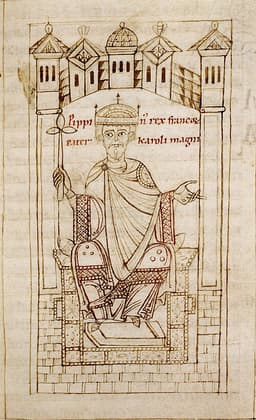
Pepin the Short
Emperor · Medieval
52.9Total
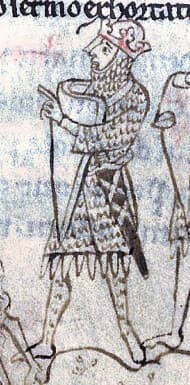
Stephen of Blois
Emperor · Medieval
41.9Total
Basic Information
Born
714
1096
Died
768
1154
Era
Medieval
Medieval
Nationality
Frankish Empire
England
Occupation
Emperor
Emperor
Civilization
Western
Western
Score Comparison
Military (10%)
70.0
50.0
Political (20%)
53.8
26.4
Influence (20%)
55.0
51.0
Legacy (20%)
40.0
41.7
Leadership (15%)
53.2
41.5
Strategy (15%)
60.7
35.7
TOTAL
52.9
41.9
Pepin the Short — Complete Timeline
751 AD
Anointment as King of the FranksPolitical Action
Pepin deposed the last Merovingian king, Childeric III, with the support of Pope Zachary. He was anointed king by Boniface, establishing the Carolingian dynasty and legitimizing his rule through papal approval.
Carolingian DynastyPapacyAnointment
Impact: regionalconstructive
755 AD
Siege of PaviaWar
Pepin besieged the Lombard capital of Pavia, forcing King Aistulf to surrender and cede territories. This campaign secured Frankish dominance in Italy and fulfilled Pepin's alliance with the papacy.
Lombard WarItalySiege
Impact: regional
756 AD
Donation of PepinPolitical Action◆ Major
Pepin granted the Pope control over territories in central Italy, including Ravenna and the Pentapolis, after defeating the Lombards. This created the Papal States and established the temporal power of the papacy.
Papal StatesLombardsDonation
Impact: regionalconstructive
Stephen of Blois — Complete Timeline
1135 AD
Coronation of StephenPolitical Action◆ Major
Stephen was crowned king of England on December 22, 1135, after the death of Henry I. He seized the throne despite Henry's designation of his daughter Matilda as heir.
CoronationUsurpationSuccession Crisis
Impact: national
1141 AD
Battle of LincolnWar◆ Major
Stephen was captured by forces loyal to Matilda at the Battle of Lincoln on February 2, 1141. He was imprisoned, and Matilda briefly ruled as Lady of the English.
BattleCaptureCivil War
Impact: nationaldestructive
Release and RestorationPolitical Action◆ Major
Stephen was released in exchange for Matilda's half-brother Robert of Gloucester, who had been captured. Stephen was restored as king, and the civil war continued.
ReleaseRestorationCivil War
Impact: national
1153 AD
Treaty of WallingfordPolitical Action◆ Major
Stephen and Matilda's son Henry Plantagenet signed the Treaty of Wallingford. Stephen recognized Henry as his heir, ending the Anarchy civil war.
TreatyPeaceSuccession
Impact: nationalconstructive
1154 AD
Death of StephenPolitical Action◆ Major
Stephen died on October 25, 1154, at Dover. His death allowed Henry Plantagenet to become king as Henry II, founding the Plantagenet dynasty.
DeathEnd of AnarchyPlantagenet
Impact: nationaltragic
Expert Analysis
Origins
Pepin the Short was born in 714 in the Frankish Kingdom, the son of Charles Martel, the powerful Mayor of the Palace who defeated the Umayyads at Tours. Growing up in a military aristocracy, Pepin was groomed for leadership alongside his brother Carloman. His family, the Carolingians, effectively ruled the Franks, but the Merovingian kings remained figureheads. Pepin's short stature earned him the epithet 'the Short,' but his ambition was immense.
Stephen of Blois was born around 1096 in Blois, France, the son of Stephen II, Count of Blois, and Adela of Normandy, daughter of William the Conqueror. His family connections gave him claims to both English and Norman lands. Stephen was raised in the Anglo-Norman court of his uncle Henry I of England, where he was favored and granted extensive lands. He was known for his chivalry and generosity, traits that initially won him support but later proved insufficient for the brutal civil war.
Rise to Power
Pepin's rise began in 741 when he and Carloman succeeded their father as mayors of the palace. In 743, they placed Childeric III on the Merovingian throne as a puppet. After Carloman retired to a monastery in 747, Pepin became sole ruler. Seeking legitimacy, he sent an embassy to Pope Zachary in 751, asking whether a king who held no real power should rule. The pope agreed that the de facto ruler should be king. Pepin then deposed Childeric and was anointed king by Boniface in 751, founding the Carolingian dynasty. This alliance with the papacy proved crucial.
Stephen's rise was more opportunistic. On Henry I's death in 1135, despite Henry's oath to make his daughter Matilda his heir, Stephen rushed to England. With the support of his brother Henry of Blois, Bishop of Winchester, and many barons who preferred a male ruler, Stephen was crowned at Westminster Abbey on December 22, 1135. He secured recognition from the Pope and initially gained widespread acceptance. However, his rule was immediately challenged by Matilda's supporters, leading to the Anarchy.
Leadership & Governance
Pepin's leadership was characterized by strategic alliance with the Church and military consolidation. He implemented administrative reforms, strengthening the royal authority over the nobles. His donation of lands to the Pope in 756 (the Donation of Pepin) established the Papal States, giving the papacy temporal power that lasted for centuries. Pepin also expanded the Frankish realm through campaigns in Aquitaine, Bavaria, and Italy. He scored 53.2 in leadership and 60.7 in strategy, reflecting his effective but not extraordinary governance.
Stephen's leadership, in contrast, was marked by indecisiveness and a failure to maintain control. He scored 41.5 in leadership and 35.7 in strategy. His generosity alienated his own supporters as he granted away royal lands to buy loyalty, weakening the crown. The Anarchy (1135-1154) saw rampant lawlessness, with barons building unauthorized castles and oppressing the populace. Stephen's inability to decisively defeat Matilda's forces led to a prolonged stalemate. His governance was reactive rather than proactive, and his reign is often seen as a cautionary tale of weak kingship.
Triumph & Tragedy
Pepin's greatest triumph was the establishment of the Carolingian dynasty and the creation of the Papal States. His victory over the Lombards in 756 secured Frankish dominance in Italy and earned him the title Patrician of the Romans. His military campaigns expanded the Frankish realm significantly. However, his tragedy may be that he set the stage for his son Charlemagne's greater glory, overshadowing his own achievements. Pepin died in 768, having divided his kingdom between his two sons, a practice that led to later conflicts.
Stephen's triumph was his initial seizure of the throne and his ability to hold onto it despite the Anarchy. He was crowned and remained king until his death. His greatest achievement was the Treaty of Wallingford in 1153, which ended the civil war by recognizing Henry Plantagenet as his heir, ensuring a peaceful transition. His tragedy is the Anarchy itself: 19 years of civil war, destruction, and suffering. The Anglo-Saxon Chronicle lamented that 'men said openly that Christ and his saints slept.' Stephen's capture at the Battle of Lincoln in 1141 was a low point, where he was imprisoned and Matilda briefly ruled.
Character & Destiny
Pepin was pragmatic and politically astute. He understood the importance of legitimacy and allied with the Church to secure his rule. His decision to be anointed by the Pope set a precedent for divine right of kings. Pepin's character was decisive; he acted quickly to crush rebellions and expand his territory. His destiny was to found a dynasty that would dominate Europe for centuries. Historians note his effective administration and military skill, giving him a total score of 52.9.
Stephen was known for his personal bravery but poor judgment. He was chivalrous and generous, but these traits undermined his authority. He failed to anticipate the ambitions of his barons or the strength of Matilda's claim. His character led to a reign of chaos. Stephen's destiny was to be remembered as a failed king whose weakness plunged England into anarchy. His total score of 41.9 reflects his shortcomings in political and strategic realms.
Legacy
Pepin's legacy is immense. He founded the Carolingian dynasty, which produced Charlemagne and shaped medieval Europe. The Donation of Pepin established the Papal States, which lasted until 1870. His alliance of throne and altar influenced European politics for centuries. Pepin's military campaigns expanded Frankish power and set the stage for the Carolingian Renaissance. He scored 55.0 in influence and 40.0 in legacy, though his legacy is often eclipsed by his son's.
Stephen's legacy is largely negative. The Anarchy became a classic example of feudal chaos. However, the Treaty of Wallingford led to the Plantagenet dynasty, which brought stronger governance. Stephen's reign highlighted the dangers of disputed succession, leading to reforms under Henry II. He scored 51.0 in influence and 41.7 in legacy. His reign is studied for its lessons in kingship and the fragility of royal authority.
Conclusion
Pepin the Short had a greater impact than Stephen of Blois. Pepin founded a dynasty that shaped European history, created the Papal States, and expanded Frankish power. Stephen's reign, while historically significant for the Anarchy, was largely destructive and led to a temporary breakdown of order. Pepin's total score of 52.9 versus Stephen's 41.9 reflects his superior leadership and strategic ability. Pepin's actions had lasting positive effects, while Stephen's reign is a cautionary tale. Therefore, Pepin the Short is the more consequential figure.
Rankings
🥇
Pepin the ShortLeader
Mil: 70.0Pol: 53.8Inf: 55.0
52.9
🥈
Stephen of Blois
Mil: 50.0Pol: 26.4Inf: 51.0
41.9
+11.0 behind
How This Comparison Works
Algorithm
Each figure is scored on 6 dimensions (0—100 scale) based on structured historical data: Military (10%), Political (20%), Influence (20%), Legacy (20%), Leadership (15%), Strategy (15%). The weighted total produces the final ranking.
Data Sources
Scores are computed from structured sub-indicators in the database. Scale factors adjust for era (Ancient ×0.85, Modern ×1.0) and civilization size (Eastern ×1.05, Other ×0.80) to account for differences in population and military scale.
Maximum 3 Figures
Comparisons are limited to 2—3 figures to ensure readability and statistical meaningfulness.
Error Margins
±5 points per dimension — Sub-scores are derived from historical records with inherent uncertainty. Two figures within 5 points on a dimension should be considered roughly equivalent in that area.
Total Score Accuracy
±3 points overall — The weighted combination of 6 dimensions produces a total score with approximately ±3 points of uncertainty. Differences of less than 3 points are not statistically significant— the figures are effectively tied.
Known Limitations
- Historical records are incomplete and uneven across civilizations
- Figures from oral-tradition societies may be underrepresented
- Occupation labels can misclassify multi-role figures
- Scores measure capability and impact, not moral character
- Quantitative scoring is a comparison tool, not absolute truth
Capability Radar
Military (10%) — Battles & Warfare
Battles
55
30
Win Rate
65
25
Expansion
65
10
Political (20%) — Governance & Reform
Reform
70
20
Diplomacy
65
25
Economy
55
15
Influence (20%) — Cultural & Global Reach
Cultural
50
20
Global
60
15
Legacy (20%) — Historical Impact
Historical
75
30
Longevity
70
20
Leadership (15%) — Power & Stability
Tenure
60
40
Stability
60
10
Strategy (15%) — Tactics & Innovation
Strategy
60
15
Tactics
50
20
Reform
70
10
Similar Comparisons
Comments & Discussion
No comments yet. Be the first to share your thoughts!