Loading...
This comparison has not been analyzed yet.
One-time AI generation (~1 minute). Scores and timeline are already available below.
Louis VI the Fat vs Tughlugh Timur
Louis VI the Fat leads by 0.2 pts · 2 figures compared
…
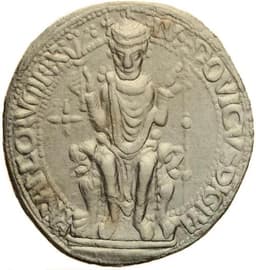
Louis VI the Fat
Emperor · Medieval
48.8Total
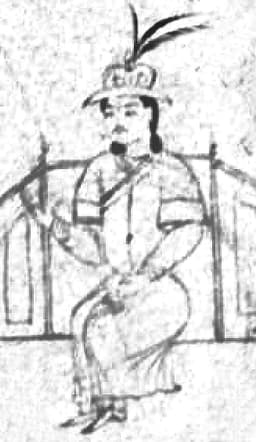
Tughlugh Timur
Emperor · Medieval
48.6Total
Basic Information
Born
1081
1329
Died
1137
1363
Era
Medieval
Medieval
Nationality
France
Moghulistan
Occupation
Emperor
Emperor
Civilization
Western
Eastern
Score Comparison
Military (10%)
45.0
25.0
Political (20%)
61.3
43.7
Influence (20%)
53.3
57.2
Legacy (20%)
47.5
45.8
Leadership (15%)
40.0
62.2
Strategy (15%)
38.6
45.0
TOTAL
48.8
48.6
Louis VI the Fat — Complete Timeline
1108 AD
Consolidation of Royal Power in the Ile-de-FrancePolitical Action◆ Major
Louis VI succeeded his father Philip I as King of the Franks. He focused on consolidating royal authority in the Ile-de-France, subduing rebellious nobles and securing the region as the core of the Capetian domain.
KingshipConsolidationIle-de-France
Impact: regionalconstructive
1119 AD
Battle of BrémuleWar◆ Major
Louis VI was defeated by Henry I of England at the Battle of Br
BattleNormandyDefeat
Impact: regionaltragic
1122 AD
Alliance with the Church and SugerPolitical Action
Louis VI formed a close alliance with the Church, particularly with Abbot Suger of Saint-Denis. Suger became a key advisor and chronicler, helping to legitimize Capetian rule and promote royal authority.
AllianceChurchSuger
Impact: nationalconstructive
1128 AD
War with the County of BloisWar
Louis VI fought a war against the County of Blois, which had allied with England. The conflict ended with a truce, but it demonstrated Louis's determination to expand royal influence beyond the Ile-de-France.
WarBloisExpansion
Impact: regional
Tughlugh Timur — Complete Timeline
1354 AD
Conversion to IslamCultural◆ Major
Tughlugh Timur converted to Islam under the influence of the Sufi missionary Jamal al-Din. This conversion led to the Islamization of Moghulistan and established Islam as the state religion, shaping the region's religious identity.
Religious ConversionIslamizationMoghulistan
Impact: regional
1360 AD
Invasion of TransoxianaWar◆ Major
Tughlugh Timur invaded Transoxiana, aiming to reunite the Chagatai Khanate. His campaign temporarily brought the region under his control, but his death in 1363 led to the collapse of his conquests and the rise of Timur.
InvasionChagatai KhanateTimur
Impact: regional
This comparison has not been analyzed yet.
One-time AI generation (~1 minute). Scores and timeline are already available below.
Rankings
🥇
Louis VI the FatLeader
Mil: 45.0Pol: 61.3Inf: 53.3
48.8
🥈
Tughlugh Timur
Mil: 25.0Pol: 43.7Inf: 57.2
48.6
+0.2 behind
How This Comparison Works
Algorithm
Each figure is scored on 6 dimensions (0—100 scale) based on structured historical data: Military (10%), Political (20%), Influence (20%), Legacy (20%), Leadership (15%), Strategy (15%). The weighted total produces the final ranking.
Data Sources
Scores are computed from structured sub-indicators in the database. Scale factors adjust for era (Ancient ×0.85, Modern ×1.0) and civilization size (Eastern ×1.05, Other ×0.80) to account for differences in population and military scale.
Maximum 3 Figures
Comparisons are limited to 2—3 figures to ensure readability and statistical meaningfulness.
Error Margins
±5 points per dimension — Sub-scores are derived from historical records with inherent uncertainty. Two figures within 5 points on a dimension should be considered roughly equivalent in that area.
Total Score Accuracy
±3 points overall — The weighted combination of 6 dimensions produces a total score with approximately ±3 points of uncertainty. Differences of less than 3 points are not statistically significant— the figures are effectively tied.
Known Limitations
- Historical records are incomplete and uneven across civilizations
- Figures from oral-tradition societies may be underrepresented
- Occupation labels can misclassify multi-role figures
- Scores measure capability and impact, not moral character
- Quantitative scoring is a comparison tool, not absolute truth
Capability Radar
Military (10%) — Battles & Warfare
Battles
25
35
Win Rate
30
40
Expansion
30
40
Political (20%) — Governance & Reform
Reform
55
40
Diplomacy
50
50
Economy
40
30
Influence (20%) — Cultural & Global Reach
Cultural
30
45
Global
20
30
Legacy (20%) — Historical Impact
Historical
45
40
Longevity
40
35
Leadership (15%) — Power & Stability
Tenure
60
45
Stability
55
35
Strategy (15%) — Tactics & Innovation
Strategy
25
35
Tactics
20
30
Reform
15
25
Similar Comparisons
Comments & Discussion
No comments yet. Be the first to share your thoughts!