Loading...
Arnulf of Carinthia vs Louis VI the Fat
Arnulf of Carinthia leads by 2.3 pts · 2 figures compared
…
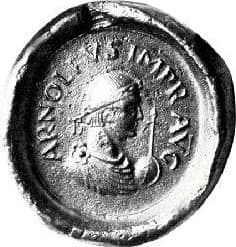
Arnulf of Carinthia
Emperor · Medieval
51.1Total
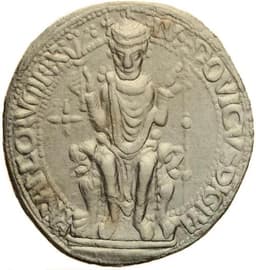
Louis VI the Fat
Emperor · Medieval
48.8Total
Basic Information
Born
850
1081
Died
899
1137
Era
Medieval
Medieval
Nationality
East Francia
France
Occupation
Emperor
Emperor
Civilization
Western
Western
Score Comparison
Military (10%)
20.0
45.0
Political (20%)
46.6
61.3
Influence (20%)
53.3
53.3
Legacy (20%)
46.7
47.5
Leadership (15%)
74.0
40.0
Strategy (15%)
60.0
38.6
TOTAL
51.1
48.8
Arnulf of Carinthia — Complete Timeline
887 AD
Deposition of Charles the FatPolitical Action
Arnulf played a key role in the deposition of his uncle, Charles the Fat, in 887. As the illegitimate son of Carloman, Arnulf was elected King of East Francia by the nobles, ending the unified Carolingian rule and establishing his own dynasty.
DepositionAccessionEast Francia
Impact: regional
891 AD
Battle of the Dyle (891)War◆ Major
Arnulf of Carinthia led an East Frankish army to victory against Viking raiders at the Battle of the Dyle in present-day Belgium. This victory halted Viking incursions into East Francia and demonstrated Arnulf's military capability, boosting his prestige.
BattleVikingsVictory
Impact: regionalconstructive
892 AD
Campaign against the MagyarsWar◆ Major
Arnulf allied with the Magyars (Hungarians) against the Moravian Empire, inviting them into Central Europe. This decision backfired, as the Magyars later turned on East Francia, launching devastating raids. Arnulf's short-term strategy had long-term negative consequences.
AllianceMagyarsRaids
Impact: regionaldestructive
896 AD
Imperial Coronation (896)Cultural◆ Major
Arnulf was crowned Holy Roman Emperor by Pope Formosus on February 22, 896, in Rome. He had marched into Italy to support the pope against rival factions. His coronation was brief, as he suffered a stroke soon after and returned to East Francia.
CoronationEmperorItaly
Impact: regional
899 AD
Death of Arnulf of CarinthiaOther
Arnulf died on December 8, 899, likely from a stroke. He was succeeded by his young son, Louis the Child, whose weak rule led to further fragmentation and vulnerability to Magyar attacks. Arnulf's reign was marked by military successes but also strategic errors.
DeathSuccessionDecline
Impact: regionaltragic
Louis VI the Fat — Complete Timeline
1108 AD
Consolidation of Royal Power in the Ile-de-FrancePolitical Action◆ Major
Louis VI succeeded his father Philip I as King of the Franks. He focused on consolidating royal authority in the Ile-de-France, subduing rebellious nobles and securing the region as the core of the Capetian domain.
KingshipConsolidationIle-de-France
Impact: regionalconstructive
1119 AD
Battle of BrémuleWar◆ Major
Louis VI was defeated by Henry I of England at the Battle of Br
BattleNormandyDefeat
Impact: regionaltragic
1122 AD
Alliance with the Church and SugerPolitical Action
Louis VI formed a close alliance with the Church, particularly with Abbot Suger of Saint-Denis. Suger became a key advisor and chronicler, helping to legitimize Capetian rule and promote royal authority.
AllianceChurchSuger
Impact: nationalconstructive
1128 AD
War with the County of BloisWar
Louis VI fought a war against the County of Blois, which had allied with England. The conflict ended with a truce, but it demonstrated Louis's determination to expand royal influence beyond the Ile-de-France.
WarBloisExpansion
Impact: regional
Expert Analysis
Origins
Arnulf of Carinthia (c. 850–899) was the illegitimate son of Carloman, King of Bavaria. Born in Carinthia (modern Austria), he grew up in the shadow of the Carolingian dynasty, which was in decline. His illegitimacy excluded him from direct succession, but he inherited his father's position as margrave of Carinthia. Louis VI the Fat (1081–1137) was born in Paris, the eldest son of King Philip I of France. His mother, Bertha of Holland, came from a powerful comital family. Louis was educated at the Abbey of Saint-Denis, where he developed a close relationship with Abbot Suger, who later became his chief advisor. Unlike Arnulf, Louis was legitimate and grew up in the royal court, but faced challenges from powerful nobles who contested Capetian authority.
Rise to Power
Arnulf rose to power in 887 when he led a revolt against his uncle, Charles the Fat, who was deposed due to his inability to defend against Viking raids. Arnulf was elected King of East Francia by the nobility, marking the end of the unified Carolingian Empire. He consolidated power by defeating the Vikings at the Battle of the Dyle in 891, where his forces inflicted heavy casualties on the raiders, halting their advance into East Francia. In 896, he marched to Italy and was crowned Holy Roman Emperor by Pope Formosus, though his control over Italy remained weak. Louis VI succeeded his father in 1108 after a period of co-rule. His early reign focused on subduing rebellious lords in the Île-de-France, such as the lords of Montlhéry and the Count of Meulan. He defeated them through a series of sieges and negotiations, gradually expanding royal domain. His victory at the Battle of Brémule in 1119 was a defeat, but he later secured a truce with Henry I of England, abandoning claims to Normandy.
Leadership & Governance
Arnulf's leadership score of 74.0 reflects his ability to command loyalty from the East Frankish nobility, but his political score of 46.6 shows his struggles with diplomacy. He allied with the Magyars against the Moravian Empire, inviting them into Central Europe. This short-term gain led to long-term devastation as the Magyars launched raids into Germany after his death. His governance was reactive, focusing on military campaigns rather than institutional reforms. Louis VI scored 61.3 in political skill, demonstrating effective use of alliances and church support. He appointed Abbot Suger as regent during his absences and worked closely with the Church to legitimize his rule. He granted charters to towns and monasteries, fostering economic growth. However, his military score of 45.0 reflects defeats like Brémule, where he was captured by Henry I's forces.
Triumph & Tragedy
Arnulf's greatest success was the Battle of the Dyle (891), where he defeated the Vikings, protecting East Francia from further raids. His imperial coronation in 896 was a personal triumph, but his alliance with the Magyars was a catastrophic failure. After his death in 899, the Magyars ravaged Germany, leading to the fragmentation of East Francia under his son Louis the Child. Louis VI's triumph was consolidating the Capetian domain in the Île-de-France, laying the foundation for future French kings. He successfully subdued the robber barons and expanded royal justice. His tragedy was the defeat at Brémule, which forced him to abandon ambitions in Normandy. He also failed to prevent the rise of the Angevin empire under Henry II, as his daughter's marriage to Geoffrey of Anjou eventually led to Plantagenet control of western France.
Character & Destiny
Arnulf was pragmatic but short-sighted, willing to use any means to secure power. His illegitimacy drove him to assert authority through military force, but his reliance on the Magyars proved disastrous. He suffered from illness in later years, possibly a stroke, which led to his death at age 49. Louis VI was known for his corpulence (hence 'the Fat') but also for his piety and dedication to royal duty. He was a capable administrator who understood the importance of alliances with the Church. His destiny was to restore the Capetian monarchy after years of weakness, but his limited resources prevented him from achieving greater territorial expansion. Both rulers faced constraints from powerful nobles, but Louis's institutional approach had more lasting effects.
Legacy
Arnulf's legacy is mixed: he is credited with defending East Francia from Vikings and briefly reviving the imperial title, but his alliance with the Magyars weakened the realm. He scored 46.7 in legacy, reflecting his role in the transition from Carolingian to Ottonian rule. His son's death in 911 led to the election of Conrad I, ending Carolingian rule in East Francia. Louis VI scored 47.5 in legacy, remembered as the king who consolidated the royal domain and strengthened the monarchy. Abbot Suger's biography of him established a model for Capetian kingship. The expansion of the royal domain under Louis VI enabled his son Louis VII to participate in the Second Crusade and later Philip II to build a powerful French state.
Conclusion
Arnulf of Carinthia had a higher total score of 51.1 compared to Louis VI's 48.8, but his impact was more transient. While Arnulf's military leadership (74.0) was superior, his political missteps led to long-term instability. Louis VI's political skill (61.3) and institutional reforms had a more enduring effect on French history. His consolidation of the Île-de-France provided the base for the rise of the French monarchy, while Arnulf's short reign failed to prevent the fragmentation of East Francia. Therefore, Louis VI the Fat had a greater long-term impact on European history, despite his lower overall score.
Rankings
🥇
Arnulf of CarinthiaLeader
Mil: 20.0Pol: 46.6Inf: 53.3
51.1
🥈
Louis VI the Fat
Mil: 45.0Pol: 61.3Inf: 53.3
48.8
+2.3 behind
How This Comparison Works
Algorithm
Each figure is scored on 6 dimensions (0—100 scale) based on structured historical data: Military (10%), Political (20%), Influence (20%), Legacy (20%), Leadership (15%), Strategy (15%). The weighted total produces the final ranking.
Data Sources
Scores are computed from structured sub-indicators in the database. Scale factors adjust for era (Ancient ×0.85, Modern ×1.0) and civilization size (Eastern ×1.05, Other ×0.80) to account for differences in population and military scale.
Maximum 3 Figures
Comparisons are limited to 2—3 figures to ensure readability and statistical meaningfulness.
Error Margins
±5 points per dimension — Sub-scores are derived from historical records with inherent uncertainty. Two figures within 5 points on a dimension should be considered roughly equivalent in that area.
Total Score Accuracy
±3 points overall — The weighted combination of 6 dimensions produces a total score with approximately ±3 points of uncertainty. Differences of less than 3 points are not statistically significant— the figures are effectively tied.
Known Limitations
- Historical records are incomplete and uneven across civilizations
- Figures from oral-tradition societies may be underrepresented
- Occupation labels can misclassify multi-role figures
- Scores measure capability and impact, not moral character
- Quantitative scoring is a comparison tool, not absolute truth
Capability Radar
Military (10%) — Battles & Warfare
Battles
45
25
Win Rate
40
30
Expansion
40
30
Political (20%) — Governance & Reform
Reform
35
55
Diplomacy
55
50
Economy
40
40
Influence (20%) — Cultural & Global Reach
Cultural
30
30
Global
30
20
Legacy (20%) — Historical Impact
Historical
45
45
Longevity
35
40
Leadership (15%) — Power & Stability
Tenure
60
60
Stability
45
55
Strategy (15%) — Tactics & Innovation
Strategy
55
25
Tactics
50
20
Reform
30
15
Similar Comparisons
Comments & Discussion
No comments yet. Be the first to share your thoughts!