Loading...
Louis XII vs Pulakeshin II
Pulakeshin II leads by 5.7 pts · 2 figures compared
…

Louis XII
Emperor · Medieval
56.5Total
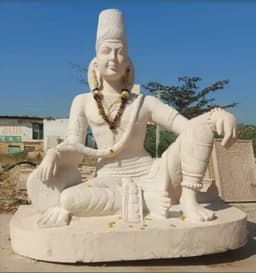
Pulakeshin II
Emperor · Medieval
62.2Total
Basic Information
Born
1462
610
Died
1515
642
Era
Medieval
Medieval
Nationality
France
India
Occupation
Emperor
Emperor
Civilization
Western
Indian
Score Comparison
Military (10%)
40.0
76.0
Political (20%)
70.0
60.0
Influence (20%)
58.0
62.0
Legacy (20%)
48.3
56.0
Leadership (15%)
79.8
62.4
Strategy (15%)
35.0
67.2
TOTAL
56.5
62.2
Louis XII — Complete Timeline
1498 AD
Reduced Taxes and Reformed JusticeReform◆ Major
Upon becoming king, Louis XII reduced the taille (land tax) and reformed the judicial system. He established the Grand Conseil to oversee justice and curbed abuses by royal officials. These measures earned him the title 'Father of the People' from the Estates-General.
Tax ReformJustice ReformPopularity
Impact: nationalconstructive
1499 AD
Invasion of Italy and Conquest of MilanWar◆ Major
Louis XII invaded Italy, claiming the Duchy of Milan through his grandmother's lineage. His forces captured Milan without major resistance, and he was proclaimed Duke of Milan. This began the Italian Wars of the early 16th century.
Italian WarsMilanConquest
Impact: regional
Married Anne of BrittanyPolitical Action◆ Major
Louis XII married Anne of Brittany, widow of his predecessor Charles VIII. This marriage ensured the permanent union of Brittany with France, ending Breton autonomy. The marriage was politically motivated and required papal dispensation due to consanguinity.
MarriageBreton UnionDynastic Policy
Impact: nationalconstructive
1508 AD
League of Cambrai against VenicePolitical Action◆ Major
Louis XII joined Pope Julius II, Emperor Maximilian I, and Ferdinand of Aragon in the League of Cambrai, aimed at partitioning Venetian territories. The French victory at Agnadello (1509) initially succeeded, but the alliance later fractured, and France lost its gains.
AllianceItalian WarsVenice
Impact: regionaldestructive
1513 AD
Defeat at the Battle of NovaraWar◆ Major
Louis XII's forces were defeated by the Swiss at Novara, forcing the French to abandon Milan. The defeat ended French control of northern Italy and marked the collapse of Louis's Italian ambitions. The war drained French finances and led to a peace treaty in 1514.
BattleItalian WarsDefeat
Impact: regionaltragic
Pulakeshin II — Complete Timeline
625 AD
Received an Embassy from the Sassanid Persian KingPolitical Action
Pulakeshin II received a diplomatic mission from the Sassanid Persian king Khosrow II, as recorded in the Aihole inscription. This embassy indicates the Chalukya kingdom's international prestige and trade connections with the Persian Gulf.
DiplomacyInternational Relations
Impact: regional
630 AD
Defeated Emperor Harsha at the Battle of NarmadaWar
Pulakeshin II repelled an invasion by the northern emperor Harsha of Kannauj on the banks of the Narmada River. This victory established the Chalukya kingdom as the dominant power in the Deccan and prevented Harsha from expanding southward.
BattleChalukya-Harsha War
Impact: regional
634 AD
Issued the Aihole InscriptionCultural
Pulakeshin II commissioned the Aihole inscription, composed by the poet Ravikirti. The inscription details his military campaigns, including the defeat of Harsha, and provides a key historical source for the Chalukya dynasty.
InscriptionPropaganda
Impact: regional
642 AD
Conquered the Pallava Capital KanchipuramWar◆ Major
Pulakeshin II captured the Pallava capital of Kanchipuram, defeating the Pallava king Mahendravarman I. This conquest extended Chalukya control into Tamil country and marked the height of his empire's territorial extent.
ConquestPallava War
Impact: regional
Killed in Battle by the PallavasWar◆ Major
Pulakeshin II was killed in battle against the Pallava king Narasimhavarman I, who avenged the earlier capture of Kanchipuram. The Pallavas sacked the Chalukya capital Vatapi, and Pulakeshin's death led to a temporary decline of the Chalukya empire.
BattleDeath
Impact: regionaltragic
Expert Analysis
Origins
Louis XII (1462–1515) was born into the Valois dynasty as the Duke of Orléans. He was raised in the French court and educated in military and political affairs. His early life was marked by rebellion against his cousin King Charles VIII, for which he was imprisoned. Louis's background as a prince of the blood gave him access to power but also made him a rival to the crown.
Pulakeshin II (610–642 CE) was born into the Chalukya dynasty of southern India. He was the son of King Kirttivarman I and ascended the throne after a civil war with his uncle Mangalesha. His early life was shaped by the military traditions of the Chalukyas, who controlled large parts of the Deccan.
Rise to Power
Louis XII became king in 1498 after Charles VIII died without heirs. He immediately claimed the Duchy of Milan through his grandmother, Valentina Visconti, and launched the Italian Wars. In 1499, he invaded Italy and captured Milan without major resistance. He also secured the union of Brittany by marrying Anne of Brittany, the widow of Charles VIII.
Pulakeshin II rose to power after defeating his uncle Mangalesha in a civil war around 610 CE. He then consolidated his rule by launching campaigns against neighboring kingdoms. His greatest achievement came around 618 CE when he defeated the northern emperor Harsha at the Battle of Narmada. This victory established the Chalukyas as the dominant power in the Deccan.
Leadership & Governance
Louis XII was known as the "Father of the People" for his domestic policies. He reduced the taille (land tax) and reformed the judicial system by establishing the Grand Conseil. His governance focused on fiscal prudence and justice, earning him popularity among commoners. However, his foreign policy was costly and ultimately unsuccessful.
Pulakeshin II ruled over a vast empire through a system of feudal vassals. He maintained control through military campaigns and diplomatic missions, such as the embassy from the Sassanid Persian king Khosrow II. His governance was supported by the Aihole inscription, which records his achievements and administrative policies.
Triumph & Tragedy
Louis XII's greatest success was the reform of French taxation and justice, which improved the lives of his subjects. His marriage to Anne of Brittany permanently united Brittany with France. However, his Italian ambitions ended in failure. The defeat at the Battle of Novara in 1513 forced the French to abandon Milan, and his alliance in the League of Cambrai collapsed.
Pulakeshin II's triumph was the defeat of Harsha, which secured his southern empire. He also conquered the Pallava capital Kanchipuram, extending Chalukya control into Tamil country. His tragedy came in 642 CE when he was killed in battle against the Pallava king Narasimhavarman I, who avenged the earlier conquest. The Pallavas sacked the Chalukya capital.
Character & Destiny
Louis XII was pragmatic and frugal, focusing on domestic stability. His character earned him the goodwill of his people but also led to overreach in Italy. His destiny was shaped by the shifting alliances of the Italian Wars, which ultimately overwhelmed his resources.
Pulakeshin II was ambitious and militarily skilled, as shown by his victory over Harsha and his capture of Kanchipuram. However, his aggressive expansion provoked a powerful enemy in the Pallavas, leading to his death in battle. His character combined strategic vision with a willingness to take risks.
Legacy
Louis XII's legacy lies in his domestic reforms, which set a precedent for later French kings. His union of Brittany strengthened the French crown. However, his Italian campaigns drained resources and left no lasting territorial gains. Historians assess his political score at 70.0 and leadership at 79.8, but his military score is only 40.0.
Pulakeshin II's legacy is more enduring in Indian history. He is remembered as the greatest Chalukya king, who expanded the empire and resisted northern invasion. The Aihole inscription provides a detailed record of his reign. His military score of 76.0 and strategy of 67.2 reflect his effectiveness, though his total score of 62.2 is slightly higher than Louis XII's 56.5.
Conclusion
Pulakeshin II had greater impact due to his decisive military victories and lasting influence on Deccan history. While Louis XII achieved domestic reforms, his foreign failures limited his overall impact. Pulakeshin II's defeat of Harsha changed the political landscape of India, and his legacy endured through the Chalukya dynasty. The score gap of 5.7 points supports this assessment.
Rankings
🥇
Pulakeshin IILeader
Mil: 76.0Pol: 60.0Inf: 62.0
62.2
🥈
Louis XII
Mil: 40.0Pol: 70.0Inf: 58.0
56.5
+5.7 behind
How This Comparison Works
Algorithm
Each figure is scored on 6 dimensions (0—100 scale) based on structured historical data: Military (10%), Political (20%), Influence (20%), Legacy (20%), Leadership (15%), Strategy (15%). The weighted total produces the final ranking.
Data Sources
Scores are computed from structured sub-indicators in the database. Scale factors adjust for era (Ancient ×0.85, Modern ×1.0) and civilization size (Eastern ×1.05, Other ×0.80) to account for differences in population and military scale.
Maximum 3 Figures
Comparisons are limited to 2—3 figures to ensure readability and statistical meaningfulness.
Error Margins
±5 points per dimension — Sub-scores are derived from historical records with inherent uncertainty. Two figures within 5 points on a dimension should be considered roughly equivalent in that area.
Total Score Accuracy
±3 points overall — The weighted combination of 6 dimensions produces a total score with approximately ±3 points of uncertainty. Differences of less than 3 points are not statistically significant— the figures are effectively tied.
Known Limitations
- Historical records are incomplete and uneven across civilizations
- Figures from oral-tradition societies may be underrepresented
- Occupation labels can misclassify multi-role figures
- Scores measure capability and impact, not moral character
- Quantitative scoring is a comparison tool, not absolute truth
Capability Radar
Military (10%) — Battles & Warfare
Battles
45
75
Win Rate
50
80
Expansion
40
85
Political (20%) — Governance & Reform
Reform
70
65
Diplomacy
60
75
Economy
75
70
Influence (20%) — Cultural & Global Reach
Cultural
40
60
Global
30
50
Legacy (20%) — Historical Impact
Historical
45
65
Longevity
35
55
Leadership (15%) — Power & Stability
Tenure
65
70
Stability
65
68
Strategy (15%) — Tactics & Innovation
Strategy
45
82
Tactics
40
78
Reform
30
60
Similar Comparisons
Comments & Discussion
No comments yet. Be the first to share your thoughts!