Loading...
Charles the Bold vs Pulakeshin II
Pulakeshin II leads by 4.3 pts · 2 figures compared
…
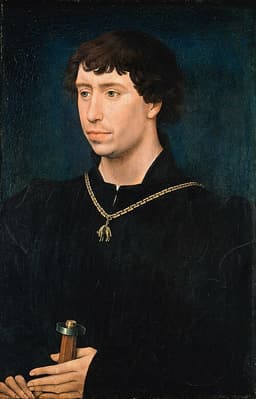
Charles the Bold
Emperor · Medieval
57.9Total

Pulakeshin II
Emperor · Medieval
62.2Total
Basic Information
Born
1433
610
Died
1477
642
Era
Medieval
Medieval
Nationality
Burgundy
India
Occupation
Emperor
Emperor
Civilization
Western
Indian
Score Comparison
Military (10%)
52.5
76.0
Political (20%)
68.0
60.0
Influence (20%)
59.0
62.0
Legacy (20%)
49.2
56.0
Leadership (15%)
65.7
62.4
Strategy (15%)
55.0
67.2
TOTAL
57.9
62.2
Charles the Bold — Complete Timeline
1467 AD
Inherited the Burgundian LandsPolitical Action◆ Major
Charles succeeded his father Philip the Good as Duke of Burgundy. He inherited a wealthy and powerful state comprising the Burgundian Netherlands, Franche-Comt
SuccessionBurgundian State
Impact: regionalconstructive
1468 AD
War with France and the Treaty of PéronneWar◆ Major
Charles forced King Louis XI of France to sign the Treaty of P
TreatyFranco-Burgundian ConflictDiplomacy
Impact: regional
1474 AD
Siege of NeussWar◆ Major
Charles besieged the imperial city of Neuss for nearly a year, defying the Holy Roman Emperor Frederick III. The siege ended inconclusively when an imperial army approached. This conflict alienated the German princes and weakened Charles's political position.
SiegeImperial ConflictBurgundian Wars
Impact: regionaldestructive
1476 AD
Battle of GrandsonWar◆ Major
Charles's army was defeated by the Swiss Confederacy at Grandson. The Burgundians abandoned their camp, which was looted. The defeat was a major setback, shattering the myth of Burgundian invincibility and encouraging further Swiss resistance.
BattleSwiss ConfederacyDefeat
Impact: regionaltragic
Battle of MoratWar◆ Major
Charles suffered a second devastating defeat by the Swiss at Morat. His army was routed, and he lost much of his artillery and baggage. The defeat effectively ended Burgundian ambitions in Switzerland and left Charles's state vulnerable.
BattleSwiss ConfederacyDefeat
Impact: regionaltragic
1477 AD
Battle of Nancy and DeathWar
Charles was killed in battle at Nancy while fighting the Swiss and the Duke of Lorraine. His body was found mutilated. His death ended the Burgundian state as an independent power, and his lands were divided between France and the Habsburgs through his daughter Mary.
BattleDeathEnd of Burgundy
Impact: regionaltragic
Pulakeshin II — Complete Timeline
625 AD
Received an Embassy from the Sassanid Persian KingPolitical Action
Pulakeshin II received a diplomatic mission from the Sassanid Persian king Khosrow II, as recorded in the Aihole inscription. This embassy indicates the Chalukya kingdom's international prestige and trade connections with the Persian Gulf.
DiplomacyInternational Relations
Impact: regional
630 AD
Defeated Emperor Harsha at the Battle of NarmadaWar
Pulakeshin II repelled an invasion by the northern emperor Harsha of Kannauj on the banks of the Narmada River. This victory established the Chalukya kingdom as the dominant power in the Deccan and prevented Harsha from expanding southward.
BattleChalukya-Harsha War
Impact: regional
634 AD
Issued the Aihole InscriptionCultural
Pulakeshin II commissioned the Aihole inscription, composed by the poet Ravikirti. The inscription details his military campaigns, including the defeat of Harsha, and provides a key historical source for the Chalukya dynasty.
InscriptionPropaganda
Impact: regional
642 AD
Conquered the Pallava Capital KanchipuramWar◆ Major
Pulakeshin II captured the Pallava capital of Kanchipuram, defeating the Pallava king Mahendravarman I. This conquest extended Chalukya control into Tamil country and marked the height of his empire's territorial extent.
ConquestPallava War
Impact: regional
Killed in Battle by the PallavasWar◆ Major
Pulakeshin II was killed in battle against the Pallava king Narasimhavarman I, who avenged the earlier capture of Kanchipuram. The Pallavas sacked the Chalukya capital Vatapi, and Pulakeshin's death led to a temporary decline of the Chalukya empire.
BattleDeath
Impact: regionaltragic
Expert Analysis
Origins
Charles the Bold (1433–1477) was the last Valois Duke of Burgundy, inheriting a wealthy and powerful state from his father Philip the Good. He was born in Dijon, France, and received a chivalric education focused on warfare and statecraft. His upbringing emphasized the grandeur of the Burgundian court, which rivaled that of the French monarchy. Charles was deeply influenced by the ideals of knighthood and sought to transform Burgundy into a centralized kingdom.
Pulakeshin II (c. 610–642 CE) was the most famous ruler of the Chalukya dynasty of Badami in present-day Karnataka, India. He was the son of King Kirttivarman I and ascended the throne after a period of instability. His early life was marked by military training and exposure to the complex politics of the Deccan. He was a patron of arts and learning, as evidenced by the Aihole inscription composed by his court poet Ravikirti.
Rise to Power
Charles the Bold rose to power upon his father's death in 1467. He immediately pursued an aggressive policy to expand Burgundian territory and assert independence from France. A key turning point was the Treaty of Péronne (1468), where he forced King Louis XI of France to recognize Burgundian sovereignty and cede control over key French towns. Charles also sought to build a centralized state by suppressing rebellious cities like Liège and Ghent. His ambition to be crowned king led him to seek the support of the Holy Roman Emperor Frederick III, but negotiations failed.
Pulakeshin II came to power in 610 CE after defeating his uncle Mangalesha in a civil war. He quickly consolidated his rule and launched campaigns to expand the Chalukya empire. His most significant achievement was defeating the northern emperor Harsha of Kannauj at the Battle of Narmada (c. 618 CE). This victory halted Harsha's southern expansion and established the Narmada River as the boundary between the two empires. Pulakeshin II then turned south, conquering the Pallava kingdom and capturing their capital Kanchipuram (c. 642 CE).
Leadership & Governance
Charles the Bold ruled with a centralized, autocratic style. He implemented administrative reforms to streamline taxation and justice, modeled on the French system. He created a standing army and a professional bureaucracy. However, his harsh rule provoked resistance from his subjects, especially in the Netherlands. He was known for his stubbornness and micromanagement, often leading campaigns personally. His governance scored 65.7 in leadership, reflecting his determination but also his inflexibility.
Pulakeshin II governed through a feudal system, delegating authority to local governors and maintaining alliances with subordinate kings. He was a tolerant ruler, patronizing both Hindu and Jain institutions. The Aihole inscription highlights his diplomatic skills, as he received an embassy from the Sassanid Persian king Khosrow II, indicating his empire's international standing. His leadership score of 62.4 reflects his ability to maintain a vast empire through a combination of military strength and diplomacy.
Triumph & Tragedy
Charles the Bold's greatest triumph was the Treaty of Péronne, which forced Louis XI to recognize Burgundian independence. He also expanded Burgundy's territory significantly, controlling a corridor from the Netherlands to the Alps. However, his greatest failure was his series of defeats against the Swiss Confederacy. At the Battle of Grandson (1476), his army was routed, and he lost his artillery and baggage. The final tragedy occurred at the Battle of Nancy (1477), where he was killed and his mutilated body found days later. His death led to the partition of Burgundy between France and the Habsburgs.
Pulakeshin II's greatest triumph was his victory over Harsha, which secured his northern frontier and established the Chalukyas as a major power. His conquest of Kanchipuram was a significant military achievement. However, his failure to fully subdue the Pallavas led to his downfall. In 642 CE, the Pallava king Narasimhavarman I avenged his father's defeat by invading the Chalukya capital, Vatapi. Pulakeshin II was killed in battle, and the city was sacked. This tragedy ended the first phase of Chalukya power.
Character & Destiny
Charles the Bold was characterized by his ambition, courage, and stubbornness. He was a skilled commander but often reckless, ignoring advice and underestimating his enemies. His insistence on fighting the Swiss in unfavorable terrain led to his downfall. Historians note that his inflexibility and overconfidence were his undoing. He scored 55.0 in strategy, reflecting his tactical weaknesses despite his boldness.
Pulakeshin II was a calculating and strategic ruler. His decision to first defeat Harsha before turning south shows his methodical approach. He was also a patron of culture, as seen in the Aihole inscription. However, his overextension after conquering Kanchipuram left his capital vulnerable. His strategy score of 67.2 indicates a more balanced approach than Charles, but he too fell victim to a counterattack.
Legacy
Charles the Bold's legacy is mixed. He is remembered as the last great Duke of Burgundy, whose ambitions set the stage for the Habsburg-Burgundian union. His administrative reforms influenced later French and Habsburg governance. However, his military failures are often highlighted. His overall legacy score of 49.2 reflects his short-lived impact.
Pulakeshin II's legacy is more enduring. He is celebrated as one of India's greatest medieval rulers, who expanded the Chalukya empire and resisted northern invasion. The Aihole inscription remains a key historical source. His defeat of Harsha is considered a turning point in Indian history. His legacy score of 56.0, while modest, reflects his lasting recognition in Indian historiography.
Conclusion
In the final analysis, Pulakeshin II had a greater impact than Charles the Bold. His victory over Harsha reshaped the political landscape of India, while Charles's death led to the dissolution of his duchy. Pulakeshin scored higher in military (76.0 vs 52.5), strategy (67.2 vs 55.0), and overall total (62.2 vs 57.9). While Charles's political maneuvering was impressive, Pulakeshin's more balanced leadership and lasting legacy give him the edge. Therefore, Pulakeshin II is the greater historical figure.
Rankings
🥇
Pulakeshin IILeader
Mil: 76.0Pol: 60.0Inf: 62.0
62.2
🥈
Charles the Bold
Mil: 52.5Pol: 68.0Inf: 59.0
57.9
+4.3 behind
How This Comparison Works
Algorithm
Each figure is scored on 6 dimensions (0—100 scale) based on structured historical data: Military (10%), Political (20%), Influence (20%), Legacy (20%), Leadership (15%), Strategy (15%). The weighted total produces the final ranking.
Data Sources
Scores are computed from structured sub-indicators in the database. Scale factors adjust for era (Ancient ×0.85, Modern ×1.0) and civilization size (Eastern ×1.05, Other ×0.80) to account for differences in population and military scale.
Maximum 3 Figures
Comparisons are limited to 2—3 figures to ensure readability and statistical meaningfulness.
Error Margins
±5 points per dimension — Sub-scores are derived from historical records with inherent uncertainty. Two figures within 5 points on a dimension should be considered roughly equivalent in that area.
Total Score Accuracy
±3 points overall — The weighted combination of 6 dimensions produces a total score with approximately ±3 points of uncertainty. Differences of less than 3 points are not statistically significant— the figures are effectively tied.
Known Limitations
- Historical records are incomplete and uneven across civilizations
- Figures from oral-tradition societies may be underrepresented
- Occupation labels can misclassify multi-role figures
- Scores measure capability and impact, not moral character
- Quantitative scoring is a comparison tool, not absolute truth
Capability Radar
Military (10%) — Battles & Warfare
Battles
65
75
Win Rate
40
80
Expansion
60
85
Political (20%) — Governance & Reform
Reform
65
65
Diplomacy
45
75
Economy
60
70
Influence (20%) — Cultural & Global Reach
Cultural
50
60
Global
35
50
Legacy (20%) — Historical Impact
Historical
55
65
Longevity
40
55
Leadership (15%) — Power & Stability
Tenure
55
70
Stability
30
68
Strategy (15%) — Tactics & Innovation
Strategy
55
82
Tactics
60
78
Reform
70
60
Similar Comparisons
Comments & Discussion
No comments yet. Be the first to share your thoughts!