Loading...
This comparison has not been analyzed yet.
One-time AI generation (~1 minute). Scores and timeline are already available below.
Ludwig II of Bavaria vs Vimaladharmasuriya I
Vimaladharmasuriya I leads by 5.3 pts · 2 figures compared
…

Ludwig II of Bavaria
Emperor · Modern
44.9Total
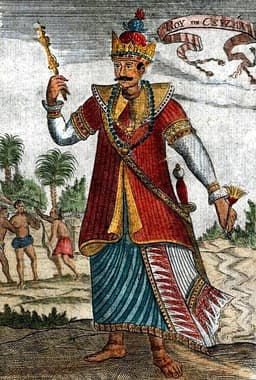
Vimaladharmasuriya I
Emperor · Modern
50.2Total
Basic Information
Born
1845
1592
Died
1886
1604
Era
Modern
Modern
Nationality
Bavaria
Sri Lanka
Occupation
Emperor
Emperor
Civilization
Western
Indian
Score Comparison
Military (10%)
21.4
30.0
Political (20%)
30.8
54.7
Influence (20%)
56.7
51.8
Legacy (20%)
54.0
41.7
Leadership (15%)
31.2
64.0
Strategy (15%)
57.4
60.0
TOTAL
44.9
50.2
Ludwig II of Bavaria — Complete Timeline
1864 AD
Patronage of Richard WagnerCultural◆ Major
Ludwig II became the patron of composer Richard Wagner, providing financial support and commissioning operas such as Tristan und Isolde and Parsifal. This patronage enabled Wagner to complete his Ring cycle and build the Bayreuth Festspielhaus.
MusicWagnerOpera
Impact: globalconstructive
1869 AD
Construction of Neuschwanstein CastleCultural◆ Major
Ludwig II commissioned the construction of Neuschwanstein Castle in 1869, a Romanesque Revival palace inspired by medieval legends. The castle became a symbol of his romantic idealism and later a major tourist attraction, though it was never completed.
ArchitectureRomanticismTourism
Impact: globalconstructive
1886 AD
Deposition and mysterious death at Lake StarnbergOther
Ludwig II was declared mentally unfit and deposed on June 10, 1886. He died the next day under mysterious circumstances in Lake Starnberg, along with his psychiatrist. The official cause was suicide by drowning, but conspiracy theories persist.
DeathDepositionMystery
Impact: regionaltragic
Vimaladharmasuriya I — Complete Timeline
1592 AD
Establishment of Kandy as CapitalPolitical Action◆ Major
Vimaladharmasuriya I established Kandy as the capital of the Sinhalese kingdom. He fortified the city and made it the center of resistance against Portuguese expansion.
CapitalFoundationResistance
Impact: nationalconstructive
1594 AD
Battle of DantureWar
Vimaladharmasuriya I's forces ambushed and defeated a Portuguese army at Danture. The Portuguese commander, Pedro Lopes de Sousa, was killed, and the Kandyan kingdom secured its independence.
BattlePortugueseIndependence
Impact: regional
1595 AD
Restoration of Buddhism in KandyPolitical Action◆ Major
Vimaladharmasuriya I restored Buddhism as the state religion in the Kandyan kingdom. He brought the Tooth Relic of the Buddha to Kandy and built a temple to house it, reviving Buddhist traditions.
BuddhismRestorationRelic
Impact: nationalconstructive
Construction of the Temple of the Tooth in KandyCultural◆ Major
Vimaladharmasuriya I built the first Temple of the Tooth in Kandy to house the sacred Tooth Relic. This established Kandy as the primary Buddhist center in Sri Lanka.
ArchitectureBuddhismRelic
Impact: nationalconstructive
This comparison has not been analyzed yet.
One-time AI generation (~1 minute). Scores and timeline are already available below.
Rankings
🥇
Vimaladharmasuriya ILeader
Mil: 30.0Pol: 54.7Inf: 51.8
50.2
🥈
Ludwig II of Bavaria
Mil: 21.4Pol: 30.8Inf: 56.7
44.9
+5.3 behind
How This Comparison Works
Algorithm
Each figure is scored on 6 dimensions (0—100 scale) based on structured historical data: Military (10%), Political (20%), Influence (20%), Legacy (20%), Leadership (15%), Strategy (15%). The weighted total produces the final ranking.
Data Sources
Scores are computed from structured sub-indicators in the database. Scale factors adjust for era (Ancient ×0.85, Modern ×1.0) and civilization size (Eastern ×1.05, Other ×0.80) to account for differences in population and military scale.
Maximum 3 Figures
Comparisons are limited to 2—3 figures to ensure readability and statistical meaningfulness.
Error Margins
±5 points per dimension — Sub-scores are derived from historical records with inherent uncertainty. Two figures within 5 points on a dimension should be considered roughly equivalent in that area.
Total Score Accuracy
±3 points overall — The weighted combination of 6 dimensions produces a total score with approximately ±3 points of uncertainty. Differences of less than 3 points are not statistically significant— the figures are effectively tied.
Known Limitations
- Historical records are incomplete and uneven across civilizations
- Figures from oral-tradition societies may be underrepresented
- Occupation labels can misclassify multi-role figures
- Scores measure capability and impact, not moral character
- Quantitative scoring is a comparison tool, not absolute truth
Capability Radar
Military (10%) — Battles & Warfare
Battles
39
45
Win Rate
38
60
Expansion
40
25
Political (20%) — Governance & Reform
Reform
15
35
Diplomacy
20
45
Economy
10
30
Influence (20%) — Cultural & Global Reach
Cultural
70
30
Global
55
20
Legacy (20%) — Historical Impact
Historical
60
35
Longevity
65
25
Leadership (15%) — Power & Stability
Tenure
10
40
Stability
5
35
Strategy (15%) — Tactics & Innovation
Strategy
47
50
Tactics
48
55
Reform
50
30
Similar Comparisons
Comments & Discussion
No comments yet. Be the first to share your thoughts!