Loading...
Luis Abinader vs Qin Shi Huang
Qin Shi Huang leads by 30.3 pts · 2 figures compared
…
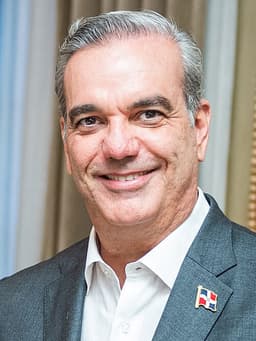
Luis Abinader
Politician · Modern
54.9Total
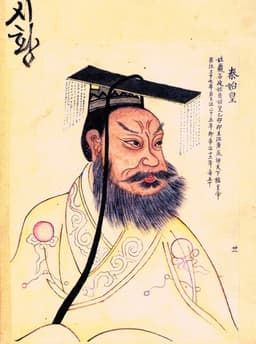
Qin Shi Huang
Emperor · Ancient
85.2Total
Basic Information
Born
1967
-259
Died
—
-210
Era
Modern
Ancient
Nationality
Dominican Republic
China
Occupation
Politician
Emperor
Civilization
Western
Eastern
Score Comparison
Military (10%)
50.0
80.0
Political (20%)
72.0
90.0
Influence (20%)
53.3
85.0
Legacy (20%)
42.5
90.0
Leadership (15%)
72.0
78.0
Strategy (15%)
43.9
82.0
TOTAL
54.9
85.2
Luis Abinader — Complete Timeline
2020 AD
Anti-Corruption CampaignReform◆ Major
Abinader launched an anti-corruption initiative, including the creation of a special prosecutor's office and investigations into previous administrations. Several high-profile figures were arrested, signaling a break from past impunity.
CorruptionJusticeReform
Impact: nationalconstructive
Election as President of the Dominican RepublicPolitical Action◆ Major
Luis Abinader won the 2020 presidential election, defeating incumbent Danilo Medina's candidate. His victory ended 16 years of PLD party rule and marked a shift in Dominican politics. He took office on August 16, 2020.
ElectionPresidencyPolitical Change
Impact: nationalconstructive
COVID-19 Pandemic ResponsePolitical Action◆ Major
Abinader implemented measures to combat the COVID-19 pandemic, including lockdowns, vaccination campaigns, and economic stimulus. The response was credited with reducing infection rates and supporting the economy during the global crisis.
PandemicPublic HealthEconomic Policy
Impact: nationalconstructive
2021 AD
Haitian Border Crisis and Immigration PolicyPolitical Action◆ Major
Abinader ordered the construction of a border wall with Haiti and implemented stricter immigration controls amid a surge in Haitian migrants. The policy drew criticism from human rights groups but was popular domestically.
ImmigrationBorder SecurityHaiti
Impact: regional
2024 AD
Re-election Campaign and VictoryPolitical Action◆ Major
Abinader won re-election in the 2024 presidential election, securing a second term. His victory was attributed to strong economic management and anti-corruption efforts, though critics cited authoritarian tendencies.
ElectionRe-electionPresidency
Impact: nationalconstructive
Qin Shi Huang — Complete Timeline
246 BC
Construction of the Mausoleum and Terracotta ArmyOther◆ Major
Qin Shi Huang commissioned a vast mausoleum complex near Xi'an, guarded by thousands of life-sized terracotta soldiers, horses, and chariots. The project employed hundreds of thousands of workers and reflected his obsession with immortality and imperial power.
Impact: global
230 BC
Conquest of the Six Warring StatesWar
From 230 to 221 BCE, Ying Zheng led the Qin state in a series of campaigns that conquered the Han, Zhao, Wei, Chu, Yan, and Qi states. This unified China under a single ruler for the first time, ending the Warring States period.
Impact: global
221 BC
Standardization of Writing, Currency, and MeasurementsReform◆ Major
Qin Shi Huang ordered the standardization of Chinese script, currency, and weights and measures across the unified empire. This facilitated administration, trade, and cultural integration, laying a foundation for future dynasties.
Impact: globalconstructive
Proclamation of the Qin DynastyPolitical Action
After conquering the last independent state, Ying Zheng declared himself Shi Huangdi (First Emperor), founding the Qin Dynasty. He adopted a new title to signify his supreme authority and initiated centralized imperial rule.
Impact: global
214 BC
Initiation of the Great Wall ConstructionOther◆ Major
Qin Shi Huang ordered the connection and extension of existing northern fortifications to create a unified defensive wall against nomadic Xiongnu raids. This project involved massive conscripted labor and became the precursor to the later Great Wall.
Impact: regional
213 BC
Burning of Books and Burying of ScholarsPolitical Action◆ Major
On the advice of Li Si, Qin Shi Huang ordered the burning of historical records and philosophical texts not aligned with Legalist doctrine. He also had 460 Confucian scholars buried alive to suppress dissent and consolidate ideological control.
Impact: nationaldestructive
Expert Analysis
luis-abinader-vs-qin-shi-huang
### The First Emperor and the First Democrat: A Tale of Two Founders
On a summer day in 221 BC, a king in his late thirties stood before his assembled generals in the city of Xianyang. He had just conquered the last independent kingdom of ancient China. In a moment of supreme self-confidence, he declared himself *Shi Huangdi*—the First Emperor. Two thousand two hundred and forty-one years later, on a humid August evening in 2020, a fifty-three-year-old economist named Luis Abinader stood before a cheering crowd in Santo Domingo. He had just won a presidential election, ending sixteen years of single-party rule. Both men were founders of a new order. One built an empire through iron and fire; the other built a democracy through ballots and reforms. Their lives, separated by millennia and continents, ask a single question: what does it mean to begin something that lasts?
**Origins**
Ying Zheng was born into a world of war. The Warring States period of China (475–221 BC) was a brutal, seven-sided chess game where kingdoms rose and fell on the edge of a sword. His father was a king, but the boy grew up as a hostage in a rival state. By age thirteen, he inherited a throne surrounded by enemies. His childhood taught him one lesson: trust is a luxury for the dead.
Luis Abinader was born in 1967 into a very different kind of struggle. His family were Dominican exiles, forced to flee the dictatorship of Rafael Trujillo. He grew up in the United States, speaking Spanish at home and English at school. His father was a prominent businessman and political activist. Young Luis learned that power could be stolen by strongmen, but it could also be reclaimed through elections. His childhood taught him a different lesson: the ballot is stronger than the bullet.
**Rise to Power**
Qin Shi Huang’s path was swift and merciless. Between 230 and 221 BC, he unleashed a series of campaigns that devoured the six rival kingdoms one by one. He was not merely a conqueror; he was a strategist who understood that war is won before the first battle, through spies, alliances, and terror. His military score of 80 reflects this cold competence. By the time he proclaimed the Qin Dynasty, he had not just won a war—he had erased an entire era of history.
Luis Abinader’s rise was slower and more patient. He entered politics in the 1990s, worked as an economist, and ran for president twice before winning in 2020. His victory was not a conquest but a culmination. He campaigned on a platform of anti-corruption and transparency, promising to clean a system that had grown stagnant. His military score of 37.5 tells the story: he never commanded an army. He commanded a movement.
**Leadership & Governance**
Here the two men diverge most dramatically. Qin Shi Huang governed as a force of nature. He standardized writing, currency, and measurements across his empire—a feat that would make China a single civilization for two thousand years. He ordered the construction of the Great Wall, a defensive line that became a symbol of national unity. But he also burned books and buried scholars alive. His political score of 88 reflects his genius for control, but his legacy is haunted by tyranny. He believed that unity required uniformity, and that dissent was a disease.
Abinader governed as a reformer. He inherited a country ravaged by COVID-19 and responded with lockdowns and vaccination campaigns. He launched an anti-corruption initiative that created a special prosecutor’s office. He built a border wall with Haiti, a controversial move that he framed as a matter of sovereignty. His political score of 72 is lower than Qin’s, but it reflects a different kind of leadership: one that must negotiate with a free press, an opposition, and a restless public. He could not burn books; he had to persuade voters.
**Triumph & Tragedy**
Qin Shi Huang’s greatest moment was the unification of China in 221 BC. His greatest failure was the legacy of fear he left behind. The Qin Dynasty collapsed within four years of his death, destroyed by the very harshness that made it possible. His tomb, guarded by the Terracotta Army, remains a monument to his ambition—and to his isolation.
Abinader’s greatest moment was his re-election in 2024, a victory that proved his reforms had popular support. His greatest failure is still unfolding: the Haitian border crisis, the economic strains of the pandemic, the slow work of building institutions that can outlast him. His legacy score of 58.3 is still being written.
**Character & Destiny**
Qin Shi Huang was a man of absolute will. He believed that history began with him—that the past was a threat to the future. He sought immortality, sending expeditions for the elixir of life. He died at age forty-nine, poisoned by mercury pills meant to keep him alive. His character was his destiny: he built an empire that could not survive without him.
Luis Abinader is a man of measured ambition. He knows that democracy is fragile, that power must be shared. He has no Terracotta Army, no Great Wall. He has a constitution, a parliament, and a skeptical electorate. His character is also his destiny: he builds a system that can survive without him.
**Legacy**
Qin Shi Huang is remembered as the father of China. His name is synonymous with unity, but also with tyranny. The Great Wall, the Terracotta Army, the standardized script—these are his fingerprints on the world. He is a ghost who still haunts the Chinese imagination.
Luis Abinader is remembered, for now, as the man who broke the cycle. He is the first opposition president in sixteen years, a symbol that democracy can work in the Dominican Republic. His legacy is not carved in stone but written in laws and elections.
**Conclusion**
Two founders. One built an empire of stone and blood, a monument to a single will. The other built a democracy of paper and votes, a fragile but living thing. Qin Shi Huang’s China still stands, but his dynasty fell. Abinader’s Dominican Republic is still young, but his system endures. Perhaps the deepest lesson is this: the hardest thing to build is not a wall, but a trust. The First Emperor commanded armies; the first democrat must command hearts. And in the long arc of history, that may be the harder war.
Rankings
🥇
Qin Shi HuangLeader
Mil: 80.0Pol: 90.0Inf: 85.0
85.2
🥈
Luis Abinader
Mil: 50.0Pol: 72.0Inf: 53.3
54.9
+30.3 behind
How This Comparison Works
Algorithm
Each figure is scored on 6 dimensions (0—100 scale) based on structured historical data: Military (10%), Political (20%), Influence (20%), Legacy (20%), Leadership (15%), Strategy (15%). The weighted total produces the final ranking.
Data Sources
Scores are computed from structured sub-indicators in the database. Scale factors adjust for era (Ancient ×0.85, Modern ×1.0) and civilization size (Eastern ×1.05, Other ×0.80) to account for differences in population and military scale.
Maximum 3 Figures
Comparisons are limited to 2—3 figures to ensure readability and statistical meaningfulness.
Error Margins
±5 points per dimension — Sub-scores are derived from historical records with inherent uncertainty. Two figures within 5 points on a dimension should be considered roughly equivalent in that area.
Total Score Accuracy
±3 points overall — The weighted combination of 6 dimensions produces a total score with approximately ±3 points of uncertainty. Differences of less than 3 points are not statistically significant— the figures are effectively tied.
Known Limitations
- Historical records are incomplete and uneven across civilizations
- Figures from oral-tradition societies may be underrepresented
- Occupation labels can misclassify multi-role figures
- Scores measure capability and impact, not moral character
- Quantitative scoring is a comparison tool, not absolute truth
Capability Radar
Military (10%) — Battles & Warfare
Battles
29
85
Win Rate
31
90
Expansion
34
90
Political (20%) — Governance & Reform
Reform
60
95
Diplomacy
65
75
Economy
60
90
Influence (20%) — Cultural & Global Reach
Cultural
30
95
Global
30
85
Legacy (20%) — Historical Impact
Historical
30
95
Longevity
25
95
Leadership (15%) — Power & Stability
Tenure
55
70
Stability
55
65
Strategy (15%) — Tactics & Innovation
Strategy
39
85
Tactics
42
80
Reform
46
95
Similar Comparisons
Comments & Discussion
铁血书同6/17/2026
拿秦始皇比阿比纳德尔?别开玩笑了。一个靠活埋儒生、焚书坑儒统一文字度量衡,一个靠竞选口号赢了选举。秦朝修长城征南越死了上百万人,多米尼加的经济增长率才3%?始皇帝建立的是延续两千年的帝国体制,阿比纳德尔连总统任期都还没干满一届。这就好比拿长城跟篱笆比高度,根本不是一个量级。
VoteCounter6/17/2026
Let's talk numbers. Qin Shi Huang unified China by fielding armies of 300,000+ soldiers at a time when the world population was maybe 200 million. Abinader won 52% of 7.5 million Dominicans. That's like comparing Alexander the Great to a mayor. The First Emperor standardized writing, currency, and axle widths across a territory bigger than modern Western Europe. Show me Abinader's equivalent of burning books to enforce ideological unity. You can't, because modern democracy is about compromise, n
古典学人6/17/2026
将法家暴君与民主改革者并列,是对政治哲学的根本误解。始皇帝继承了商鞅的"弱民"思想——人民越无力反抗,国家越强大。他废除分封制,建立郡县,把权力集中到一个人手中。阿比纳德尔呢?他靠的是政党轮替、权力制衡。两人都"创始"了秩序,但秦朝的秩序是金字塔——顶端一个人,底下全是奴隶;多米尼加的秩序是网络——人人都有投票权。这不是比较,这是对照。
HistoryBuff146/17/2026
Fun fact: both men were outsiders who rose from precarious childhoods. Ying Zheng spent his early years as a hostage in Handan, constantly fearing assassination. Abinader's family fled the Trujillo regime. Yet their responses diverged completely. The Emperor built the Great Wall to keep people out; Abinader opened trade agreements. The Emperor killed scholars who disagreed with him; Abinader faces a congress where his party doesn't even hold a majority. One ruled through absolute terror; the oth
螺丝钉思想史6/17/2026
说阿比纳德尔是"创始人"太抬举他了。始皇帝是真正的"始"——他结束了800年诸侯割据,创造了"中国"这个概念本身。没有他,就没有后来的汉唐明清。多米尼加民主?那是1978年才开始的花瓶,阿比纳德尔只是暂时看管花瓶的人。秦朝修了全长5000公里的驰道,打通了帝国的血管;阿比纳德尔上台三年,道路维修费还占预算不到1%。历史的重量不会因为八月的欢呼而改变。