Loading...
This comparison has not been analyzed yet.
One-time AI generation (~1 minute). Scores and timeline are already available below.
Luis Arce vs Paavo Lipponen
Luis Arce leads by 3.8 pts · 2 figures compared
…

Luis Arce
Politician · Modern
55.0Total
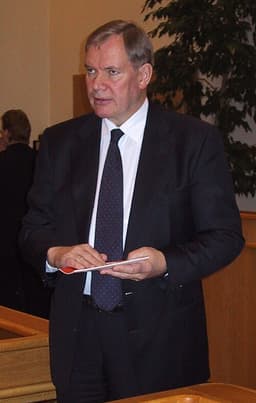
Paavo Lipponen
Politician · Modern
51.2Total
Basic Information
Born
1962
1941
Died
—
—
Era
Modern
Modern
Nationality
Bolivia
Finland
Occupation
Politician
Politician
Civilization
Western
Western
Score Comparison
Military (10%)
49.6
21.2
Political (20%)
72.0
60.0
Influence (20%)
52.5
56.4
Legacy (20%)
42.5
45.0
Leadership (15%)
74.0
72.0
Strategy (15%)
43.9
38.9
TOTAL
55.0
51.2
Luis Arce — Complete Timeline
2020 AD
Elected President of BoliviaPolitical Action◆ Major
Luis Arce won the Bolivian general election with 55.1% of the vote, succeeding Evo Morales. The election followed a period of political crisis after Morales' resignation in 2019. Arce's victory restored the MAS party to power.
ElectionMASBolivia
Impact: nationalconstructive
Managed COVID-19 pandemic responsePolitical Action◆ Major
Arce implemented lockdowns and economic measures during the COVID-19 pandemic. Bolivia faced high infection rates and a strained healthcare system. The government secured vaccines through multilateral agreements.
PandemicPublic HealthBolivia
Impact: national
2021 AD
Faced economic crisis and protestsPolitical Action
Arce's government dealt with fuel shortages, inflation, and protests over economic policies. The government subsidized fuel and food prices to maintain stability. Critics argued the measures were insufficient.
Economic CrisisProtestsBolivia
Impact: national
Paavo Lipponen — Complete Timeline
1995 AD
Election as Prime Minister of FinlandPolitical Action◆ Major
Paavo Lipponen became Prime Minister of Finland, leading a broad coalition government of Social Democrats, Conservatives, and others. His tenure focused on economic recovery, EU integration, and welfare state reforms.
Finnish PoliticsSocial Democratic PartyCoalition Government
Impact: nationalconstructive
1999 AD
Finland's EU PresidencyPolitical Action◆ Major
Finland held its first rotating presidency of the Council of the European Union under Lipponen's leadership. The presidency focused on EU enlargement, the Helsinki Summit, and the development of the EU's security and defence policy.
European UnionFinnish Presidency
Impact: regionalconstructive
2002 AD
Introduction of the Euro in FinlandPolitical Action◆ Major
Under Lipponen's government, Finland adopted the euro as its official currency, replacing the Finnish markka. This was a key step in Finland's deeper integration into the European Union.
Euro AdoptionFinnish EconomyEU Integration
Impact: nationalconstructive
2003 AD
Resignation as Prime MinisterPolitical Action◆ Major
Lipponen resigned as Prime Minister after the Social Democrats lost seats in the general election. He was succeeded by Anneli J
Finnish PoliticsResignation
Impact: national
This comparison has not been analyzed yet.
One-time AI generation (~1 minute). Scores and timeline are already available below.
Rankings
🥇
Luis ArceLeader
Mil: 49.6Pol: 72.0Inf: 52.5
55.0
🥈
Paavo Lipponen
Mil: 21.2Pol: 60.0Inf: 56.4
51.2
+3.8 behind
How This Comparison Works
Algorithm
Each figure is scored on 6 dimensions (0—100 scale) based on structured historical data: Military (10%), Political (20%), Influence (20%), Legacy (20%), Leadership (15%), Strategy (15%). The weighted total produces the final ranking.
Data Sources
Scores are computed from structured sub-indicators in the database. Scale factors adjust for era (Ancient ×0.85, Modern ×1.0) and civilization size (Eastern ×1.05, Other ×0.80) to account for differences in population and military scale.
Maximum 3 Figures
Comparisons are limited to 2—3 figures to ensure readability and statistical meaningfulness.
Error Margins
±5 points per dimension — Sub-scores are derived from historical records with inherent uncertainty. Two figures within 5 points on a dimension should be considered roughly equivalent in that area.
Total Score Accuracy
±3 points overall — The weighted combination of 6 dimensions produces a total score with approximately ±3 points of uncertainty. Differences of less than 3 points are not statistically significant— the figures are effectively tied.
Known Limitations
- Historical records are incomplete and uneven across civilizations
- Figures from oral-tradition societies may be underrepresented
- Occupation labels can misclassify multi-role figures
- Scores measure capability and impact, not moral character
- Quantitative scoring is a comparison tool, not absolute truth
Capability Radar
Military (10%) — Battles & Warfare
Battles
27
24
Win Rate
34
28
Expansion
35
28
Political (20%) — Governance & Reform
Reform
60
60
Diplomacy
55
70
Economy
70
65
Influence (20%) — Cultural & Global Reach
Cultural
30
30
Global
25
50
Legacy (20%) — Historical Impact
Historical
35
40
Longevity
20
30
Leadership (15%) — Power & Stability
Tenure
45
65
Stability
40
60
Strategy (15%) — Tactics & Innovation
Strategy
39
30
Tactics
42
35
Reform
46
40
Similar Comparisons
Comments & Discussion
No comments yet. Be the first to share your thoughts!