Loading...
This comparison has not been analyzed yet.
One-time AI generation (~1 minute). Scores and timeline are already available below.
Mackenzie King vs Manuel Quezon
Mackenzie King leads by 7.8 pts · 2 figures compared
…

Mackenzie King
Politician · Modern
60.1Total
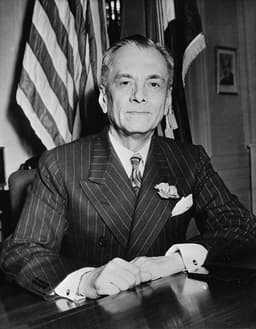
Manuel Quezon
Politician · Modern
52.3Total
Basic Information
Born
1874
1878
Died
1950
1944
Era
Modern
Modern
Nationality
Canada
Philippines
Occupation
Politician
Politician
Civilization
Western
Eastern
Score Comparison
Military (10%)
48.1
18.8
Political (20%)
70.0
55.0
Influence (20%)
61.0
55.0
Legacy (20%)
54.0
56.0
Leadership (15%)
78.0
72.0
Strategy (15%)
42.9
36.4
TOTAL
60.1
52.3
Mackenzie King — Complete Timeline
1926 AD
King-Byng AffairPolitical Action◆ Major
Governor General Lord Byng refused Prime Minister Mackenzie King's request to dissolve Parliament, leading to a constitutional crisis. King resigned, but after a short Conservative government, he returned to power, establishing the principle of Canadian autonomy from Britain.
Constitutional CrisisCanadian Autonomy
Impact: national
1931 AD
Statute of Westminster 1931Political Action◆ Major
King's government supported the Statute of Westminster, which granted Canada and other dominions full legislative independence from the British Parliament. This was a key step in Canada's evolution from colony to sovereign nation.
IndependenceCommonwealth
Impact: globalconstructive
1940 AD
Introduction of unemployment insuranceReform◆ Major
King's government passed the Unemployment Insurance Act, creating Canada's first national social security program. This was a key part of the New Deal-style reforms during the Great Depression, providing a safety net for unemployed workers.
Social WelfareGreat Depression
Impact: nationalconstructive
1944 AD
Conscription Crisis of 1944Political Action◆ Major
Facing pressure from the military, King reluctantly introduced conscription for overseas service in World War II, despite promising not to. The decision split his party and French Canada, but he managed to limit conscription to 16,000 men through a plebiscite.
World War IIConscriptionFrench Canada
Impact: nationaldestructive
1948 AD
Longest-serving Canadian Prime MinisterPolitical Action◆ Major
Mackenzie King retired after 21 years and 154 days as Prime Minister, the longest tenure in Canadian history. He served through the Great Depression and World War II, shaping modern Canada's political and social landscape.
Prime MinisterRecord
Impact: national
Manuel Quezon — Complete Timeline
1935 AD
Approved the National Defense Act of 1935Reform◆ Major
Quezon signed the National Defense Act, creating the Philippine Army under General Douglas MacArthur. The act established a system of military training and reserves to prepare the Philippines for self-defense after independence.
National DefenseMilitaryMacArthur
Impact: nationalconstructive
Elected President of the Philippine CommonwealthPolitical Action
Quezon was elected as the first president of the Philippine Commonwealth under the Tydings-McDuffie Act, which established a ten-year transition period to full independence from the United States. His administration focused on national defense, social justice, and economic development.
Philippine CommonwealthIndependenceElection
Impact: nationalconstructive
1936 AD
Implemented the Social Justice ProgramReform◆ Major
Quezon launched a social justice program that included land reform, minimum wage laws, and the creation of the Court of Industrial Relations. The program aimed to address rural poverty and labor exploitation but faced implementation challenges.
Social JusticeLand ReformLabor
Impact: nationalprogressive
1937 AD
Established the National Language InstituteCultural◆ Major
Quezon created the National Language Institute to develop a national language based on Tagalog. This decision promoted national unity but sparked debates over linguistic diversity and regional representation.
National LanguageTagalogCultural Policy
Impact: nationalconstructive
1942 AD
Fled to the United States during Japanese OccupationPolitical Action◆ Major
After the Japanese invasion of the Philippines, Quezon evacuated to the United States to lead the Philippine government-in-exile. He continued to advocate for Philippine independence and Allied support from Washington, D.C.
World War IIExileJapanese Occupation
Impact: nationaltragic
1944 AD
Signed the Philippine Rehabilitation Act (Tydings–McDuffie Act amendments)Political Action◆ Major
Quezon negotiated with the U.S. Congress for post-war rehabilitation funds, resulting in the Philippine Rehabilitation Act. The act provided financial aid for reconstruction after the war, though Quezon died before its full implementation.
RehabilitationU.S. RelationsPost-War
Impact: nationalconstructive
This comparison has not been analyzed yet.
One-time AI generation (~1 minute). Scores and timeline are already available below.
Rankings
🥇
Mackenzie KingLeader
Mil: 48.1Pol: 70.0Inf: 61.0
60.1
🥈
Manuel Quezon
Mil: 18.8Pol: 55.0Inf: 55.0
52.3
+7.8 behind
How This Comparison Works
Algorithm
Each figure is scored on 6 dimensions (0—100 scale) based on structured historical data: Military (10%), Political (20%), Influence (20%), Legacy (20%), Leadership (15%), Strategy (15%). The weighted total produces the final ranking.
Data Sources
Scores are computed from structured sub-indicators in the database. Scale factors adjust for era (Ancient ×0.85, Modern ×1.0) and civilization size (Eastern ×1.05, Other ×0.80) to account for differences in population and military scale.
Maximum 3 Figures
Comparisons are limited to 2—3 figures to ensure readability and statistical meaningfulness.
Error Margins
±5 points per dimension — Sub-scores are derived from historical records with inherent uncertainty. Two figures within 5 points on a dimension should be considered roughly equivalent in that area.
Total Score Accuracy
±3 points overall — The weighted combination of 6 dimensions produces a total score with approximately ±3 points of uncertainty. Differences of less than 3 points are not statistically significant— the figures are effectively tied.
Known Limitations
- Historical records are incomplete and uneven across civilizations
- Figures from oral-tradition societies may be underrepresented
- Occupation labels can misclassify multi-role figures
- Scores measure capability and impact, not moral character
- Quantitative scoring is a comparison tool, not absolute truth
Capability Radar
Military (10%) — Battles & Warfare
Battles
31
13
Win Rate
33
16
Expansion
35
18
Political (20%) — Governance & Reform
Reform
70
70
Diplomacy
80
75
Economy
65
55
Influence (20%) — Cultural & Global Reach
Cultural
40
60
Global
55
55
Legacy (20%) — Historical Impact
Historical
60
65
Longevity
55
55
Leadership (15%) — Power & Stability
Tenure
85
65
Stability
75
60
Strategy (15%) — Tactics & Innovation
Strategy
39
23
Tactics
39
25
Reform
46
28
Similar Comparisons
Comments & Discussion
No comments yet. Be the first to share your thoughts!