Loading...
Manuel Quezon vs Marquis of Pombal
Marquis of Pombal leads by 12.7 pts · 2 figures compared
…
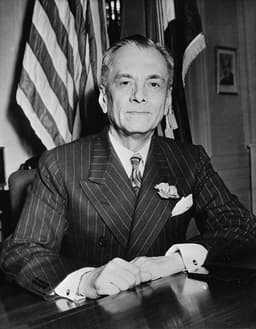
Manuel Quezon
Politician · Modern
52.3Total
Marquis of Pombal
Politician · Modern
65.0Total
Basic Information
Born
1878
1699
Died
1944
1782
Era
Modern
Modern
Nationality
Philippines
Portugal
Occupation
Politician
Politician
Civilization
Eastern
Western
Score Comparison
Military (10%)
18.8
41.6
Political (20%)
55.0
82.0
Influence (20%)
55.0
82.0
Legacy (20%)
56.0
52.0
Leadership (15%)
72.0
80.0
Strategy (15%)
36.4
30.3
TOTAL
52.3
65.0
Manuel Quezon — Complete Timeline
1935 AD
Approved the National Defense Act of 1935Reform◆ Major
Quezon signed the National Defense Act, creating the Philippine Army under General Douglas MacArthur. The act established a system of military training and reserves to prepare the Philippines for self-defense after independence.
National DefenseMilitaryMacArthur
Impact: nationalconstructive
Elected President of the Philippine CommonwealthPolitical Action
Quezon was elected as the first president of the Philippine Commonwealth under the Tydings-McDuffie Act, which established a ten-year transition period to full independence from the United States. His administration focused on national defense, social justice, and economic development.
Philippine CommonwealthIndependenceElection
Impact: nationalconstructive
1936 AD
Implemented the Social Justice ProgramReform◆ Major
Quezon launched a social justice program that included land reform, minimum wage laws, and the creation of the Court of Industrial Relations. The program aimed to address rural poverty and labor exploitation but faced implementation challenges.
Social JusticeLand ReformLabor
Impact: nationalprogressive
1937 AD
Established the National Language InstituteCultural◆ Major
Quezon created the National Language Institute to develop a national language based on Tagalog. This decision promoted national unity but sparked debates over linguistic diversity and regional representation.
National LanguageTagalogCultural Policy
Impact: nationalconstructive
1942 AD
Fled to the United States during Japanese OccupationPolitical Action◆ Major
After the Japanese invasion of the Philippines, Quezon evacuated to the United States to lead the Philippine government-in-exile. He continued to advocate for Philippine independence and Allied support from Washington, D.C.
World War IIExileJapanese Occupation
Impact: nationaltragic
1944 AD
Signed the Philippine Rehabilitation Act (Tydings–McDuffie Act amendments)Political Action◆ Major
Quezon negotiated with the U.S. Congress for post-war rehabilitation funds, resulting in the Philippine Rehabilitation Act. The act provided financial aid for reconstruction after the war, though Quezon died before its full implementation.
RehabilitationU.S. RelationsPost-War
Impact: nationalconstructive
Marquis of Pombal — Complete Timeline
1755 AD
1755 Lisbon earthquake reconstructionReform◆ Major
Following the devastating Lisbon earthquake, tsunami, and fires, Pombal organized the city's reconstruction. He implemented a grid-based urban plan, standardized building designs with earthquake-resistant features, and oversaw the rebuilding of the city center, the Baixa Pombalina.
Urban PlanningDisaster ResponseReconstruction
Impact: nationalconstructive
1759 AD
Expulsion of the Jesuits from PortugalPolitical Action◆ Major
Pombal expelled the Society of Jesus from Portugal and its empire, confiscating their property. This action was part of his broader anti-clerical reforms to centralize state power and reduce Church influence, and it led to a break in relations with the Papacy.
Anti-ClericalismChurch-State RelationsReform
Impact: nationaldestructive
Távora affair trial and executionsPolitical Action◆ Major
Pombal orchestrated the trial and execution of the powerful T
Political RepressionAristocracyPower Consolidation
Impact: nationaldestructive
1761 AD
Abolition of slavery in PortugalReform◆ Major
Pombal decreed the abolition of slavery in mainland Portugal, though it continued in the colonies. This was one of the earliest such acts in Europe, motivated by economic and humanitarian considerations, and it freed thousands of enslaved people within the kingdom.
AbolitionHuman RightsSocial Reform
Impact: nationalprogressive
1772 AD
Reform of Portuguese education systemReform◆ Major
Pombal implemented a comprehensive educational reform, replacing Jesuit-run schools with state-controlled institutions. He introduced new curricula emphasizing sciences, mathematics, and practical knowledge, and founded the College of Nobles and reformed the University of Coimbra.
EducationSecularizationModernization
Impact: nationalconstructive
Expert Analysis
Origins
Manuel Quezon (born 1878 in Baler, Philippines) came from a mestizo family of farmers and teachers. He studied law at the University of Santo Tomas and joined the Philippine Revolution against Spain, later serving under the American colonial government. His early exposure to both Filipino nationalism and American political systems shaped his pragmatic approach.
Sebastião José de Carvalho e Melo, the Marquis of Pombal (born 1699 in Lisbon, Portugal), was the son of a rural nobleman. He studied law at the University of Coimbra and served as a diplomat in London and Vienna. His experiences abroad convinced him of the need for modernization and centralization in Portugal, leading to his appointment as Secretary of State under King Joseph I.
Rise to Power
Quezon rose through the Philippine political system, serving as governor of Tayabas, then as Resident Commissioner to the U.S. House of Representatives (1909-1916). He became Senate President in 1916 and leveraged the Tydings-McDuffie Act of 1934 to secure Philippine independence. In 1935, he was elected the first president of the Philippine Commonwealth, a transitional government.
Pombal gained the favor of King Joseph I after the 1755 Lisbon earthquake. His efficient handling of the disaster—organizing relief, preventing looting, and planning reconstruction—earned him the king's trust. He was appointed Secretary of State for Foreign Affairs and War, effectively becoming prime minister. He consolidated power by sidelining rivals, including the Távora family, whom he had executed in 1759 for alleged treason.
Leadership & Governance
Quezon's leadership style was charismatic and personalistic. He centralized power in the presidency, often bypassing legislative processes. His Social Justice Program (1936) included land reform, minimum wage laws, and the creation of the Court of Industrial Relations, but implementation was limited by elite opposition. He approved the National Defense Act of 1935, creating the Philippine Army under General Douglas MacArthur, but the military remained underfunded. He also established the National Language Institute, promoting Tagalog as the basis for a national language, which fostered unity but alienated speakers of other dialects.
Pombal ruled as an enlightened despot, centralizing authority and reducing the power of the nobility and church. He rebuilt Lisbon with a rational grid plan after the earthquake, improving sanitation and earthquake resistance. He expelled the Jesuits in 1759, seizing their property and reforming education to emphasize science and state control. He abolished slavery in mainland Portugal in 1761 (though it continued in colonies), one of the earliest such acts in Europe. However, his methods were ruthless: the Távora affair involved torture and executions without due process. His political score of 82.0 dwarfs Quezon's 55.0, reflecting his more absolute control.
Triumph & Tragedy
Quezon's greatest success was securing the Tydings-McDuffie Act, which set a timeline for Philippine independence. His social justice reforms, though limited, laid groundwork for future labor rights. His greatest failure was his handling of the Japanese invasion in 1941-1942. Despite warnings, he hesitated to mobilize fully and fled to the United States, leaving his people to suffer occupation. His military score of 18.8 reflects this weakness. He died in exile in 1944, never seeing Philippine independence.
Pombal's triumph was the reconstruction of Lisbon, which became a model for urban planning. His educational reforms modernized Portugal's system. His tragedy was the Távora affair, which stained his reputation with brutality. His anti-Jesuit policies weakened religious influence but also led to the decline of Portuguese missions abroad. His legacy score of 52.0 is slightly below Quezon's 56.0, partly due to the controversial means he employed.
Character & Destiny
Quezon was pragmatic and adaptable, often switching positions to maintain power. He was a skilled negotiator who balanced American interests with Filipino aspirations. His decision to flee to the U.S. was controversial but arguably necessary for a government-in-exile. His health declined due to tuberculosis, contributing to his early death.
Pombal was ruthless and authoritarian, believing that progress required crushing opposition. He was a reformer but also a tyrant, willing to destroy rivals. His fall came after King Joseph I's death in 1777; Queen Maria I dismissed him and revoked many of his reforms. He died in disgrace in 1782.
Legacy
Quezon is remembered as the "Father of the Philippine Commonwealth" and a key figure in the independence movement. His national language policy and social justice programs had lasting impact, though many reforms were incomplete. His leadership score of 72.0 reflects his effectiveness in navigating the transition to independence. The Philippines gained full independence in 1946, partly due to his groundwork.
Pombal's legacy is mixed. He is credited with modernizing Portugal, rebuilding Lisbon, and weakening the church. However, his authoritarian methods and the Távora affair tarnish his reputation. His reforms were partially reversed after his fall, but his urban planning and educational models persisted. His influence score of 82.0 is the highest in this comparison, indicating his impact on Portuguese state-building.
Conclusion
By the numbers, Pombal scores higher overall (65.0 vs 52.3), with superior political (82.0 vs 55.0), influence (82.0 vs 55.0), and leadership (80.0 vs 72.0) scores. Quezon's legacy score (56.0) slightly exceeds Pombal's (52.0), but this does not compensate for the gap. Pombal's reforms—urban planning, education, anti-clericalism—had more concrete, lasting effects on Portugal's development, despite their controversial nature. Quezon's achievements were significant but constrained by colonial dependence and his own limitations. Therefore, the Marquis of Pombal had a greater impact as a transformative leader who reshaped a nation through decisive, if brutal, reforms.
Rankings
🥇
Marquis of PombalLeader
Mil: 41.6Pol: 82.0Inf: 82.0
65.0
🥈
Manuel Quezon
Mil: 18.8Pol: 55.0Inf: 55.0
52.3
+12.7 behind
How This Comparison Works
Algorithm
Each figure is scored on 6 dimensions (0—100 scale) based on structured historical data: Military (10%), Political (20%), Influence (20%), Legacy (20%), Leadership (15%), Strategy (15%). The weighted total produces the final ranking.
Data Sources
Scores are computed from structured sub-indicators in the database. Scale factors adjust for era (Ancient ×0.85, Modern ×1.0) and civilization size (Eastern ×1.05, Other ×0.80) to account for differences in population and military scale.
Maximum 3 Figures
Comparisons are limited to 2—3 figures to ensure readability and statistical meaningfulness.
Error Margins
±5 points per dimension — Sub-scores are derived from historical records with inherent uncertainty. Two figures within 5 points on a dimension should be considered roughly equivalent in that area.
Total Score Accuracy
±3 points overall — The weighted combination of 6 dimensions produces a total score with approximately ±3 points of uncertainty. Differences of less than 3 points are not statistically significant— the figures are effectively tied.
Known Limitations
- Historical records are incomplete and uneven across civilizations
- Figures from oral-tradition societies may be underrepresented
- Occupation labels can misclassify multi-role figures
- Scores measure capability and impact, not moral character
- Quantitative scoring is a comparison tool, not absolute truth
Capability Radar
Military (10%) — Battles & Warfare
Battles
13
10
Win Rate
16
10
Expansion
18
10
Political (20%) — Governance & Reform
Reform
70
90
Diplomacy
75
75
Economy
55
85
Influence (20%) — Cultural & Global Reach
Cultural
60
65
Global
55
65
Legacy (20%) — Historical Impact
Historical
65
70
Longevity
55
60
Leadership (15%) — Power & Stability
Tenure
65
85
Stability
60
70
Strategy (15%) — Tactics & Innovation
Strategy
23
15
Tactics
25
10
Reform
28
60
Similar Comparisons
Comments & Discussion
No comments yet. Be the first to share your thoughts!