Loading...
Manuel Quezon vs Xi Jinping
Xi Jinping leads by 5.7 pts · 2 figures compared
…
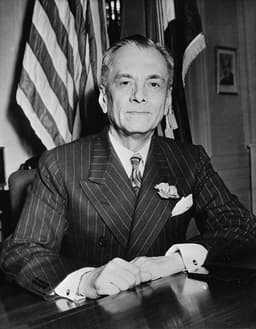
Manuel Quezon
Politician · Modern
52.3Total
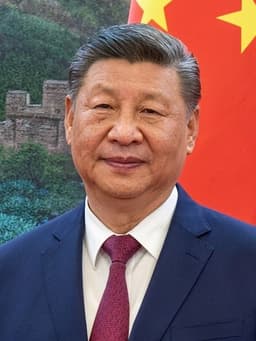
Xi Jinping
Politician · Modern
58.0Total
Basic Information
Born
1878
1953
Died
1944
—
Era
Modern
Modern
Nationality
Philippines
China
Occupation
Politician
Politician
Civilization
Eastern
Eastern
Score Comparison
Military (10%)
18.8
10.0
Political (20%)
55.0
70.3
Influence (20%)
55.0
65.0
Legacy (20%)
56.0
52.0
Leadership (15%)
72.0
75.0
Strategy (15%)
36.4
60.0
TOTAL
52.3
58.0
Manuel Quezon — Complete Timeline
1935 AD
Approved the National Defense Act of 1935Reform◆ Major
Quezon signed the National Defense Act, creating the Philippine Army under General Douglas MacArthur. The act established a system of military training and reserves to prepare the Philippines for self-defense after independence.
National DefenseMilitaryMacArthur
Impact: nationalconstructive
Elected President of the Philippine CommonwealthPolitical Action
Quezon was elected as the first president of the Philippine Commonwealth under the Tydings-McDuffie Act, which established a ten-year transition period to full independence from the United States. His administration focused on national defense, social justice, and economic development.
Philippine CommonwealthIndependenceElection
Impact: nationalconstructive
1936 AD
Implemented the Social Justice ProgramReform◆ Major
Quezon launched a social justice program that included land reform, minimum wage laws, and the creation of the Court of Industrial Relations. The program aimed to address rural poverty and labor exploitation but faced implementation challenges.
Social JusticeLand ReformLabor
Impact: nationalprogressive
1937 AD
Established the National Language InstituteCultural◆ Major
Quezon created the National Language Institute to develop a national language based on Tagalog. This decision promoted national unity but sparked debates over linguistic diversity and regional representation.
National LanguageTagalogCultural Policy
Impact: nationalconstructive
1942 AD
Fled to the United States during Japanese OccupationPolitical Action◆ Major
After the Japanese invasion of the Philippines, Quezon evacuated to the United States to lead the Philippine government-in-exile. He continued to advocate for Philippine independence and Allied support from Washington, D.C.
World War IIExileJapanese Occupation
Impact: nationaltragic
1944 AD
Signed the Philippine Rehabilitation Act (Tydings–McDuffie Act amendments)Political Action◆ Major
Quezon negotiated with the U.S. Congress for post-war rehabilitation funds, resulting in the Philippine Rehabilitation Act. The act provided financial aid for reconstruction after the war, though Quezon died before its full implementation.
RehabilitationU.S. RelationsPost-War
Impact: nationalconstructive
Xi Jinping — Complete Timeline
2012 AD
Launched the Anti-Corruption CampaignReform◆ Major
Xi initiated a sweeping anti-corruption campaign targeting officials at all levels. The campaign led to the investigation and punishment of millions of party members, including high-ranking figures like Zhou Yongkang and Bo Xilai. It consolidated Xi's authority and reshaped the party's internal discipline.
Anti-CorruptionPolitical Purge
Impact: nationalconstructive
Elected General Secretary of the Communist Party of ChinaPolitical Action
Xi Jinping was elected General Secretary of the CPC Central Committee at the 18th National Congress. This positioned him as the paramount leader of China, succeeding Hu Jintao. The event marked the beginning of his consolidation of power and the launch of major policy initiatives.
Leadership TransitionCPC Congress
Impact: global
2013 AD
Announced the Belt and Road InitiativePolitical Action◆ Major
Xi unveiled the Belt and Road Initiative (BRI) during visits to Kazakhstan and Indonesia. The BRI is a massive infrastructure and economic development project spanning Asia, Europe, and Africa. It aims to enhance connectivity and trade, but has also drawn criticism for debt-trap diplomacy and geopolitical expansion.
InfrastructureForeign PolicyEconomic Strategy
Impact: global
2018 AD
Abolished Presidential Term LimitsPolitical Action
The National People's Congress approved a constitutional amendment removing the two-term limit for the presidency. This allowed Xi to remain in office indefinitely. Critics viewed it as a consolidation of authoritarian rule, while supporters argued it ensured stability and continuity.
Constitutional AmendmentPower Consolidation
Impact: nationaldestructive
2020 AD
Implemented the Hong Kong National Security LawPolitical Action◆ Major
In response to the 2019 Hong Kong protests, Beijing imposed a national security law on Hong Kong. The law criminalized secession, subversion, terrorism, and collusion with foreign forces. It led to the arrest of pro-democracy activists and the dissolution of opposition groups, significantly curtailing Hong Kong's autonomy.
Hong KongNational SecurityAutonomy
Impact: regionaldestructive
Launched the COVID-19 Zero-COVID PolicyPolitical Action◆ Major
Xi's government implemented a strict zero-COVID strategy involving mass testing, lockdowns, and quarantine. The policy initially controlled the virus but later caused economic disruption and public discontent. It was abruptly abandoned in late 2022 after widespread protests.
Public HealthPandemic Response
Impact: national
2022 AD
Met with President Joe Biden at the G20 SummitPolitical Action
Xi held his first in-person meeting with U.S. President Joe Biden on the sidelines of the G20 summit in Bali. The meeting aimed to manage tensions over Taiwan, trade, and human rights. Both sides agreed to resume cooperation on climate change and other issues.
DiplomacyUS-China Relations
Impact: global
Expert Analysis
Origins
Manuel Quezon was born on August 19, 1878, in Baler, Tayabas (now Aurora), Philippines, to a poor Spanish mestizo family. His father was a primary school teacher, and his mother a rice farmer. He studied law at the University of Santo Tomas and passed the bar in 1903. His early career included serving as a provincial fiscal and later as a representative to the U.S. Congress.
Xi Jinping was born on June 15, 1953, in Beijing, China, into a revolutionary family. His father, Xi Zhongxun, was a high-ranking Communist Party official. During the Cultural Revolution, his family was purged, and Xi was sent to the countryside for "re-education" in Yanchuan County. He later studied chemical engineering at Tsinghua University and earned a doctorate in Marxist theory.
Rise to Power
Quezon rose through the Philippine political system under U.S. colonial rule. He was elected Resident Commissioner to the U.S. House of Representatives in 1909, where he advocated for Philippine independence. In 1916, he became President of the Philippine Senate, a position he held until 1935. He was a key figure in the passage of the Tydings-McDuffie Act (1934), which established the Philippine Commonwealth and set a ten-year transition to independence. He was elected as the first Commonwealth president in 1935, defeating Emilio Aguinaldo.
Xi Jinping rose through the Chinese Communist Party (CCP) hierarchy. He served as Governor of Fujian (1999-2002) and Zhejiang (2002-2007), where he implemented economic reforms. He became a member of the Politburo Standing Committee in 2007 and Vice President under Hu Jintao. In 2012, he was elected General Secretary of the CCP and President of China in 2013. His power consolidated with the 2018 constitutional amendment that abolished presidential term limits.
Leadership & Governance
Quezon governed the Philippine Commonwealth with a focus on national preparation for independence. He implemented the National Defense Act of 1935, creating the Philippine Army under U.S. General Douglas MacArthur. He launched a Social Justice Program that included land reform, minimum wage laws, and the creation of the Court of Industrial Relations. He also established the National Language Institute, promoting Tagalog as the basis for a national language, which sparked debates with other linguistic groups. His leadership style was pragmatic and populist, often using his charisma to build alliances.
Xi Jinping governs China with a centralized, authoritarian style. He launched the Belt and Road Initiative (BRI) in 2013, a global infrastructure project spanning over 140 countries. Domestically, he pursued the "Chinese Dream" of national rejuvenation, anti-corruption campaigns that netted over 1.5 million officials, and the Hong Kong National Security Law in 2020. His governance emphasizes party discipline and ideological conformity, with scores of Political 70.3 and Leadership 75.0, compared to Quezon's Political 55.0 and Leadership 72.0.
Triumph & Tragedy
Quezon's greatest success was securing the Tydings-McDuffie Act and leading the Commonwealth toward independence. His social justice programs, though limited, laid groundwork for labor rights. However, his failure to adequately prepare the Philippines for Japanese invasion led to a brutal occupation. He fled to the U.S., establishing a government-in-exile, which some saw as abandoning his people. His controversial decision to allow U.S. military bases in the Philippines after independence also drew criticism.
Xi Jinping's triumphs include the BRI, which has invested over $1 trillion in infrastructure, and the successful hosting of the 2022 Winter Olympics. His zero-COVID policy initially controlled the pandemic, but later lockdowns caused economic disruption. The Hong Kong National Security Law suppressed protests but drew international condemnation. His anti-corruption campaign strengthened party control but also centralized power. The abolition of term limits in 2018 allowed him to remain in power indefinitely, a move critics call a step toward dictatorship.
Character & Destiny
Quezon was a charismatic, pragmatic leader who often compromised with the U.S. to achieve gradual independence. He was known for his temper and impulsive decisions, such as his flight to the U.S., which damaged his reputation. His character shaped his fate as a transitional leader who laid foundations but couldn't complete the journey.
Xi Jinping is a disciplined, strategic leader who prioritizes party unity and national strength. His experience during the Cultural Revolution instilled a distrust of chaos, leading to tight control. His character drives his ambition for a powerful China, but his centralization of power risks instability after his tenure. He scores Strategy 60.0 while Quezon scores 36.4, reflecting Xi's more systematic approach.
Legacy
Quezon is remembered as the "Father of the National Language" and the first Commonwealth president. His social justice programs influenced later Philippine policies. However, his legacy is mixed due to his authoritarian tendencies and failure to defend the Philippines. He scores Legacy 56.0.
Xi Jinping's legacy is still unfolding. He has reshaped China's global role through the BRI and strengthened party control. His abolition of term limits may define his legacy as a leader who broke with precedent. He scores Legacy 52.0, slightly lower than Quezon's 56.0, but his Influence score of 65.0 is higher than Quezon's 55.0.
Conclusion
Xi Jinping has a higher total score (58.0 vs. 52.3) and greater global impact through the BRI and China's rising power. While Quezon's contributions to Philippine independence are significant, Xi's influence spans continents and reshapes international order. The data supports Xi as having greater overall impact, though Quezon's legacy is more consolidated. Xi's total score of 58.0 edges out Quezon's 52.3, with higher Political, Influence, Leadership, and Strategy scores.
Rankings
🥇
Xi JinpingLeader
Mil: 10.0Pol: 70.3Inf: 65.0
58.0
🥈
Manuel Quezon
Mil: 18.8Pol: 55.0Inf: 55.0
52.3
+5.7 behind
How This Comparison Works
Algorithm
Each figure is scored on 6 dimensions (0—100 scale) based on structured historical data: Military (10%), Political (20%), Influence (20%), Legacy (20%), Leadership (15%), Strategy (15%). The weighted total produces the final ranking.
Data Sources
Scores are computed from structured sub-indicators in the database. Scale factors adjust for era (Ancient ×0.85, Modern ×1.0) and civilization size (Eastern ×1.05, Other ×0.80) to account for differences in population and military scale.
Maximum 3 Figures
Comparisons are limited to 2—3 figures to ensure readability and statistical meaningfulness.
Error Margins
±5 points per dimension — Sub-scores are derived from historical records with inherent uncertainty. Two figures within 5 points on a dimension should be considered roughly equivalent in that area.
Total Score Accuracy
±3 points overall — The weighted combination of 6 dimensions produces a total score with approximately ±3 points of uncertainty. Differences of less than 3 points are not statistically significant— the figures are effectively tied.
Known Limitations
- Historical records are incomplete and uneven across civilizations
- Figures from oral-tradition societies may be underrepresented
- Occupation labels can misclassify multi-role figures
- Scores measure capability and impact, not moral character
- Quantitative scoring is a comparison tool, not absolute truth
Capability Radar
Military (10%) — Battles & Warfare
Battles
13
0
Win Rate
16
0
Expansion
18
60
Political (20%) — Governance & Reform
Reform
70
80
Diplomacy
75
75
Economy
55
85
Influence (20%) — Cultural & Global Reach
Cultural
60
65
Global
55
75
Legacy (20%) — Historical Impact
Historical
65
70
Longevity
55
60
Leadership (15%) — Power & Stability
Tenure
65
85
Stability
60
80
Strategy (15%) — Tactics & Innovation
Strategy
23
0
Tactics
25
0
Reform
28
75
Similar Comparisons
Comments & Discussion
No comments yet. Be the first to share your thoughts!