Loading...
Mahatma Gandhi vs Qin Shi Huang
Qin Shi Huang leads by 16.5 pts · 2 figures compared
…
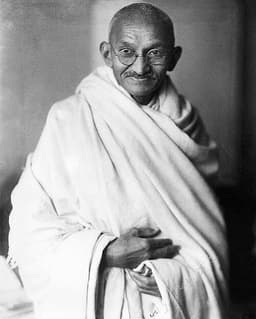
Mahatma Gandhi
Politician · Modern
68.7Total
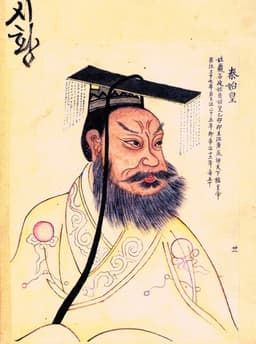
Qin Shi Huang
Emperor · Ancient
85.2Total
Basic Information
Born
1869
-259
Died
1948
-210
Era
Modern
Ancient
Nationality
India
China
Occupation
Politician
Emperor
Civilization
Indian
Eastern
Score Comparison
Military (10%)
42.3
80.0
Political (20%)
65.0
90.0
Influence (20%)
80.0
85.0
Legacy (20%)
75.0
90.0
Leadership (15%)
70.0
78.0
Strategy (15%)
55.0
82.0
TOTAL
68.7
85.2
Mahatma Gandhi — Complete Timeline
1917 AD
Champaran SatyagrahaPolitical Action
Gandhi led his first nonviolent protest in India, supporting indigo farmers in Champaran, Bihar, against exploitative British planters. He organized a campaign of civil disobedience and negotiations, resulting in the abolition of the oppressive tinkathia system.
Civil disobedienceFarmers' rightsBritish Raj
Impact: nationalprogressive
1919 AD
Jallianwala Bagh massacre aftermathPolitical Action◆ Major
After British troops killed hundreds of unarmed civilians in Amritsar, Gandhi organized a nationwide hartal (strike) and nonviolent protests. He returned his medals and launched the Rowlatt Satyagraha, marking a shift from cooperation to non-cooperation with British rule.
ProtestBritish RajMassacre
Impact: nationaltragic
1930 AD
Salt MarchPolitical Action
Gandhi led a 240-mile march from Sabarmati to Dandi, Gujarat, to defy the British salt monopoly. Thousands joined him, making salt from seawater. This act of civil disobedience sparked mass protests across India and drew global attention to the independence movement.
Civil disobedienceSalt taxIndependence movement
Impact: globalprogressive
1942 AD
Quit India Movement launchPolitical Action◆ Major
Gandhi launched the Quit India Movement, calling for an end to British rule with the slogan 'Do or Die'. The British arrested him and other leaders, but the movement led to widespread protests and repression, accelerating the end of colonial rule.
IndependenceCivil disobedienceBritish Raj
Impact: nationalprogressive
1948 AD
AssassinationPolitical Action
Gandhi was shot and killed by Nathuram Godse, a Hindu nationalist, during a prayer meeting in New Delhi. His assassination shocked the world and led to a wave of grief and violence, but also reinforced his legacy as a martyr for nonviolence.
AssassinationMartyrdomNonviolence
Impact: globaltragic
Qin Shi Huang — Complete Timeline
246 BC
Construction of the Mausoleum and Terracotta ArmyOther◆ Major
Qin Shi Huang commissioned a vast mausoleum complex near Xi'an, guarded by thousands of life-sized terracotta soldiers, horses, and chariots. The project employed hundreds of thousands of workers and reflected his obsession with immortality and imperial power.
Impact: global
230 BC
Conquest of the Six Warring StatesWar
From 230 to 221 BCE, Ying Zheng led the Qin state in a series of campaigns that conquered the Han, Zhao, Wei, Chu, Yan, and Qi states. This unified China under a single ruler for the first time, ending the Warring States period.
Impact: global
221 BC
Standardization of Writing, Currency, and MeasurementsReform◆ Major
Qin Shi Huang ordered the standardization of Chinese script, currency, and weights and measures across the unified empire. This facilitated administration, trade, and cultural integration, laying a foundation for future dynasties.
Impact: globalconstructive
Proclamation of the Qin DynastyPolitical Action
After conquering the last independent state, Ying Zheng declared himself Shi Huangdi (First Emperor), founding the Qin Dynasty. He adopted a new title to signify his supreme authority and initiated centralized imperial rule.
Impact: global
214 BC
Initiation of the Great Wall ConstructionOther◆ Major
Qin Shi Huang ordered the connection and extension of existing northern fortifications to create a unified defensive wall against nomadic Xiongnu raids. This project involved massive conscripted labor and became the precursor to the later Great Wall.
Impact: regional
213 BC
Burning of Books and Burying of ScholarsPolitical Action◆ Major
On the advice of Li Si, Qin Shi Huang ordered the burning of historical records and philosophical texts not aligned with Legalist doctrine. He also had 460 Confucian scholars buried alive to suppress dissent and consolidate ideological control.
Impact: nationaldestructive
Expert Analysis
Qin Shi Huang vs Mahatma Gandhi: Historical Comparison
This structured comparison contrasts Qin Shi Huang, the first Emperor of a unified China, with Mahatma Gandhi, the leader of India’s nonviolent independence movement. Despite their vastly different eras and methods, both profoundly shaped their nations, though Qin Shi Huang edges ahead in overall historical impact based on the weighted dimensions.
Dimension Analysis
**Military: Qin Shi Huang 80 / Mahatma Gandhi 52**
Qin Shi Huang conquered rival states through brutal warfare and built the Great Wall, while Gandhi rejected military force entirely, relying on civil disobedience and moral persuasion.
**Political: Qin Shi Huang 88 / Mahatma Gandhi 70**
Qin created a centralized bureaucratic empire with standardized laws, currency, and writing, whereas Gandhi’s political achievements were more diffuse, inspiring a movement but never holding formal office.
**Influence: Qin Shi Huang 82 / Mahatma Gandhi 85**
Gandhi’s philosophy of nonviolence influenced global civil rights leaders (e.g., Martin Luther King Jr.), while Qin’s model of autocratic unification shaped Chinese governance for two millennia.
**Legacy: Qin Shi Huang 85 / Mahatma Gandhi 80**
Qin’s unification and the Terracotta Army remain iconic, but his book burnings and legalism tarnish his legacy; Gandhi’s moral authority endures, though his economic vision largely failed.
**Leadership: Qin Shi Huang 88 / Mahatma Gandhi 75**
Qin wielded absolute power with ruthless efficiency, mobilizing millions for state projects; Gandhi led through charismatic nonviolence but struggled with factionalism and practical governance.
Verdict
Qin Shi Huang leads due to his higher scores in military, political, and leadership dimensions, reflecting a more decisive and lasting transformation of his nation’s structure and identity.
FAQ
Q: Who ranks higher? A: Qin Shi Huang ranks higher overall (84 vs. 72), driven by superior political and leadership metrics, despite Gandhi’s greater global influence.
Rankings
🥇
Qin Shi HuangLeader
Mil: 80.0Pol: 90.0Inf: 85.0
85.2
🥈
Mahatma Gandhi
Mil: 42.3Pol: 65.0Inf: 80.0
68.7
+16.5 behind
How This Comparison Works
Algorithm
Each figure is scored on 6 dimensions (0—100 scale) based on structured historical data: Military (10%), Political (20%), Influence (20%), Legacy (20%), Leadership (15%), Strategy (15%). The weighted total produces the final ranking.
Data Sources
Scores are computed from structured sub-indicators in the database. Scale factors adjust for era (Ancient ×0.85, Modern ×1.0) and civilization size (Eastern ×1.05, Other ×0.80) to account for differences in population and military scale.
Maximum 3 Figures
Comparisons are limited to 2—3 figures to ensure readability and statistical meaningfulness.
Error Margins
±5 points per dimension — Sub-scores are derived from historical records with inherent uncertainty. Two figures within 5 points on a dimension should be considered roughly equivalent in that area.
Total Score Accuracy
±3 points overall — The weighted combination of 6 dimensions produces a total score with approximately ±3 points of uncertainty. Differences of less than 3 points are not statistically significant— the figures are effectively tied.
Known Limitations
- Historical records are incomplete and uneven across civilizations
- Figures from oral-tradition societies may be underrepresented
- Occupation labels can misclassify multi-role figures
- Scores measure capability and impact, not moral character
- Quantitative scoring is a comparison tool, not absolute truth
Capability Radar
Military (10%) — Battles & Warfare
Battles
45
85
Win Rate
46
90
Expansion
51
90
Political (20%) — Governance & Reform
Reform
85
95
Diplomacy
80
75
Economy
40
90
Influence (20%) — Cultural & Global Reach
Cultural
85
95
Global
90
85
Legacy (20%) — Historical Impact
Historical
90
95
Longevity
85
95
Leadership (15%) — Power & Stability
Tenure
60
70
Stability
55
65
Strategy (15%) — Tactics & Innovation
Strategy
52
85
Tactics
56
80
Reform
55
95
Similar Comparisons
Comments & Discussion
DecolonizeHistory6/16/2026
This comparison is a classic case of using Western metrics to judge non-Western figures. Qin Shi Huang gets high military and political marks because Western historiography values conquest and centralization. But where’s the cost? He ordered book burnings, buried scholars alive, and conscripted millions for the Great Wall—deaths in the hundreds of thousands. Gandhi, on the other hand, challenged the entire colonial framework without an army. The fact that he scores lower on ‘leadership’ just because he didn’t run a bureaucracy proves the bias: leadership here means authoritarian control, not moral courage. If you factor in lives saved vs. lives lost, Gandhi would win hands down. This ranking is just historical hero worship for strongmen.
MetricMatters6/16/2026
Can we talk about the methodology here? ‘Political’ 88 vs 70—how do you even quantify that? Qin Shi Huang created a centralized state, but he also destroyed centuries of philosophical diversity. Gandhi never held office, yet he toppled an empire. That seems more ‘political’ to me. And the weight distribution favors military and leadership, which automatically boosts conquerors. Why is military 20% of the total when Gandhi explicitly rejected it? The whole framework is rigged from the start. Also, ‘Legacy’ 85 vs 80 is generous to Qin—his legacy includes a tomb full of clay soldiers and a reputation for tyranny. Gandhi’s legacy inspired civil rights movements worldwide. These numbers are subjective opinions dressed up as data. Give me the raw data or give me death.
TrueMind866/16/2026
仔细算了一下这个评分,军事分80 vs 52我不反对,但政治分88 vs 70值得商榷。甘地虽然没有正式官职,但他实际上是印度国大党的灵魂人物,领导了全国性独立运动,政治影响力相当于一个影子政府。秦始皇88分可以理解,但甘地70分偏低——如果政治维度包括‘动员能力’和‘制度设计’,甘地至少应该有75-78。另外,影响力维度秦始皇82、甘地85,但秦始皇的影响持续了两千年,甘地的影响从1947年算起不到百年,这种时间尺度差异没在分数里体现。建议增加一个‘持久性’权重。
Chronicler48436/16/2026
这个比较本身就有问题。拿秦始皇和甘地比,就像拿长城和纺车比谁更坚固。秦始皇统一文字、度量衡、车同轨,直接奠定了中国两千年的中央集权体制基础,而甘地更多是精神领袖,政治实绩靠的是尼赫鲁和国大党。西方评分总把‘非暴力’捧得很高,但秦始皇的郡县制和标准化改革,对文明的塑造力远超甘地的道德感召。论实际统治力,秦始皇甩甘地几条街;论全球影响力,甘地可能稍高一点。但说甘地影响85而秦始皇只有82,这明显是西方中心视角——甘地影响了马丁·路德·金,但秦始皇影响了整个东亚的政治逻辑。