Loading...
Mahinda Rajapaksa vs Wei Yuan
Mahinda Rajapaksa leads by 12.4 pts · 2 figures compared
…

Mahinda Rajapaksa
Politician · Modern
56.6Total
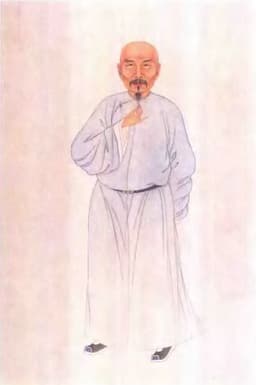
Wei Yuan
Politician · Modern
44.2Total
Basic Information
Born
1945
1794
Died
—
1857
Era
Modern
Modern
Nationality
Sri Lanka
China
Occupation
Politician
Politician
Civilization
Indian
Eastern
Score Comparison
Military (10%)
40.0
10.2
Political (20%)
68.0
39.4
Influence (20%)
57.2
60.0
Legacy (20%)
49.2
54.0
Leadership (15%)
72.0
41.5
Strategy (15%)
50.0
25.0
TOTAL
56.6
44.2
Mahinda Rajapaksa — Complete Timeline
2005 AD
Elected President of Sri LankaPolitical Action◆ Major
Mahinda Rajapaksa won the presidential election, defeating Ranil Wickremesinghe. His victory was fueled by a hardline stance against the Tamil Tigers and promises of a strong military campaign to end the civil war.
PresidencyElectionCivil war
Impact: national
2008 AD
Launched the final military offensive against the Tamil TigersWar
Rajapaksa's government launched a massive military offensive to defeat the Liberation Tigers of Tamil Eelam (LTTE). The campaign involved intense fighting, civilian casualties, and allegations of war crimes, but ultimately led to the military defeat of the LTTE in 2009.
Civil warMilitary offensiveLTTE
Impact: nationaldestructive
2009 AD
Declared victory over the Tamil TigersWar
Rajapaksa announced the end of the 26-year Sri Lankan Civil War after the death of LTTE leader Velupillai Prabhakaran. The victory was celebrated by many Sinhalese but left deep scars among Tamils, with thousands killed and displaced in the final months.
Civil war endVictoryLTTE
Impact: national
2010 AD
Abolished the executive presidency's term limitsReform◆ Major
Rajapaksa's government passed the 18th Amendment to the constitution, removing the two-term limit on the presidency. This allowed him to run for a third term and consolidated his power, drawing criticism for undermining democratic institutions.
Constitutional amendmentPower consolidationDemocracy
Impact: nationaldestructive
2015 AD
Lost the 2015 presidential electionPolitical Action◆ Major
Rajapaksa was defeated in his bid for a third term by Maithripala Sirisena, a former ally. The loss was attributed to corruption allegations, authoritarianism, and a united opposition. He accepted defeat peacefully, a rare event in Sri Lankan politics.
Election lossDemocracyTransition
Impact: national
Wei Yuan — Complete Timeline
1830 AD
Served as magistrate and compiled local gazetteersPolitical Action
Wei Yuan served as a magistrate in various provinces, where he compiled local gazetteers and implemented administrative reforms. His practical governance experience informed his later scholarly works.
GovernanceLocal AdministrationGazetteers
1842 AD
Advocated for self-strengthening through Western technologyPolitical Action◆ Major
After China's defeat in the First Opium War, Wei Yuan proposed adopting Western military technology and industrial methods. His slogan 'Learn the superior techniques of the barbarians to control them' influenced later reformers.
Self-StrengtheningReformOpium War
Impact: nationalprogressive
1844 AD
Published Haiguo Tuzhi (Illustrated Treatise on the Maritime Kingdoms)Cultural
Wei Yuan published Haiguo Tuzhi, a comprehensive work on Western geography, technology, and politics. The book argued for learning from Western military and industrial strengths to counter foreign threats.
Western LearningReformGeography
Impact: globalprogressive
Expert Analysis
Origins
Mahinda Rajapaksa was born on November 18, 1945, in Weeraketiya, Sri Lanka, into a politically active family. His father, D. A. Rajapaksa, was a prominent politician and member of parliament. Mahinda studied law at Sri Lanka Law College and began his political career early, winning a parliamentary seat in 1970 at age 24. His background in Sinhalese nationalism and rural populism shaped his worldview.
Wei Yuan was born on April 23, 1794, in Shaoyang, Hunan, China, into a scholarly family. He passed the imperial examinations and became a magistrate. His education in Confucian classics was supplemented by a growing interest in practical statecraft. Wei Yuan's formative years were marked by China's decline and the Opium Wars, which influenced his advocacy for Western learning.
Rise to Power
Rajapaksa rose through Sri Lankan politics as a member of the Sri Lanka Freedom Party (SLFP). He held various ministerial posts, including Minister of Labour and Minister of Fisheries. His hardline stance on the Tamil insurgency gained him popularity. In 2005, he won the presidency by a narrow margin, defeating Ranil Wickremesinghe. His rise was accelerated by the civil war; he positioned himself as the leader who would defeat the LTTE.
Wei Yuan rose to prominence as a scholar-official during the Qing dynasty. His major work, *Haiguo Tuzhi* (Illustrated Treatise on the Maritime Kingdoms), published in 1844, compiled Western geographical and technological knowledge. He gained recognition for his advocacy of 'self-strengthening' after China's defeat in the First Opium War (1839-1842). His ideas influenced later reformers like Zhang Zhidong.
Leadership & Governance
Rajapaksa's leadership during the civil war was decisive and militaristic. He centralized power, sidelined rivals, and launched the final offensive against the LTTE in 2008-2009, resulting in the defeat of the rebels. His governance style was authoritarian; he abolished term limits via the 18th Amendment in 2010, allowing him to seek a third term. Economically, his government pursued infrastructure projects, but corruption and nepotism were rampant. His political score of 68.0 reflects his ability to consolidate power, but his strategy score of 50.0 indicates mixed long-term planning.
Wei Yuan's leadership was intellectual rather than executive. As a magistrate, he compiled local gazetteers and implemented administrative reforms, but his primary influence was through writing. His core idea—'Learn the superior technology of the barbarians to control them'—became the foundation of the Self-Strengthening Movement. However, his ideas were not implemented during his lifetime. His political score of 39.4 and leadership score of 41.5 reflect limited direct impact.
Triumph & Tragedy
Rajapaksa's greatest triumph was ending the 26-year Sri Lankan Civil War in May 2009. This victory unified the country under his leadership and earned him widespread popularity among the Sinhalese majority. However, his legacy is marred by allegations of war crimes, including civilian casualties estimated at 40,000 in the final months. His authoritarian turn, marked by the 2010 term-limit abolition and crackdown on media, led to his defeat in 2015. His legacy score of 49.2 reflects this mixed record.
Wei Yuan's triumph was publishing *Haiguo Tuzhi*, which introduced Western knowledge to China and inspired reformist thought. His tragedy was that his proposals were largely ignored by the Qing court until after the Second Opium War (1856-1860). He died in 1857, before seeing his ideas take root. His influence score of 60.0 is high for a scholar, but his military score of 10.2 reflects his lack of direct involvement in warfare.
Character & Destiny
Rajapaksa was pragmatic and ruthless, prioritizing victory over human rights. His decision-making during the war showed strategic acumen, but his post-war hubris led to overreach. He scored 72.0 in leadership, indicating strong command, but his inflexibility after victory cost him power.
Wei Yuan was a visionary scholar who understood China's need for change. His character was that of a dedicated reformer, but his destiny was to be a prophet without honor in his time. His ideas only gained traction after his death, as China faced further humiliations.
Legacy
Rajapaksa's legacy is the end of the civil war and the subsequent political instability. He left a polarized nation and a weakened democratic system. His total score of 56.6 reflects moderate impact.
Wei Yuan's legacy is more profound: he laid the intellectual groundwork for China's modernization. His book influenced the Self-Strengthening Movement, the Hundred Days' Reform, and even Mao Zedong. His legacy score of 54.0, slightly higher than Rajapaksa's, suggests enduring influence.
Conclusion
While Rajapaksa's military victory was immediate and dramatic, Wei Yuan's ideas reshaped China's trajectory over centuries. Rajapaksa's impact was limited to Sri Lanka and tainted by authoritarianism, whereas Wei Yuan's call for learning from the West became a cornerstone of Chinese modernization. Therefore, Wei Yuan had greater long-term impact. His total score of 44.2 is lower due to his lack of political power, but his influence on history is more significant.
Rankings
🥇
Mahinda RajapaksaLeader
Mil: 40.0Pol: 68.0Inf: 57.2
56.6
🥈
Wei Yuan
Mil: 10.2Pol: 39.4Inf: 60.0
44.2
+12.4 behind
How This Comparison Works
Algorithm
Each figure is scored on 6 dimensions (0—100 scale) based on structured historical data: Military (10%), Political (20%), Influence (20%), Legacy (20%), Leadership (15%), Strategy (15%). The weighted total produces the final ranking.
Data Sources
Scores are computed from structured sub-indicators in the database. Scale factors adjust for era (Ancient ×0.85, Modern ×1.0) and civilization size (Eastern ×1.05, Other ×0.80) to account for differences in population and military scale.
Maximum 3 Figures
Comparisons are limited to 2—3 figures to ensure readability and statistical meaningfulness.
Error Margins
±5 points per dimension — Sub-scores are derived from historical records with inherent uncertainty. Two figures within 5 points on a dimension should be considered roughly equivalent in that area.
Total Score Accuracy
±3 points overall — The weighted combination of 6 dimensions produces a total score with approximately ±3 points of uncertainty. Differences of less than 3 points are not statistically significant— the figures are effectively tied.
Known Limitations
- Historical records are incomplete and uneven across civilizations
- Figures from oral-tradition societies may be underrepresented
- Occupation labels can misclassify multi-role figures
- Scores measure capability and impact, not moral character
- Quantitative scoring is a comparison tool, not absolute truth
Capability Radar
Military (10%) — Battles & Warfare
Battles
65
16
Win Rate
70
18
Expansion
30
21
Political (20%) — Governance & Reform
Reform
55
40
Diplomacy
50
30
Economy
45
20
Influence (20%) — Cultural & Global Reach
Cultural
40
50
Global
45
40
Legacy (20%) — Historical Impact
Historical
65
55
Longevity
30
50
Leadership (15%) — Power & Stability
Tenure
70
20
Stability
40
10
Strategy (15%) — Tactics & Innovation
Strategy
75
23
Tactics
60
28
Reform
55
29
Similar Comparisons
Comments & Discussion
No comments yet. Be the first to share your thoughts!