Loading...
Ding Richang vs Wei Yuan
Ding Richang leads by 6.6 pts · 2 figures compared
…

Ding Richang
Politician · Modern
50.8Total
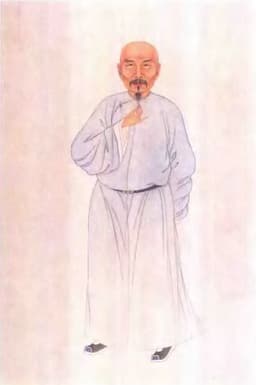
Wei Yuan
Politician · Modern
44.2Total
Basic Information
Born
1823
1794
Died
1882
1857
Era
Modern
Modern
Nationality
China
China
Occupation
Politician
Politician
Civilization
Eastern
Eastern
Score Comparison
Military (10%)
35.0
10.2
Political (20%)
45.0
39.4
Influence (20%)
50.2
60.0
Legacy (20%)
45.0
54.0
Leadership (15%)
72.0
41.5
Strategy (15%)
60.0
25.0
TOTAL
50.8
44.2
Ding Richang — Complete Timeline
1865 AD
Established the Jiangnan ArsenalInvention◆ Major
Ding Richang, as a Qing official, oversaw the establishment of the Jiangnan Arsenal in Shanghai. This facility produced modern weapons and machinery, becoming a key center of the Self-Strengthening Movement and China's early industrialization.
Self-Strengthening MovementIndustrializationMilitary Modernization
Impact: nationalconstructive
1867 AD
Promoted Western Learning and TranslationCultural
Ding Richang supported the translation of Western scientific and technical texts at the Jiangnan Arsenal. He facilitated the hiring of foreign experts and the training of Chinese engineers, advancing technological knowledge in China.
TranslationEducationWesternization
Impact: nationalconstructive
1875 AD
Served as Governor of Jiangsu ProvincePolitical Action
Ding Richang was appointed Governor of Jiangsu, where he implemented administrative reforms and continued to support industrial projects. His tenure focused on strengthening provincial governance and economic development.
GovernorshipAdministrative Reform
Impact: regionalconstructive
Wei Yuan — Complete Timeline
1830 AD
Served as magistrate and compiled local gazetteersPolitical Action
Wei Yuan served as a magistrate in various provinces, where he compiled local gazetteers and implemented administrative reforms. His practical governance experience informed his later scholarly works.
GovernanceLocal AdministrationGazetteers
1842 AD
Advocated for self-strengthening through Western technologyPolitical Action◆ Major
After China's defeat in the First Opium War, Wei Yuan proposed adopting Western military technology and industrial methods. His slogan 'Learn the superior techniques of the barbarians to control them' influenced later reformers.
Self-StrengtheningReformOpium War
Impact: nationalprogressive
1844 AD
Published Haiguo Tuzhi (Illustrated Treatise on the Maritime Kingdoms)Cultural
Wei Yuan published Haiguo Tuzhi, a comprehensive work on Western geography, technology, and politics. The book argued for learning from Western military and industrial strengths to counter foreign threats.
Western LearningReformGeography
Impact: globalprogressive
Expert Analysis
Origins
Ding Richang was born in 1823 in Guangdong province, into a scholarly family. He passed the imperial examinations and began his career as a local magistrate, gaining experience in administration and fiscal management. His early exposure to Western technology came through his work with foreign merchants in the treaty ports.
Wei Yuan was born in 1794 in Hunan province, also to a scholarly family. He studied under prominent Confucian scholars and passed the provincial examinations in 1822. His early career involved compiling local gazetteers and serving as a secretary to influential officials, which gave him insight into China's administrative challenges.
Rise to Power
Ding Richang rose to prominence through his administrative skills and support for the Self-Strengthening Movement. In 1865, he was appointed intendant of the Shanghai circuit, where he collaborated with Li Hongzhang to establish the Jiangnan Arsenal. By 1867, he became governor of Jiangsu province, implementing reforms in taxation and education.
Wei Yuan's rise was more intellectual. After the First Opium War (1839-1842), he published *Haiguo Tuzhi* in 1844, a comprehensive study of Western geography, technology, and politics. The work was based on translations by Lin Zexu and others. Wei Yuan's ideas gained traction among reform-minded officials, though he never held high office. He served as a magistrate in various provinces, but his influence remained scholarly.
Leadership & Governance
Ding Richang's leadership was pragmatic and hands-on. As governor of Jiangsu, he oversaw the production of modern weapons at the Jiangnan Arsenal, employing Western engineers and translating technical manuals. He also reformed the tax system to fund industrial projects. His governance score of 72.0 reflects his ability to implement concrete changes.
Wei Yuan's leadership was indirect, through his writings. He advocated for "learning the superior technology of the barbarians to control them" - a slogan that shaped the Self-Strengthening Movement. However, his political score of 39.4 indicates limited direct influence on policy. His role was more as a theorist than a practitioner.
Triumph & Tragedy
Ding Richang's greatest triumph was the establishment of the Jiangnan Arsenal, which became China's premier military-industrial complex, producing rifles, cannons, and steamships. Its translation bureau disseminated Western science. His tragedy was that his reforms were limited to a few provinces and failed to prevent China's decline. He died in 1882, before the full impact of his work was felt.
Wei Yuan's triumph was *Haiguo Tuzhi*, which influenced generations of reformers, including the Meiji leaders in Japan. The book was reprinted many times and became a foundational text of Chinese modernization. His tragedy was that his ideas were largely ignored during his lifetime; he died in 1857, before the Self-Strengthening Movement gained momentum.
Character & Destiny
Ding Richang was a practical administrator, focused on results rather than ideology. His leadership score of 72.0 reflects his ability to mobilize resources and manage projects. However, his influence score of 50.2 suggests that his impact was localized.
Wei Yuan was a visionary scholar, driven by a sense of urgency after China's defeat. His influence score of 60.0 shows his long-term impact on intellectual currents. Yet his strategy score of 25.0 indicates a lack of practical implementation skills. Their characters shaped their fates: Ding built institutions, Wei built ideas.
Legacy
Ding Richang's legacy is the Jiangnan Arsenal, which operated until the early 20th century and laid the foundation for China's defense industry. His administrative reforms influenced later provincial governors. His total score of 50.8 reflects his concrete but limited achievements.
Wei Yuan's legacy is more enduring. *Haiguo Tuzhi* became a blueprint for modernization, influencing reformers like Zhang Zhidong and even Japanese leaders. His legacy score of 54.0 highlights his intellectual impact. However, his military score of 10.2 shows he had no direct role in conflict.
Conclusion
Wei Yuan had greater long-term impact. While Ding Richang built the Jiangnan Arsenal and achieved a higher total score (50.8 vs 44.2), Wei Yuan's ideas shaped the entire trajectory of Chinese modernization. His work influenced not only China but also Japan, making his intellectual legacy more profound. Ding's practical achievements were important but limited in scope. Therefore, Wei Yuan's influence on history surpasses Ding Richang's.
Rankings
🥇
Ding RichangLeader
Mil: 35.0Pol: 45.0Inf: 50.2
50.8
🥈
Wei Yuan
Mil: 10.2Pol: 39.4Inf: 60.0
44.2
+6.6 behind
How This Comparison Works
Algorithm
Each figure is scored on 6 dimensions (0—100 scale) based on structured historical data: Military (10%), Political (20%), Influence (20%), Legacy (20%), Leadership (15%), Strategy (15%). The weighted total produces the final ranking.
Data Sources
Scores are computed from structured sub-indicators in the database. Scale factors adjust for era (Ancient ×0.85, Modern ×1.0) and civilization size (Eastern ×1.05, Other ×0.80) to account for differences in population and military scale.
Maximum 3 Figures
Comparisons are limited to 2—3 figures to ensure readability and statistical meaningfulness.
Error Margins
±5 points per dimension — Sub-scores are derived from historical records with inherent uncertainty. Two figures within 5 points on a dimension should be considered roughly equivalent in that area.
Total Score Accuracy
±3 points overall — The weighted combination of 6 dimensions produces a total score with approximately ±3 points of uncertainty. Differences of less than 3 points are not statistically significant— the figures are effectively tied.
Known Limitations
- Historical records are incomplete and uneven across civilizations
- Figures from oral-tradition societies may be underrepresented
- Occupation labels can misclassify multi-role figures
- Scores measure capability and impact, not moral character
- Quantitative scoring is a comparison tool, not absolute truth
Capability Radar
Military (10%) — Battles & Warfare
Battles
0
16
Win Rate
0
18
Expansion
10
21
Political (20%) — Governance & Reform
Reform
65
40
Diplomacy
30
30
Economy
55
20
Influence (20%) — Cultural & Global Reach
Cultural
20
50
Global
20
40
Legacy (20%) — Historical Impact
Historical
40
55
Longevity
30
50
Leadership (15%) — Power & Stability
Tenure
40
20
Stability
40
10
Strategy (15%) — Tactics & Innovation
Strategy
0
23
Tactics
0
28
Reform
70
29
Similar Comparisons
Comments & Discussion
No comments yet. Be the first to share your thoughts!