Loading...
Leon Gambetta vs Wei Yuan
Leon Gambetta leads by 17.0 pts · 2 figures compared
…
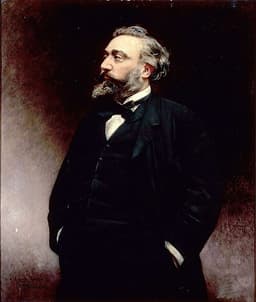
Leon Gambetta
Politician · Modern
61.2Total
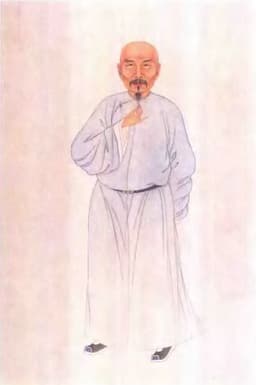
Wei Yuan
Politician · Modern
44.2Total
Basic Information
Born
1838
1794
Died
1882
1857
Era
Modern
Modern
Nationality
France
China
Occupation
Politician
Politician
Civilization
Western
Eastern
Score Comparison
Military (10%)
50.0
10.2
Political (20%)
70.0
39.4
Influence (20%)
62.0
60.0
Legacy (20%)
56.0
54.0
Leadership (15%)
79.8
41.5
Strategy (15%)
42.6
25.0
TOTAL
61.2
44.2
Leon Gambetta — Complete Timeline
1870 AD
Proclamation of the Third Republic (1870)Political Action
After the fall of Napoleon III at Sedan, Gambetta proclaimed the Third Republic from the H
Third RepublicRegime Change
Impact: nationalconstructive
Escape from Paris by Balloon (1870)Political Action◆ Major
During the Siege of Paris, Gambetta escaped the city in a hot air balloon to organize resistance in the provinces. He raised new armies and continued the war effort against Prussia.
Franco-Prussian WarResistance
Impact: nationalconstructive
Minister of the Interior (1870-1871)Political Action◆ Major
Gambetta served as Minister of the Interior in the Government of National Defense. He directed the war effort and attempted to continue fighting after the fall of Paris.
Franco-Prussian WarGovernment
Impact: national
1871 AD
Founding of the Republican Union (1871)Political Action◆ Major
Gambetta founded the Republican Union party, which advocated for a secular, democratic republic. The party became a major force in the National Assembly.
Political PartyRepublicanism
Impact: nationalconstructive
1879 AD
President of the Chamber of Deputies (1879-1882)Political Action◆ Major
Gambetta was elected President of the Chamber of Deputies, a powerful position in the Third Republic. He used it to advance republican reforms.
Third RepublicParliament
Impact: national
1881 AD
Prime Minister of France (1881-1882)Political Action◆ Major
Gambetta became Prime Minister, forming the 'Grand Ministry' of republican unity. His government lasted only 73 days due to opposition to his proposed constitutional reforms.
Third RepublicPrime Minister
Impact: national
Wei Yuan — Complete Timeline
1830 AD
Served as magistrate and compiled local gazetteersPolitical Action
Wei Yuan served as a magistrate in various provinces, where he compiled local gazetteers and implemented administrative reforms. His practical governance experience informed his later scholarly works.
GovernanceLocal AdministrationGazetteers
1842 AD
Advocated for self-strengthening through Western technologyPolitical Action◆ Major
After China's defeat in the First Opium War, Wei Yuan proposed adopting Western military technology and industrial methods. His slogan 'Learn the superior techniques of the barbarians to control them' influenced later reformers.
Self-StrengtheningReformOpium War
Impact: nationalprogressive
1844 AD
Published Haiguo Tuzhi (Illustrated Treatise on the Maritime Kingdoms)Cultural
Wei Yuan published Haiguo Tuzhi, a comprehensive work on Western geography, technology, and politics. The book argued for learning from Western military and industrial strengths to counter foreign threats.
Western LearningReformGeography
Impact: globalprogressive
Expert Analysis
Origins
Leon Gambetta was born on April 2, 1838, in Cahors, France, to a family of Italian immigrant grocers. His father ran a small shop, but Gambetta excelled in studies, earning a law degree in Paris. He was drawn to republican and liberal ideas, influenced by the works of Voltaire and Rousseau. His early legal career saw him defending political dissidents, which honed his oratory skills.
Wei Yuan was born in 1794 in Shaoyang, Hunan, China, into a scholarly family. He passed the provincial examinations in 1822 and became a juren (second-level degree holder). His early education was steeped in Confucian classics, but he also developed an interest in statecraft and geography. He served as a secretary to He Changling, a high-ranking official, where he studied administrative and military affairs.
Rise to Power
Gambetta rose rapidly during the Franco-Prussian War. After the fall of Napoleon III at Sedan on September 2, 1870, he proclaimed the Third Republic from the Hôtel de Ville in Paris on September 4. He became Minister of the Interior in the Government of National Defense. During the Siege of Paris, he escaped by hot air balloon on October 7, 1870, to organize resistance in the provinces. He raised new armies, but they were ultimately defeated. His wartime leadership made him a symbol of republican defiance.
Wei Yuan's rise was slower and more scholarly. After China's defeat in the First Opium War (1839-1842), he was commissioned by Lin Zexu to compile a work on Western countries. In 1842, he published the Haiguo Tuzhi (Illustrated Treatise on the Maritime Kingdoms), a comprehensive geography and history of Western nations. The book argued for learning from Western military technology and industry, coining the slogan "Learn the superior techniques of the barbarians to control them." His ideas gained traction among reform-minded officials like Zeng Guofan.
Leadership & Governance
Gambetta's leadership style was charismatic and democratic. As Minister of the Interior, he decentralized power, appointing republican prefects and purging monarchists. He founded the Republican Union party in 1871, advocating for secularism, universal education, and laissez-faire economics. As President of the Chamber of Deputies (1879-1882), he pushed through laws on press freedom, public education, and civil service reform. His governance score of 79.8 reflects his effectiveness in consolidating republican institutions.
Wei Yuan's leadership was more advisory and intellectual. As a magistrate in various provinces, he compiled local gazetteers and implemented small-scale administrative reforms, such as improving tax collection and irrigation. However, he never held high central office. His influence came through his writings. He advocated for a self-strengthening movement that would adopt Western technology while preserving Confucian values. His strategic score of 25.0 indicates limited practical impact.
Triumph & Tragedy
Gambetta's greatest triumph was the proclamation and stabilization of the Third Republic, which lasted until 1940. He successfully resisted monarchist coups, such as the May 16, 1877 crisis, when President MacMahon attempted to dissolve the Chamber. Gambetta rallied republicans and forced MacMahon to resign. His greatest failure was the inability to win the Franco-Prussian War; the armies he raised were poorly trained and defeated. He also failed to prevent the loss of Alsace-Lorraine. His political score of 70.0 reflects his success in founding a durable regime, but his military score of 50.0 shows wartime shortcomings.
Wei Yuan's triumph was his intellectual legacy: the Haiguo Tuzhi became a foundational text for China's modernization. It influenced the Self-Strengthening Movement (1861-1895) and later reformers like Kang Youwei. His tragedy was that his ideas were only partially implemented. The Qing court resisted full-scale reform, and China suffered further defeats, such as in the Second Opium War (1856-1860). His influence score of 60.0 is notable, but his political score of 39.4 reflects his limited direct power.
Character & Destiny
Gambetta was passionate, eloquent, and determined. He was known for his fiery speeches and unwavering commitment to republicanism. His escape from Paris by balloon exemplifies his audacity. However, his health was fragile; he died of stomach cancer at age 44 in 1882. His early death cut short his political career, but he had already cemented the Republic.
Wei Yuan was scholarly, methodical, and pragmatic. He focused on practical knowledge and was less interested in personal power. His destiny was to be a herald of reform rather than a leader. He died in 1857, before his ideas bore fruit. His character of intellectual persistence shaped his legacy as a pioneer of Chinese modernization.
Legacy
Gambetta's legacy is the Third Republic itself. His political reforms established secular, democratic institutions that endured through two world wars. He scored 56.0 in legacy, reflecting his foundational role. The French educational system, press freedoms, and parliamentary democracy owe much to his efforts.
Wei Yuan's legacy is the idea of learning from the West. His Haiguo Tuzhi introduced China to global geography and technology. He scored 54.0 in legacy. His slogan "Learn the superior techniques" became the motto of the Self-Strengthening Movement and later influenced the Hundred Days' Reform. However, his impact was intellectual rather than institutional.
Conclusion
Leon Gambetta had greater impact, with a total score of 61.2 versus Wei Yuan's 44.2. Gambetta's leadership (79.8) and political (70.0) scores highlight his direct role in founding a stable republic that shaped modern France. Wei Yuan's influence (60.0) is significant, but his lack of political power limited his ability to enact change. Gambetta's actions created lasting institutions; Wei Yuan's ideas required others to implement. Thus, Gambetta's concrete achievements outweigh Wei Yuan's intellectual contributions.
Rankings
🥇
Leon GambettaLeader
Mil: 50.0Pol: 70.0Inf: 62.0
61.2
🥈
Wei Yuan
Mil: 10.2Pol: 39.4Inf: 60.0
44.2
+17.0 behind
How This Comparison Works
Algorithm
Each figure is scored on 6 dimensions (0—100 scale) based on structured historical data: Military (10%), Political (20%), Influence (20%), Legacy (20%), Leadership (15%), Strategy (15%). The weighted total produces the final ranking.
Data Sources
Scores are computed from structured sub-indicators in the database. Scale factors adjust for era (Ancient ×0.85, Modern ×1.0) and civilization size (Eastern ×1.05, Other ×0.80) to account for differences in population and military scale.
Maximum 3 Figures
Comparisons are limited to 2—3 figures to ensure readability and statistical meaningfulness.
Error Margins
±5 points per dimension — Sub-scores are derived from historical records with inherent uncertainty. Two figures within 5 points on a dimension should be considered roughly equivalent in that area.
Total Score Accuracy
±3 points overall — The weighted combination of 6 dimensions produces a total score with approximately ±3 points of uncertainty. Differences of less than 3 points are not statistically significant— the figures are effectively tied.
Known Limitations
- Historical records are incomplete and uneven across civilizations
- Figures from oral-tradition societies may be underrepresented
- Occupation labels can misclassify multi-role figures
- Scores measure capability and impact, not moral character
- Quantitative scoring is a comparison tool, not absolute truth
Capability Radar
Military (10%) — Battles & Warfare
Battles
28
16
Win Rate
31
18
Expansion
32
21
Political (20%) — Governance & Reform
Reform
70
40
Diplomacy
65
30
Economy
55
20
Influence (20%) — Cultural & Global Reach
Cultural
45
50
Global
55
40
Legacy (20%) — Historical Impact
Historical
60
55
Longevity
50
50
Leadership (15%) — Power & Stability
Tenure
60
20
Stability
50
10
Strategy (15%) — Tactics & Innovation
Strategy
35
23
Tactics
43
28
Reform
46
29
Similar Comparisons
Comments & Discussion
No comments yet. Be the first to share your thoughts!