Loading...
This comparison has not been analyzed yet.
One-time AI generation (~1 minute). Scores and timeline are already available below.
Mai of Borno vs Mohammad Reza Pahlavi
Mohammad Reza Pahlavi leads by 7.6 pts · 2 figures compared
…

Mai of Borno
Emperor · Modern
45.9Total
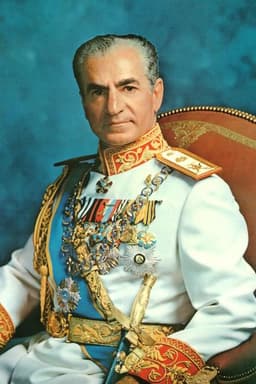
Mohammad Reza Pahlavi
Emperor · Modern
53.5Total
Basic Information
Born
1800
1919
Died
1850
1980
Era
Modern
Modern
Nationality
Bornu Empire
Iran
Occupation
Emperor
Emperor
Civilization
Other
Middle Eastern
Score Comparison
Military (10%)
50.0
22.6
Political (20%)
42.2
55.0
Influence (20%)
48.6
62.0
Legacy (20%)
37.5
48.3
Leadership (15%)
67.0
74.0
Strategy (15%)
30.3
43.3
TOTAL
45.9
53.5
Mai of Borno — Complete Timeline
1810 AD
Ascended as Mai of BornoPolitical Action◆ Major
The Mai became the traditional ruler of the Bornu Empire, a Kanuri state in the Lake Chad region. His reign occurred during the empire's decline, facing pressure from the Fulani jihad and internal rebellions.
Bornu EmpireCoronationKanuri
Impact: regional
1820 AD
Defeated by Fulani Forces at NgalaWar◆ Major
The Mai's army was defeated by Fulani jihadists at the Battle of Ngala, leading to the loss of western Bornu territories. This defeat weakened the empire's control over trade routes and reduced its political influence.
Fulani JihadBattleTerritorial Loss
Impact: regionaltragic
1840 AD
Signed Treaty with the BritishPolitical Action◆ Major
The Mai signed a commercial treaty with the British Empire, granting trading rights in Bornu. This agreement aimed to counter the Fulani threat by securing European support, but it also increased British influence in the region.
British TreatyTradeDiplomacy
Impact: regional
Mohammad Reza Pahlavi — Complete Timeline
1953 AD
1953 Iranian coup d'étatPolitical Action
Mohammad Reza Pahlavi was reinstated as Shah after a CIA- and MI6-backed coup overthrew Prime Minister Mohammad Mossadegh. The coup ended Iran's democratic experiment and established the Shah's authoritarian rule, fueling long-term resentment.
CoupMossadeghUS intervention
Impact: nationaldestructive
1963 AD
White RevolutionReform◆ Major
The Shah launched the White Revolution, a series of land reforms, modernization, and women's suffrage. While it aimed to modernize Iran, it disrupted traditional rural life, concentrated wealth, and alienated the clergy and landowners.
Land reformModernizationWomen's rights
Impact: national
1971 AD
1971 2,500-year celebration of the Persian EmpireCultural
The Shah hosted an extravagant celebration at Persepolis to mark 2,500 years of the Persian monarchy. The event was criticized for its opulence and disregard for Iran's poverty, fueling opposition to his regime.
ExtravagancePropagandaOpposition
Impact: nationaldestructive
1979 AD
Islamic Revolution and exilePolitical Action
Mass protests led by Ayatollah Khomeini overthrew the Shah's regime. Mohammad Reza Pahlavi fled Iran in January 1979, eventually seeking medical treatment abroad. He died in exile in Egypt in 1980, never returning to Iran.
RevolutionExileKhomeini
Impact: globaltragic
This comparison has not been analyzed yet.
One-time AI generation (~1 minute). Scores and timeline are already available below.
Rankings
🥇
Mohammad Reza PahlaviLeader
Mil: 22.6Pol: 55.0Inf: 62.0
53.5
🥈
Mai of Borno
Mil: 50.0Pol: 42.2Inf: 48.6
45.9
+7.6 behind
How This Comparison Works
Algorithm
Each figure is scored on 6 dimensions (0—100 scale) based on structured historical data: Military (10%), Political (20%), Influence (20%), Legacy (20%), Leadership (15%), Strategy (15%). The weighted total produces the final ranking.
Data Sources
Scores are computed from structured sub-indicators in the database. Scale factors adjust for era (Ancient ×0.85, Modern ×1.0) and civilization size (Eastern ×1.05, Other ×0.80) to account for differences in population and military scale.
Maximum 3 Figures
Comparisons are limited to 2—3 figures to ensure readability and statistical meaningfulness.
Error Margins
±5 points per dimension — Sub-scores are derived from historical records with inherent uncertainty. Two figures within 5 points on a dimension should be considered roughly equivalent in that area.
Total Score Accuracy
±3 points overall — The weighted combination of 6 dimensions produces a total score with approximately ±3 points of uncertainty. Differences of less than 3 points are not statistically significant— the figures are effectively tied.
Known Limitations
- Historical records are incomplete and uneven across civilizations
- Figures from oral-tradition societies may be underrepresented
- Occupation labels can misclassify multi-role figures
- Scores measure capability and impact, not moral character
- Quantitative scoring is a comparison tool, not absolute truth
Capability Radar
Military (10%) — Battles & Warfare
Battles
20
15
Win Rate
25
10
Expansion
15
10
Political (20%) — Governance & Reform
Reform
30
70
Diplomacy
30
60
Economy
25
55
Influence (20%) — Cultural & Global Reach
Cultural
20
55
Global
10
55
Legacy (20%) — Historical Impact
Historical
20
60
Longevity
15
30
Leadership (15%) — Power & Stability
Tenure
40
65
Stability
30
20
Strategy (15%) — Tactics & Innovation
Strategy
20
25
Tactics
20
20
Reform
15
60
Similar Comparisons
Comments & Discussion
No comments yet. Be the first to share your thoughts!