Loading...
This comparison has not been analyzed yet.
One-time AI generation (~1 minute). Scores and timeline are already available below.
Mamai vs Yuan Chonghuan
Yuan Chonghuan leads by 18.1 pts · 2 figures compared
…

Mamai
General · Medieval
41.6Total
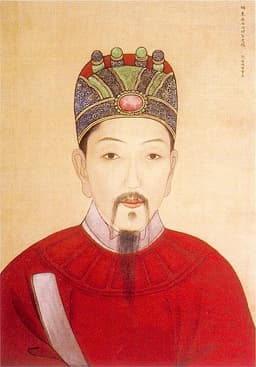
Yuan Chonghuan
General · Medieval
59.7Total
Basic Information
Born
1325
1584
Died
1380
1630
Era
Medieval
Medieval
Nationality
Golden Horde
China
Occupation
General
General
Civilization
Eastern
Eastern
Score Comparison
Military (10%)
40.0
70.0
Political (20%)
26.4
68.0
Influence (20%)
46.3
53.3
Legacy (20%)
40.0
50.0
Leadership (15%)
40.4
61.1
Strategy (15%)
60.0
75.0
TOTAL
41.6
59.7
Mamai — Complete Timeline
1378 AD
Battle of the Vozha RiverWar◆ Major
Mamai sent a force under Begich to attack the Grand Principality of Moscow. Dmitry Donskoy's army defeated the Horde force on the Vozha River, marking the first major Russian victory over the Golden Horde and escalating tensions before Kulikovo.
Russo-Horde WarsBattleRussian Victory
Impact: regional
1380 AD
Battle of KulikovoWar
Mamai led a large Golden Horde army against the coalition of Russian principalities under Dmitry Donskoy at Kulikovo Field. The Russian forces defeated the Horde, severely damaging Mamai's authority and prestige. Mamai fled the battlefield.
Russo-Horde WarsBattleRussian VictoryTurning Point
Impact: regional
Loss of Power and DeathPolitical Action◆ Major
After the defeat at Kulikovo, Mamai's rival Tokhtamysh, backed by Tamerlane, challenged his rule. Mamai gathered forces but was defeated by Tokhtamysh at the Battle of the Kalka River. Mamai fled to the Genoese colony of Caffa, where he was killed.
Succession StruggleDeathGolden Horde
Impact: regionaltragic
Yuan Chonghuan — Complete Timeline
1626 AD
Defense of NingyuanWar
Yuan Chonghuan, as commander of Ningyuan, successfully defended the city against a large Manchu army led by Nurhaci. The victory was a rare Ming success and marked the first major defeat for the Manchu leader.
Ming-Manchu WarDefenseNingyuan
Impact: nationalconstructive
1627 AD
Battle of Ningyuan-JinzhouWar◆ Major
Yuan Chonghuan again defended Ningyuan and nearby Jinzhou against a Manchu attack led by Hong Taiji. The Ming forces held their positions, inflicting heavy casualties on the Manchus and securing a second major victory.
Ming-Manchu WarBattleVictory
Impact: nationalconstructive
1629 AD
Execution of Mao WenlongPolitical Action◆ Major
Yuan Chonghuan executed the Ming general Mao Wenlong on charges of insubordination and collusion with the Manchus. This act removed a powerful but unreliable commander but also created enemies at court.
ExecutionMilitary CommandMing Dynasty
Impact: nationaldestructive
1630 AD
Arrest and execution by the Ming courtPolitical Action
Yuan Chonghuan was arrested on charges of treason after the Manchus bypassed his defenses and raided Beijing. He was executed by lingchi (slow slicing) in the marketplace, a punishment that shocked the empire.
ExecutionTreasonMing Dynasty
Impact: nationaltragic
This comparison has not been analyzed yet.
One-time AI generation (~1 minute). Scores and timeline are already available below.
Rankings
🥇
Yuan ChonghuanLeader
Mil: 70.0Pol: 68.0Inf: 53.3
59.7
🥈
Mamai
Mil: 40.0Pol: 26.4Inf: 46.3
41.6
+18.1 behind
How This Comparison Works
Algorithm
Each figure is scored on 6 dimensions (0—100 scale) based on structured historical data: Military (10%), Political (20%), Influence (20%), Legacy (20%), Leadership (15%), Strategy (15%). The weighted total produces the final ranking.
Data Sources
Scores are computed from structured sub-indicators in the database. Scale factors adjust for era (Ancient ×0.85, Modern ×1.0) and civilization size (Eastern ×1.05, Other ×0.80) to account for differences in population and military scale.
Maximum 3 Figures
Comparisons are limited to 2—3 figures to ensure readability and statistical meaningfulness.
Error Margins
±5 points per dimension — Sub-scores are derived from historical records with inherent uncertainty. Two figures within 5 points on a dimension should be considered roughly equivalent in that area.
Total Score Accuracy
±3 points overall — The weighted combination of 6 dimensions produces a total score with approximately ±3 points of uncertainty. Differences of less than 3 points are not statistically significant— the figures are effectively tied.
Known Limitations
- Historical records are incomplete and uneven across civilizations
- Figures from oral-tradition societies may be underrepresented
- Occupation labels can misclassify multi-role figures
- Scores measure capability and impact, not moral character
- Quantitative scoring is a comparison tool, not absolute truth
Capability Radar
Military (10%) — Battles & Warfare
Battles
45
75
Win Rate
30
70
Expansion
30
10
Political (20%) — Governance & Reform
Reform
20
50
Diplomacy
25
60
Economy
20
45
Influence (20%) — Cultural & Global Reach
Cultural
25
50
Global
20
40
Legacy (20%) — Historical Impact
Historical
40
65
Longevity
30
55
Leadership (15%) — Power & Stability
Tenure
40
55
Stability
15
30
Strategy (15%) — Tactics & Innovation
Strategy
35
75
Tactics
40
80
Reform
20
60
Similar Comparisons
Comments & Discussion
No comments yet. Be the first to share your thoughts!