Loading...
Mary Queen of Scots vs Nasir-ud-Daulah
Mary Queen of Scots leads by 0.4 pts · 2 figures compared
…
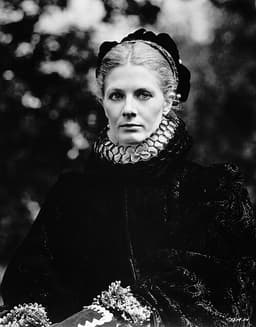
Mary Queen of Scots
Emperor · Modern
46.5Total

Nasir-ud-Daulah
Emperor · Modern
46.1Total
Basic Information
Born
1542
1794
Died
1587
1857
Era
Modern
Modern
Nationality
Scotland
India
Occupation
Emperor
Emperor
Civilization
Western
Indian
Score Comparison
Military (10%)
48.6
20.0
Political (20%)
29.3
43.7
Influence (20%)
55.7
47.9
Legacy (20%)
45.8
37.5
Leadership (15%)
41.5
72.0
Strategy (15%)
56.1
54.3
TOTAL
46.5
46.1
Mary Queen of Scots — Complete Timeline
1543 AD
Coronation as Queen of ScotsPolitical Action◆ Major
Mary was crowned Queen of Scots at Stirling Castle at nine months old, following the death of her father James V. The coronation was overseen by regents, and Scotland was governed by a series of regents during her minority.
CoronationRegencyMinority
Impact: national
1558 AD
Marriage to Francis II of FrancePolitical Action◆ Major
Mary married Francis, Dauphin of France, at Notre Dame Cathedral in Paris. The marriage strengthened the Auld Alliance and made Mary queen consort of France when Francis became king in 1559. Francis died in 1560, ending Mary's French reign.
MarriageAuld AllianceFrance
Impact: national
1561 AD
Return to ScotlandPolitical Action◆ Major
Mary returned to Scotland after the death of her husband Francis II. She arrived in Leith and began her personal rule in a country deeply divided by the Protestant Reformation. She faced challenges from Protestant nobles and the English queen Elizabeth I.
ReturnReformationRule
Impact: national
1566 AD
Murder of David RizzioPolitical Action◆ Major
Mary's private secretary David Rizzio was murdered in her presence at Holyrood Palace by a group of nobles led by her husband Lord Darnley. The murder was motivated by jealousy and political intrigue, and it deepened the rift between Mary and Darnley.
MurderIntrigueDarnley
Impact: nationaltragic
1567 AD
Abdication and ImprisonmentPolitical Action
Mary was forced to abdicate the Scottish throne in favor of her infant son James VI after her defeat at the Battle of Carberry Hill. She was imprisoned in Loch Leven Castle and later escaped, but was defeated again and fled to England.
AbdicationImprisonmentFlight
Impact: nationaltragic
1587 AD
Execution by Elizabeth IPolitical Action
Mary was executed at Fotheringhay Castle after being found guilty of involvement in the Babington Plot to assassinate Elizabeth I. Her execution ended 19 years of captivity in England and removed a Catholic claimant to the English throne.
ExecutionPlotCatholic Claimant
Impact: globaltragic
Nasir-ud-Daulah — Complete Timeline
1829 AD
Became Nizam of HyderabadPolitical Action◆ Major
Nasir-ud-Daulah ascended the throne of Hyderabad after the death of his father, Sikandar Jah. His reign was marked by loyalty to the British East India Company and a focus on internal administration.
SuccessionHyderabadNizam
Impact: regional
1855 AD
Established the Nizam's CollegeCultural
Nasir-ud-Daulah established the Nizam's College in Hyderabad, an institution for higher education. This was part of his efforts to modernize the state's educational system and promote learning among the elite.
EducationCollegeHyderabad
constructive
1857 AD
Remained loyal to the British during the Indian Rebellion of 1857Political Action◆ Major
During the Indian Rebellion of 1857, Nasir-ud-Daulah refused to join the uprising and maintained his alliance with the British East India Company. He provided military support to the British, which helped suppress the rebellion in the Deccan.
Indian Rebellion of 1857LoyaltyBritish East India Company
Impact: regional
Expert Analysis
Origins
**Mary Queen of Scots** was born on December 8, 1542, at Linlithgow Palace, Scotland. She was the only legitimate child of King James V and his French wife, Mary of Guise. Her father died just six days after her birth, making her queen from infancy. She was sent to France at age five to be raised at the French court, where she received a refined education in languages, music, and statecraft. Her mother, Mary of Guise, remained in Scotland as regent, but Mary's formative years were spent in the sophisticated and Catholic environment of the French court.
**Nasir-ud-Daulah**, born on April 25, 1794, in Hyderabad, India, was the fourth Nizam of the princely state of Hyderabad. He was the eldest son of Nizam Sikandar Jah and a noblewoman. His education was traditional, focusing on Islamic studies, Persian literature, and administration under the supervision of British tutors. Unlike Mary, he grew up in a stable, albeit subordinate, political environment under British paramountcy.
Rise to Power
Mary was crowned Queen of Scots at Stirling Castle on September 9, 1543, at just nine months old, with James Hamilton, 2nd Earl of Arran, as regent. Her marriage to Francis, Dauphin of France, on April 24, 1558, solidified the Auld Alliance and made her queen consort of France from 1559 until Francis's death in 1560. After his death, she returned to Scotland on August 19, 1561, to assume personal rule. Her Catholic faith and French upbringing put her at odds with the Protestant Scottish nobility.
Nasir-ud-Daulah ascended the throne on May 21, 1829, upon the death of his father, Sikandar Jah. His rise was smooth, as he was the designated heir and had the backing of the British East India Company. Unlike Mary, his succession was not contested, and he inherited a stable state under British protection.
Leadership & Governance
Mary's leadership was marked by political naivety and poor judgment. She married her cousin Henry Stuart, Lord Darnley, on July 29, 1565, which alienated the Protestant nobility and led to rebellion. After Darnley's murder (February 10, 1567), her marriage to James Hepburn, 4th Earl of Bothwell, on May 15, 1567, provoked a revolt, forcing her abdication on July 24, 1567. Her political score of 29.3 reflects her inability to navigate Scotland's religious and political divisions.
Nasir-ud-Daulah, in contrast, governed with a focus on stability and modernization. He maintained loyalty to the British, suppressing any dissent. He established the Nizam's College in 1850 to promote higher education and improved infrastructure. His leadership score of 72.0 indicates effective administration, though his governance was constrained by British oversight. He never faced internal rebellion or external invasion, largely due to his alliance with the British.
Triumph & Tragedy
Mary's greatest triumph was her early marriage to Francis II, which made her queen of France and gave her international prestige. However, her greatest tragedy was her execution on February 8, 1587, at Fotheringhay Castle after being implicated in the Babington Plot to assassinate Elizabeth I. Her 19-year imprisonment and eventual death were the result of her own political miscalculations.
Nasir-ud-Daulah's triumph was his successful navigation of the Indian Rebellion of 1857. By remaining loyal to the British, he ensured Hyderabad's stability and gained British favor. His tragedy lies in his lack of independence; despite being a ruler, he was effectively a British puppet. His legacy is overshadowed by more assertive contemporaries, and his military score of 20.0 reflects his complete subordination.
Character & Destiny
Mary was charismatic and cultured but impulsive and politically inexperienced. Her decisions were driven by emotion rather than strategy, as seen in her disastrous marriages. Her destiny was shaped by her Catholic faith in a Protestant realm and her claim to the English throne, which made her a threat to Elizabeth I. Her strategy score of 56.1 indicates some tactical ability, but her overall character led to her downfall.
Nasir-ud-Daulah was cautious, pragmatic, and loyal. He understood the limits of his power and chose cooperation over resistance. His character ensured a peaceful reign but limited his historical impact. His political score of 43.7 and influence score of 47.9 reflect his mediocrity.
Legacy
Mary's legacy is that of a tragic queen whose execution became a symbol of Catholic martyrdom and a catalyst for Anglo-Scottish conflict. Her son James VI became king of both Scotland and England, uniting the crowns. She scored 45.8 in legacy, remembered in popular culture as a romantic figure.
Nasir-ud-Daulah's legacy is more administrative: he modernized Hyderabad's education system and maintained stability during turbulent times. However, his legacy score of 37.5 reflects his lack of lasting impact; Hyderabad was later annexed by India in 1948. He is largely forgotten outside of regional history.
Conclusion
Mary Queen of Scots, despite her failures, had a greater impact on history than Nasir-ud-Daulah. She scored 46.5 overall, slightly higher than his 46.1, but her influence extends beyond her reign. Her execution altered the course of English-Scottish relations and contributed to the eventual union of the crowns. Nasir-ud-Daulah, while an effective administrator, was a subordinate ruler whose actions did not change the trajectory of Indian history. Mary's story resonates centuries later, while Nasir-ud-Daulah's remains a footnote. Thus, Mary Queen of Scots had a greater historical impact.
Rankings
🥇
Mary Queen of ScotsLeader
Mil: 48.6Pol: 29.3Inf: 55.7
46.5
🥈
Nasir-ud-Daulah
Mil: 20.0Pol: 43.7Inf: 47.9
46.1
+0.4 behind
How This Comparison Works
Algorithm
Each figure is scored on 6 dimensions (0—100 scale) based on structured historical data: Military (10%), Political (20%), Influence (20%), Legacy (20%), Leadership (15%), Strategy (15%). The weighted total produces the final ranking.
Data Sources
Scores are computed from structured sub-indicators in the database. Scale factors adjust for era (Ancient ×0.85, Modern ×1.0) and civilization size (Eastern ×1.05, Other ×0.80) to account for differences in population and military scale.
Maximum 3 Figures
Comparisons are limited to 2—3 figures to ensure readability and statistical meaningfulness.
Error Margins
±5 points per dimension — Sub-scores are derived from historical records with inherent uncertainty. Two figures within 5 points on a dimension should be considered roughly equivalent in that area.
Total Score Accuracy
±3 points overall — The weighted combination of 6 dimensions produces a total score with approximately ±3 points of uncertainty. Differences of less than 3 points are not statistically significant— the figures are effectively tied.
Known Limitations
- Historical records are incomplete and uneven across civilizations
- Figures from oral-tradition societies may be underrepresented
- Occupation labels can misclassify multi-role figures
- Scores measure capability and impact, not moral character
- Quantitative scoring is a comparison tool, not absolute truth
Capability Radar
Military (10%) — Battles & Warfare
Battles
22
5
Win Rate
24
5
Expansion
32
5
Political (20%) — Governance & Reform
Reform
15
20
Diplomacy
30
40
Economy
10
30
Influence (20%) — Cultural & Global Reach
Cultural
40
10
Global
35
5
Legacy (20%) — Historical Impact
Historical
45
15
Longevity
40
10
Leadership (15%) — Power & Stability
Tenure
25
60
Stability
5
50
Strategy (15%) — Tactics & Innovation
Strategy
32
5
Tactics
37
5
Reform
40
5
Similar Comparisons
Comments & Discussion
No comments yet. Be the first to share your thoughts!