Loading...
Mary Queen of Scots vs Napoleon Bonaparte
Napoleon Bonaparte leads by 24.4 pts · 2 figures compared
…
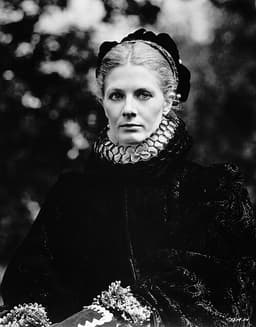
Mary Queen of Scots
Emperor · Modern
46.5Total

Napoleon Bonaparte
General · Modern
70.9Total
Basic Information
Born
1542
1769
Died
1587
1821
Era
Modern
Modern
Nationality
Scotland
France
Occupation
Emperor
General
Civilization
Western
Western
Score Comparison
Military (10%)
48.6
94.0
Political (20%)
29.3
72.0
Influence (20%)
55.7
40.0
Legacy (20%)
45.8
80.0
Leadership (15%)
41.5
78.0
Strategy (15%)
56.1
90.0
TOTAL
46.5
70.9
Mary Queen of Scots — Complete Timeline
1543 AD
Coronation as Queen of ScotsPolitical Action◆ Major
Mary was crowned Queen of Scots at Stirling Castle at nine months old, following the death of her father James V. The coronation was overseen by regents, and Scotland was governed by a series of regents during her minority.
CoronationRegencyMinority
Impact: national
1558 AD
Marriage to Francis II of FrancePolitical Action◆ Major
Mary married Francis, Dauphin of France, at Notre Dame Cathedral in Paris. The marriage strengthened the Auld Alliance and made Mary queen consort of France when Francis became king in 1559. Francis died in 1560, ending Mary's French reign.
MarriageAuld AllianceFrance
Impact: national
1561 AD
Return to ScotlandPolitical Action◆ Major
Mary returned to Scotland after the death of her husband Francis II. She arrived in Leith and began her personal rule in a country deeply divided by the Protestant Reformation. She faced challenges from Protestant nobles and the English queen Elizabeth I.
ReturnReformationRule
Impact: national
1566 AD
Murder of David RizzioPolitical Action◆ Major
Mary's private secretary David Rizzio was murdered in her presence at Holyrood Palace by a group of nobles led by her husband Lord Darnley. The murder was motivated by jealousy and political intrigue, and it deepened the rift between Mary and Darnley.
MurderIntrigueDarnley
Impact: nationaltragic
1567 AD
Abdication and ImprisonmentPolitical Action
Mary was forced to abdicate the Scottish throne in favor of her infant son James VI after her defeat at the Battle of Carberry Hill. She was imprisoned in Loch Leven Castle and later escaped, but was defeated again and fled to England.
AbdicationImprisonmentFlight
Impact: nationaltragic
1587 AD
Execution by Elizabeth IPolitical Action
Mary was executed at Fotheringhay Castle after being found guilty of involvement in the Babington Plot to assassinate Elizabeth I. Her execution ended 19 years of captivity in England and removed a Catholic claimant to the English throne.
ExecutionPlotCatholic Claimant
Impact: globaltragic
Napoleon Bonaparte — Complete Timeline
1799 AD
Coup of 18 BrumaireOther◆ Major
Napoleon Bonaparte, with support from his brother Lucien and key political figures, overthrew the Directory in a bloodless coup. He established the Consulate with himself as First Consul, effectively becoming the ruler of France. This event ended the French Revolution's most unstable period.
French RevolutionCoupRise to Power
Impact: regional
1804 AD
Promulgation of the Napoleonic CodeOther◆ Major
Napoleon enacted the Civil Code of the French, known as the Napoleonic Code, a comprehensive set of laws that replaced the fragmented feudal legal systems. The code established legal equality, protected property rights, and secularized law. It became the basis for legal systems in many European and world countries.
Legal ReformNapoleonic CodeCivil Law
Impact: globalconstructive
1805 AD
Battle of AusterlitzWar◆ Major
Napoleon's Grande Arm
Napoleonic WarsBattleDecisive Victory
Impact: global
1812 AD
Invasion of RussiaWar◆ Major
Napoleon led the Grande Arm
Napoleonic WarsInvasionDisaster
Impact: globaldestructive
1815 AD
Battle of WaterlooWar◆ Major
Napoleon's French army was defeated by the combined forces of the Duke of Wellington's Anglo-Allied army and Gebhard Leberecht von Bl
Napoleonic WarsBattleFinal Defeat
Impact: globaldestructive
Expert Analysis
mary-queen-of-scots-vs-napoleon-bonaparte
# The Emperor and the Queen: Two Crowns, Two Destinies
On a June morning in 1815, Napoleon Bonaparte stood on a ridge near Waterloo, watching his legions march toward destiny. He was forty-six years old, a man who had crowned himself emperor and redrawn the map of Europe. Two centuries earlier, on a February afternoon in 1587, Mary Queen of Scots knelt in the great hall of Fotheringhay Castle, her hands bound, waiting for the axe to fall. She was forty-four, a queen who had worn three crowns and lost them all. Both were prisoners of their own ambitions—but one built an empire, while the other built a legend.
Origins
Napoleon was born in 1769 on the island of Corsica, a place that had only become French the year before. His family was minor nobility, proud and impoverished. He grew up speaking Italian, not French, and his childhood was marked by the resentment of a conquered people. This outsider’s perspective would fuel his relentless drive to prove himself.
Mary Stuart was born in 1542 at Linlithgow Palace, six days before her father James V died. She was queen of Scotland from her first breath. While Napoleon had to claw his way into history, Mary inherited it—but inheritance came with a price. Scotland in the 1540s was a cauldron of religious war, noble feuds, and English aggression. A queen without power was a target.
Both were shaped by violence: Napoleon by the chaos of the French Revolution, Mary by the Reformation’s bloody divisions. But Napoleon learned to harness chaos; Mary learned to survive it.
Rise to Power
Napoleon’s ascent was a masterpiece of opportunism. A young artillery officer during the French Revolution, he seized his moment at the Siege of Toulon in 1793, where his strategic brilliance forced the British fleet to withdraw. By 1796, at just twenty-six, he commanded the Army of Italy—and within a year, he had humiliated Austria and carved out a new republic in northern Italy. His 1798 Egyptian campaign was a gamble that failed militarily but succeeded politically, making him a hero at home. In 1799, he staged a coup d’état and became First Consul. By 1804, he crowned himself Emperor of the French.
Mary’s path was more tragic. Crowned queen at nine months old, she was sent to France at age five to be raised as a future queen consort. She married Francis II in 1558, becoming queen of France—but he died just a year later, leaving her a widow at eighteen. She returned to Scotland in 1561, a Catholic queen in a Protestant country, a woman in a world of men. Her rise was not a campaign of conquest but a struggle for survival.
Leadership & Governance
Napoleon governed with the precision of a military campaign. He centralized the French state, created the Napoleonic Code—a legal system that influenced civil law across Europe—and reformed education, banking, and infrastructure. His military genius was unmatched: at Austerlitz in 1805, he crushed the combined armies of Russia and Austria in a single day, a battle still studied in war colleges. But his political wisdom was flawed. He alienated allies, overreached into Spain and Russia, and refused to share power.
Mary’s governance was a study in fragility. She tried to rule with moderation, tolerating Protestantism while practicing Catholicism, but her kingdom was a web of factions. Her marriage to Lord Darnley in 1565 was a disaster—he was vain, violent, and conspired with nobles to murder her secretary David Rizzio in her presence in 1566. Her subsequent marriage to the Earl of Bothwell, widely believed to have murdered Darnley, destroyed her credibility. She was forced to abdicate in 1567 after defeat at Carberry Hill.
Triumph & Tragedy
Napoleon’s greatest triumph was the Empire at its height in 1810, when he controlled most of Europe from Spain to Poland. His greatest tragedy was the 1812 invasion of Russia—a catastrophic retreat that cost hundreds of thousands of lives. Exiled to Elba in 1814, he escaped in 1815 and returned to power for the Hundred Days, only to be defeated at Waterloo.
Mary’s greatest triumph was perhaps her escape from Lochleven Castle in 1568, where she rallied an army of supporters. But she was defeated at Langside and fled to England, throwing herself on the mercy of Queen Elizabeth I. This was her tragedy: she became a prisoner for nineteen years, and her name was used in countless Catholic plots against Elizabeth. In 1587, after the Babington Plot, she was executed.
Character & Destiny
Napoleon was driven by an unshakable belief in his own destiny. “Impossible is a word to be found only in the dictionary of fools,” he once said. His arrogance was his strength and his ruin—it gave him the nerve to conquer Europe, but it also blinded him to the limits of power. He died in exile on Saint Helena in 1821, a prisoner of the British.
Mary was driven by passion and pride. “In my end is my beginning,” she embroidered on her cloth of state. She made disastrous choices in love and politics, but she faced death with extraordinary courage. At her execution, she removed her black gown to reveal a red petticoat—the color of Catholic martyrdom.
Legacy
Napoleon left behind a transformed Europe: the Napoleonic Code, a legacy of nationalism, and the memory of a man who reshaped the modern state. His score of 94 for military genius is deserved, but his political score of 75 reflects his ultimate failure to consolidate his empire. He is remembered as both a tyrant and a reformer.
Mary left behind a son who became King James VI of Scotland and I of England, uniting the crowns. Her score of 74 for influence reflects her role as a symbol of Catholic resistance and a tragic queen. She is remembered as a romantic figure—beautiful, doomed, and endlessly fascinating.
Conclusion
Why did Napoleon succeed where Mary failed? He had the advantage of a revolutionary age, where talent could overthrow birth. He was a man in a man’s world, commanding armies and building institutions. Mary was a woman in a world that saw queens as pawns or threats. Yet both were destroyed by the same flaw: they believed their will alone could bend history. Napoleon’s ambition consumed an empire; Mary’s passion consumed herself. In the end, one built a legacy of law and war, the other a legacy of poetry and tragedy. Both remind us that greatness and ruin are often the same coin, flipped by the same hand.
Rankings
🥇
Napoleon BonaparteLeader
Mil: 94.0Pol: 72.0Inf: 40.0
70.9
🥈
Mary Queen of Scots
Mil: 48.6Pol: 29.3Inf: 55.7
46.5
+24.4 behind
How This Comparison Works
Algorithm
Each figure is scored on 6 dimensions (0—100 scale) based on structured historical data: Military (10%), Political (20%), Influence (20%), Legacy (20%), Leadership (15%), Strategy (15%). The weighted total produces the final ranking.
Data Sources
Scores are computed from structured sub-indicators in the database. Scale factors adjust for era (Ancient ×0.85, Modern ×1.0) and civilization size (Eastern ×1.05, Other ×0.80) to account for differences in population and military scale.
Maximum 3 Figures
Comparisons are limited to 2—3 figures to ensure readability and statistical meaningfulness.
Error Margins
±5 points per dimension — Sub-scores are derived from historical records with inherent uncertainty. Two figures within 5 points on a dimension should be considered roughly equivalent in that area.
Total Score Accuracy
±3 points overall — The weighted combination of 6 dimensions produces a total score with approximately ±3 points of uncertainty. Differences of less than 3 points are not statistically significant— the figures are effectively tied.
Known Limitations
- Historical records are incomplete and uneven across civilizations
- Figures from oral-tradition societies may be underrepresented
- Occupation labels can misclassify multi-role figures
- Scores measure capability and impact, not moral character
- Quantitative scoring is a comparison tool, not absolute truth
Capability Radar
Military (10%) — Battles & Warfare
Battles
22
95
Win Rate
24
90
Expansion
32
95
Political (20%) — Governance & Reform
Reform
15
95
Diplomacy
30
80
Economy
10
85
Influence (20%) — Cultural & Global Reach
Cultural
40
85
Global
35
90
Legacy (20%) — Historical Impact
Historical
45
95
Longevity
40
90
Leadership (15%) — Power & Stability
Tenure
25
85
Stability
5
70
Strategy (15%) — Tactics & Innovation
Strategy
32
95
Tactics
37
98
Reform
40
92
Similar Comparisons
Comments & Discussion
NapoleonsLegion6/17/2026
Waterloo wasn't just a battle—it was the collision of two eras. Napoleon's Old Guard didn't break because they lacked courage; they broke because Wellington chose his ground like a chess master, and Blücher's Prussians arrived with perfect timing. Meanwhile, Mary's "courage" was just stubbornness without strategy. She plotted with foreign powers while sitting in English captivity. One man commanded armies across continents; the other woman couldn't even command her own household. There's no comp
血之统计官6/17/2026
数据不会说谎:拿破仑在19年内打了60多场战役,胜率超过80%,而玛丽在位25年,唯一拿得出手的军事行动是带着几千人的叛军逃往英格兰。她所谓的"女王之死"更多是浪漫化的悲剧,拿破仑之死却是欧洲权力平衡的终结。别被煽情故事骗了——一个改变了世界地图,另一个只改变了几本言情小说的销量。
RevolutionaryMyth6/17/2026
Napoleon didn't build an empire—he destroyed one. The Revolution gave him the tools, and he traded them for a crown. Mary, for all her flaws, never betrayed her people's faith or sold out to the nobility. Napoleon's Code may look progressive, but it was gloss over the reinstatement of slavery in 1802. At least Mary died for what she believed in, not from boredom on a prison island.
苏格兰风笛手6/17/2026
拿玛丽和拿破仑比?这是对历史的侮辱。玛丽在1561年回到苏格兰时,面对的是一个被宗教战争撕裂的国家,而她先用政治联姻稳住局面,再用外交手腕周旋于英法之间。拿破仑呢?他只需要用军刀说话。玛丽输给了伊丽莎白一世的间谍网和自己的丈夫,拿破仑输给了整个欧洲联军和自己的狂妄。一个是被历史背叛的女人,一个是背叛了历史的天才。
CorsicanGhost6/17/2026
Both were prisoners of their birthright—but Napoleon made his chains into armor. Mary wore hers like a shroud. He learned from his Corsican vendetta culture how to turn enemies into tools; she inherited the Stuart curse of trusting the wrong people. The real difference? Napoleon understood that power is never given—it's taken. Mary believed her bloodline would save her. In the end, blood never saved anyone at the execution block.