Loading...
Guled Abdi vs Mary Queen of Scots
Mary Queen of Scots leads by 1.8 pts · 2 figures compared
…
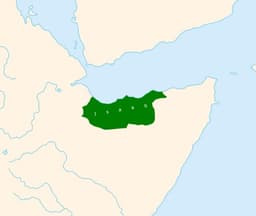
Guled Abdi
Emperor · Modern
44.7Total
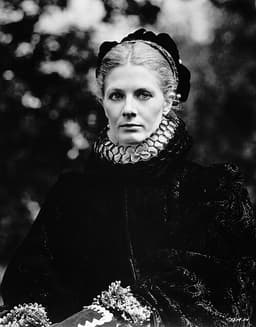
Mary Queen of Scots
Emperor · Modern
46.5Total
Basic Information
Born
1750
1542
Died
1808
1587
Era
Modern
Modern
Nationality
Somalia
Scotland
Occupation
Emperor
Emperor
Civilization
Other
Western
Score Comparison
Military (10%)
50.0
48.6
Political (20%)
35.1
29.3
Influence (20%)
48.6
55.7
Legacy (20%)
39.2
45.8
Leadership (15%)
58.8
41.5
Strategy (15%)
36.8
56.1
TOTAL
44.7
46.5
Guled Abdi — Complete Timeline
1750 AD
Foundation of the Isaaq SultanatePolitical Action◆ Major
Guled Abdi established the Isaaq Sultanate, becoming its first sultan. This event created a centralized political entity for the Isaaq clan in the Horn of Africa, consolidating their territory and influence in the region.
FoundingSultanateIsaaq
Impact: regionalconstructive
1760 AD
Consolidation of Isaaq TerritoryWar
Guled Abdi led military campaigns to expand and secure the Isaaq Sultanate's borders, subjugating rival clans and establishing control over key trade routes in the region. This solidified the sultanate's power base.
ExpansionMilitary CampaignIsaaq
Impact: regional
Mary Queen of Scots — Complete Timeline
1543 AD
Coronation as Queen of ScotsPolitical Action◆ Major
Mary was crowned Queen of Scots at Stirling Castle at nine months old, following the death of her father James V. The coronation was overseen by regents, and Scotland was governed by a series of regents during her minority.
CoronationRegencyMinority
Impact: national
1558 AD
Marriage to Francis II of FrancePolitical Action◆ Major
Mary married Francis, Dauphin of France, at Notre Dame Cathedral in Paris. The marriage strengthened the Auld Alliance and made Mary queen consort of France when Francis became king in 1559. Francis died in 1560, ending Mary's French reign.
MarriageAuld AllianceFrance
Impact: national
1561 AD
Return to ScotlandPolitical Action◆ Major
Mary returned to Scotland after the death of her husband Francis II. She arrived in Leith and began her personal rule in a country deeply divided by the Protestant Reformation. She faced challenges from Protestant nobles and the English queen Elizabeth I.
ReturnReformationRule
Impact: national
1566 AD
Murder of David RizzioPolitical Action◆ Major
Mary's private secretary David Rizzio was murdered in her presence at Holyrood Palace by a group of nobles led by her husband Lord Darnley. The murder was motivated by jealousy and political intrigue, and it deepened the rift between Mary and Darnley.
MurderIntrigueDarnley
Impact: nationaltragic
1567 AD
Abdication and ImprisonmentPolitical Action
Mary was forced to abdicate the Scottish throne in favor of her infant son James VI after her defeat at the Battle of Carberry Hill. She was imprisoned in Loch Leven Castle and later escaped, but was defeated again and fled to England.
AbdicationImprisonmentFlight
Impact: nationaltragic
1587 AD
Execution by Elizabeth IPolitical Action
Mary was executed at Fotheringhay Castle after being found guilty of involvement in the Babington Plot to assassinate Elizabeth I. Her execution ended 19 years of captivity in England and removed a Catholic claimant to the English throne.
ExecutionPlotCatholic Claimant
Impact: globaltragic
Expert Analysis
Origins
**Guled Abdi** was born around 1750 in the Horn of Africa, into the Isaaq clan. His early life is obscure, but he emerged as a leader during a period of clan fragmentation. He likely received training in traditional Somali warfare and diplomacy. No formal education is recorded, but he mastered the art of clan politics and trade.
**Mary Queen of Scots** was born on 8 December 1542 at Linlithgow Palace, Scotland. Her father, James V, died days after her birth, making her queen at six days old. She was sent to France at age five, raised at the French court, and educated in languages, music, and statecraft. She married Francis II in 1558, becoming queen consort of France briefly.
Rise to Power
**Guled Abdi** rose by unifying the Isaaq clans through warfare and diplomacy. In the 1750s, he founded the Isaaq Sultanate, centering it at Hargeisa. He led campaigns against neighboring clans like the Gadabuursi, securing trade routes to Berbera. His consolidation of territory was marked by military actions scored at 50.0, but his political savvy was lower at 35.1. He became the first sultan, establishing a hereditary line.
**Mary Queen of Scots** ascended to the Scottish throne at birth, with regents ruling until she came of age. After Francis II's death in 1560, she returned to Scotland in 1561, facing a Protestant nobility led by John Knox. Her claim to the English throne made her a rival to Elizabeth I. She married Henry Stuart, Lord Darnley, in 1565, but his murder and her subsequent marriage to James Hepburn, 4th Earl of Bothwell, sparked rebellion. She was forced to abdicate in 1567 after defeat at Carberry Hill.
Leadership & Governance
**Guled Abdi** ruled as a traditional Somali sultan, relying on clan councils and military force. He established a centralized authority but maintained local autonomy. His leadership score of 58.8 reflects his ability to command loyalty, but his strategy score of 36.8 suggests limited long-term planning. He focused on expansion and trade, not institutional reforms.
**Mary Queen of Scots** attempted to rule a divided Scotland. Her leadership score of 41.5 indicates struggles with governance. She favored Catholicism in a Protestant country, leading to conflict. Her marriage choices were disastrous: Darnley was weak and ambitious, Bothwell was accused of Darnley's murder. She lacked political acumen, scoring 29.3, and her strategy score of 56.1 was undermined by impulsive decisions.
Triumph & Tragedy
**Guled Abdi**'s triumph was founding a sultanate that lasted until 1884, providing stability for the Isaaq. His military campaigns secured territory and trade. His tragedy is the lack of historical records; his legacy is mostly oral tradition. He died around 1808, leaving a fragile state that later faced colonial pressures.
**Mary Queen of Scots**'s triumph was her early life as queen of France and her return to Scotland. She was a cultured monarch in the Renaissance tradition. Her tragedy is her abdication, 19 years of imprisonment in England, and execution on 8 February 1587 at Fotheringhay Castle for treason. Her involvement in the Babington Plot sealed her fate.
Character & Destiny
**Guled Abdi** was pragmatic and ruthless, as seen in his clan subjugation. His character suited the harsh Somali environment, but his lack of strategic depth limited his state's durability. He is remembered as a unifier, but his methods were typical of the era.
**Mary Queen of Scots** was romantic and impulsive, making poor decisions in love and politics. Her charm and determination contrasted with her lack of foresight. Historians note her as a tragic figure caught between religious factions. Her execution made her a martyr for Catholics.
Legacy
**Guled Abdi** is remembered as the founder of the Isaaq Sultanate, which shaped Somali clan identity. His legacy score of 39.2 reflects limited global impact, but he is a regional figure. The sultanate's structure influenced later Somali governance.
**Mary Queen of Scots** has a legacy score of 45.8, higher due to her role in British history. Her son James VI united the crowns of Scotland and England. Her tragic story fascinates historians and popular culture. She symbolizes the dangers of political naivety.
Conclusion
Mary Queen of Scots had greater impact due to her connection to the English succession and her role in the Protestant-Catholic conflict. Her total score of 46.5 edges Guled Abdi's 44.7. While Guled Abdi founded a lasting political entity, Mary's influence extends beyond Scotland into British and European history. Her execution changed the course of the English Reformation. Guled Abdi's legacy is local and less documented. Therefore, Mary Queen of Scots is the more historically significant figure.
Rankings
🥇
Mary Queen of ScotsLeader
Mil: 48.6Pol: 29.3Inf: 55.7
46.5
🥈
Guled Abdi
Mil: 50.0Pol: 35.1Inf: 48.6
44.7
+1.8 behind
How This Comparison Works
Algorithm
Each figure is scored on 6 dimensions (0—100 scale) based on structured historical data: Military (10%), Political (20%), Influence (20%), Legacy (20%), Leadership (15%), Strategy (15%). The weighted total produces the final ranking.
Data Sources
Scores are computed from structured sub-indicators in the database. Scale factors adjust for era (Ancient ×0.85, Modern ×1.0) and civilization size (Eastern ×1.05, Other ×0.80) to account for differences in population and military scale.
Maximum 3 Figures
Comparisons are limited to 2—3 figures to ensure readability and statistical meaningfulness.
Error Margins
±5 points per dimension — Sub-scores are derived from historical records with inherent uncertainty. Two figures within 5 points on a dimension should be considered roughly equivalent in that area.
Total Score Accuracy
±3 points overall — The weighted combination of 6 dimensions produces a total score with approximately ±3 points of uncertainty. Differences of less than 3 points are not statistically significant— the figures are effectively tied.
Known Limitations
- Historical records are incomplete and uneven across civilizations
- Figures from oral-tradition societies may be underrepresented
- Occupation labels can misclassify multi-role figures
- Scores measure capability and impact, not moral character
- Quantitative scoring is a comparison tool, not absolute truth
Capability Radar
Military (10%) — Battles & Warfare
Battles
15
22
Win Rate
20
24
Expansion
25
32
Political (20%) — Governance & Reform
Reform
25
15
Diplomacy
30
30
Economy
20
10
Influence (20%) — Cultural & Global Reach
Cultural
20
40
Global
10
35
Legacy (20%) — Historical Impact
Historical
25
45
Longevity
20
40
Leadership (15%) — Power & Stability
Tenure
30
25
Stability
25
5
Strategy (15%) — Tactics & Innovation
Strategy
20
32
Tactics
15
37
Reform
10
40
Similar Comparisons
Comments & Discussion
No comments yet. Be the first to share your thoughts!