Loading...
This comparison has not been analyzed yet.
One-time AI generation (~1 minute). Scores and timeline are already available below.
Matsudaira Nobutsuna vs Minoo Masani
Minoo Masani leads by 1.6 pts · 2 figures compared
…
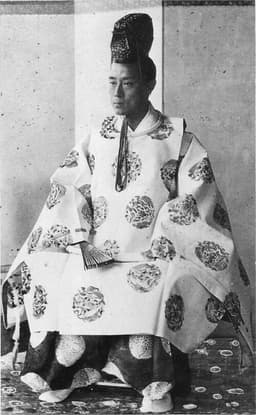
Matsudaira Nobutsuna
Politician · Modern
52.5Total

Minoo Masani
Politician · Modern
54.1Total
Basic Information
Born
1596
1905
Died
1662
1998
Era
Modern
Modern
Nationality
Japan
India
Occupation
Politician
Politician
Civilization
Eastern
Indian
Score Comparison
Military (10%)
30.0
39.1
Political (20%)
68.0
55.0
Influence (20%)
51.8
54.9
Legacy (20%)
45.0
45.8
Leadership (15%)
72.0
72.0
Strategy (15%)
43.3
60.0
TOTAL
52.5
54.1
Matsudaira Nobutsuna — Complete Timeline
1633 AD
Appointment as Senior Councilor (Roju)Political Action◆ Major
Nobutsuna was appointed to the powerful position of roju under Shogun Tokugawa Iemitsu. This role made him one of the highest-ranking officials in the Tokugawa shogunate, responsible for major policy decisions and military command.
AppointmentTokugawa shogunateRoju
Impact: nationalconstructive
1638 AD
Suppression of the Shimabara RebellionWar◆ Major
As a senior councilor, Matsudaira Nobutsuna commanded shogunate forces in the siege of Hara Castle, crushing the Christian-led peasant uprising. The rebellion's suppression led to the finalization of Japan's national seclusion policy and the persecution of Christians.
Shimabara RebellionChristian persecutionSiege
Impact: nationaldestructive
1642 AD
Oversight of the Kan'ei Great Famine ReliefReform
During the severe Kan'ei famine, Nobutsuna implemented relief measures including rice distribution and tax reductions in domains under his control. His actions mitigated some suffering but the famine still caused widespread death across Japan.
Famine reliefKan'ei eraDisaster response
Impact: nationalconstructive
Minoo Masani — Complete Timeline
1943 AD
Served as Mayor of BombayPolitical Action
Masani was elected Mayor of Bombay (now Mumbai) during World War II. He focused on municipal administration and civic issues, though his tenure was brief and overshadowed by the war and independence movement.
Municipal GovernmentMayor
1955 AD
Authored 'Socialism Reconsidered'Cultural
Masani published the book 'Socialism Reconsidered', arguing against state-controlled socialism and for a mixed economy with strong private sector. The book influenced Indian economic debates and helped shape the Swatantra Party's ideology.
BookEconomic PolicyIdeology
Impact: nationalconstructive
1957 AD
Served as Member of Parliament (Lok Sabha)Political Action
Masani was elected to the Lok Sabha from the Rajkot constituency. He served as a prominent opposition voice, criticizing the Congress government's economic policies and advocating for private enterprise.
ParliamentOppositionPolitics
Impact: national
1959 AD
Co-founded the Swatantra PartyPolitical Action◆ Major
Minoo Masani, along with C. Rajagopalachari and others, founded the Swatantra Party in Bombay. The party advocated for free-market economics, limited government, and individual liberties, opposing the socialist policies of the Congress Party.
Free MarketPolitical PartyLiberalism
Impact: nationalconstructive
This comparison has not been analyzed yet.
One-time AI generation (~1 minute). Scores and timeline are already available below.
Rankings
🥇
Minoo MasaniLeader
Mil: 39.1Pol: 55.0Inf: 54.9
54.1
🥈
Matsudaira Nobutsuna
Mil: 30.0Pol: 68.0Inf: 51.8
52.5
+1.6 behind
How This Comparison Works
Algorithm
Each figure is scored on 6 dimensions (0—100 scale) based on structured historical data: Military (10%), Political (20%), Influence (20%), Legacy (20%), Leadership (15%), Strategy (15%). The weighted total produces the final ranking.
Data Sources
Scores are computed from structured sub-indicators in the database. Scale factors adjust for era (Ancient ×0.85, Modern ×1.0) and civilization size (Eastern ×1.05, Other ×0.80) to account for differences in population and military scale.
Maximum 3 Figures
Comparisons are limited to 2—3 figures to ensure readability and statistical meaningfulness.
Error Margins
±5 points per dimension — Sub-scores are derived from historical records with inherent uncertainty. Two figures within 5 points on a dimension should be considered roughly equivalent in that area.
Total Score Accuracy
±3 points overall — The weighted combination of 6 dimensions produces a total score with approximately ±3 points of uncertainty. Differences of less than 3 points are not statistically significant— the figures are effectively tied.
Known Limitations
- Historical records are incomplete and uneven across civilizations
- Figures from oral-tradition societies may be underrepresented
- Occupation labels can misclassify multi-role figures
- Scores measure capability and impact, not moral character
- Quantitative scoring is a comparison tool, not absolute truth
Capability Radar
Military (10%) — Battles & Warfare
Battles
45
41
Win Rate
60
48
Expansion
20
51
Political (20%) — Governance & Reform
Reform
50
70
Diplomacy
55
55
Economy
45
75
Influence (20%) — Cultural & Global Reach
Cultural
25
30
Global
15
30
Legacy (20%) — Historical Impact
Historical
40
40
Longevity
30
35
Leadership (15%) — Power & Stability
Tenure
65
60
Stability
60
50
Strategy (15%) — Tactics & Innovation
Strategy
50
51
Tactics
55
57
Reform
30
59
Similar Comparisons
Comments & Discussion
No comments yet. Be the first to share your thoughts!