Loading...
This comparison has not been analyzed yet.
One-time AI generation (~1 minute). Scores and timeline are already available below.
Matthias vs Yeshwant Rao Holkar II
Yeshwant Rao Holkar II leads by 4.6 pts · 2 figures compared
…

Matthias
Emperor · Modern
49.7Total
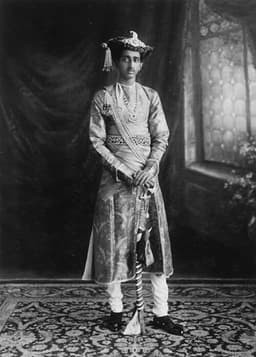
Yeshwant Rao Holkar II
Emperor · Modern
54.3Total
Basic Information
Born
1557
1908
Died
1619
1961
Era
Modern
Modern
Nationality
Holy Roman Empire
India
Occupation
Emperor
Emperor
Civilization
Western
Indian
Score Comparison
Military (10%)
50.0
40.5
Political (20%)
39.4
68.0
Influence (20%)
54.9
54.9
Legacy (20%)
50.0
41.7
Leadership (15%)
67.0
65.7
Strategy (15%)
25.0
60.0
TOTAL
49.7
54.3
Matthias — Complete Timeline
1606 AD
Peace of ZsitvatorokPolitical Action◆ Major
Matthias, as the representative of the Habsburgs, negotiated the Peace of Zsitvatorok with the Ottoman Empire, ending the Long Turkish War. The treaty was a compromise, with the Habsburgs ceasing to pay tribute to the Ottomans but recognizing Ottoman control over much of Hungary. This peace was a diplomatic achievement for Matthias.
Peace TreatyOttoman EmpireLong Turkish War
Impact: regionalconstructive
1611 AD
Deposition of Rudolf IIPolitical Action◆ Major
Matthias led a revolt of the Habsburg family and the Bohemian estates against his brother Rudolf II, forcing him to cede the crowns of Bohemia, Hungary, and Austria. Matthias was crowned King of Bohemia in 1611 and later became Holy Roman Emperor in 1612. This internal conflict weakened the Habsburg dynasty.
DepositionHabsburg Family FeudPower Struggle
Impact: regionaldestructive
1612 AD
Coronation as Holy Roman EmperorPolitical Action◆ Major
Matthias was crowned Holy Roman Emperor in Frankfurt, succeeding his brother Rudolf II. His reign was marked by attempts to maintain religious peace and centralize authority, but he faced opposition from both Catholic and Protestant factions. His policies ultimately failed to prevent the outbreak of the Thirty Years' War.
CoronationImperial AuthorityReligious Tensions
Impact: global
1618 AD
Defenestration of Prague (1618)Political Action
During Matthias's reign, Protestant nobles in Bohemia threw two Catholic imperial governors out of a window in Prague Castle, an event known as the Second Defenestration of Prague. This act was a direct challenge to Matthias's authority and sparked the Bohemian Revolt, which escalated into the Thirty Years' War. Matthias died shortly after.
Defenestration of PragueThirty Years' WarBohemian Revolt
Impact: globaldestructive
Yeshwant Rao Holkar II — Complete Timeline
1926 AD
Accession to Indore ThronePolitical Action
Yeshwant Rao Holkar II became Maharaja of Indore at age 18 after the death of his father, Shivaji Rao Holkar. He was known for his modernist outlook and patronage of art and architecture.
IndoreSuccession
1930 AD
Construction of Manik Bagh PalaceCultural◆ Major
Yeshwant Rao Holkar II commissioned the Manik Bagh Palace in Indore, designed by German architect Eckart Muthesius in the Art Deco style. The palace featured modernist furniture and became a landmark of 20th-century design.
IndoreArchitectureArt Deco
Impact: regionalconstructive
1935 AD
Patronage of Modern Art and CollectionCultural
Yeshwant Rao Holkar II amassed a significant collection of modern Western and Indian art, including works by artists like Brancusi and Magritte. His collection was displayed at Manik Bagh and later dispersed, influencing Indian art patronage.
Art CollectionModernism
Impact: nationalconstructive
1947 AD
Accession of Indore to IndiaPolitical Action
Yeshwant Rao Holkar II signed the Instrument of Accession, merging Indore into the Dominion of India after independence. He later served as a Rajpramukh of Madhya Bharat until the state's reorganization in 1956.
Indian IndependenceIntegration
Impact: national
This comparison has not been analyzed yet.
One-time AI generation (~1 minute). Scores and timeline are already available below.
Rankings
🥇
Yeshwant Rao Holkar IILeader
Mil: 40.5Pol: 68.0Inf: 54.9
54.3
🥈
Matthias
Mil: 50.0Pol: 39.4Inf: 54.9
49.7
+4.6 behind
How This Comparison Works
Algorithm
Each figure is scored on 6 dimensions (0—100 scale) based on structured historical data: Military (10%), Political (20%), Influence (20%), Legacy (20%), Leadership (15%), Strategy (15%). The weighted total produces the final ranking.
Data Sources
Scores are computed from structured sub-indicators in the database. Scale factors adjust for era (Ancient ×0.85, Modern ×1.0) and civilization size (Eastern ×1.05, Other ×0.80) to account for differences in population and military scale.
Maximum 3 Figures
Comparisons are limited to 2—3 figures to ensure readability and statistical meaningfulness.
Error Margins
±5 points per dimension — Sub-scores are derived from historical records with inherent uncertainty. Two figures within 5 points on a dimension should be considered roughly equivalent in that area.
Total Score Accuracy
±3 points overall — The weighted combination of 6 dimensions produces a total score with approximately ±3 points of uncertainty. Differences of less than 3 points are not statistically significant— the figures are effectively tied.
Known Limitations
- Historical records are incomplete and uneven across civilizations
- Figures from oral-tradition societies may be underrepresented
- Occupation labels can misclassify multi-role figures
- Scores measure capability and impact, not moral character
- Quantitative scoring is a comparison tool, not absolute truth
Capability Radar
Military (10%) — Battles & Warfare
Battles
20
32
Win Rate
15
33
Expansion
10
34
Political (20%) — Governance & Reform
Reform
30
60
Diplomacy
25
40
Economy
20
50
Influence (20%) — Cultural & Global Reach
Cultural
20
45
Global
50
25
Legacy (20%) — Historical Impact
Historical
60
30
Longevity
55
20
Leadership (15%) — Power & Stability
Tenure
55
30
Stability
15
35
Strategy (15%) — Tactics & Innovation
Strategy
15
40
Tactics
10
42
Reform
10
42
Similar Comparisons
Comments & Discussion
No comments yet. Be the first to share your thoughts!