Loading...
This comparison has not been analyzed yet.
One-time AI generation (~1 minute). Scores and timeline are already available below.
Maurice Yameogo vs Timothy Harris
Timothy Harris leads by 8.6 pts · 2 figures compared
…

Maurice Yameogo
Politician · Modern
41.9Total
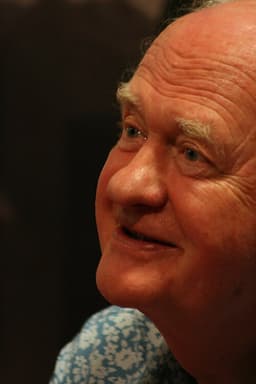
Timothy Harris
Politician · Modern
50.5Total
Basic Information
Born
1921
1964
Died
—
—
Era
Modern
Modern
Nationality
Burkina Faso
Saint Kitts and Nevis
Occupation
Politician
Politician
Civilization
Other
Other
Score Comparison
Military (10%)
13.4
33.6
Political (20%)
39.4
68.0
Influence (20%)
47.1
50.2
Legacy (20%)
38.3
40.8
Leadership (15%)
64.0
68.0
Strategy (15%)
37.3
39.9
TOTAL
41.9
50.5
Maurice Yameogo — Complete Timeline
1960 AD
Became first President of Upper VoltaPolitical Action
Maurice Yam
IndependenceFirst PresidentUpper Volta
Impact: nationalconstructive
Established one-party statePolitical Action◆ Major
Yaméogo banned all opposition parties and established the Voltaic Democratic Union as the sole legal party. He suppressed dissent, arrested opponents, and centralized control, creating an authoritarian regime.
One-Party StateAuthoritarianismUpper Volta
Impact: nationaldestructive
1966 AD
Overthrown by popular uprising and military coupPolitical Action◆ Major
Yaméogo was overthrown on January 3, 1966, following massive protests and a general strike triggered by his austerity policies and corruption. The military, led by Sangoulé Lamizana, took power, ending Yaméogo's rule.
CoupUprisingOverthrow
Impact: nationaldestructive
Timothy Harris — Complete Timeline
2013 AD
Formed Team Unity CoalitionPolitical Action◆ Major
Harris helped form the Team Unity coalition, uniting the People's Labour Party, the Concerned Citizens' Movement, and the People's Action Movement. This alliance aimed to defeat the incumbent Labour Party.
CoalitionSaint KittsPolitics
Impact: nationalconstructive
2015 AD
Elected Prime Minister of Saint Kitts and NevisPolitical Action◆ Major
Timothy Harris led the Team Unity coalition to victory in the 2015 general election, becoming prime minister. The coalition ended 20 years of Denzil Douglas's rule.
ElectionSaint KittsCoalition
Impact: nationalconstructive
2016 AD
Implemented Citizenship by Investment ReformsReform◆ Major
Harris's government reformed the Citizenship by Investment Program, increasing transparency and oversight. The program became a major source of revenue for Saint Kitts and Nevis.
CBIEconomicReform
Impact: nationalconstructive
2022 AD
Lost 2022 General ElectionPolitical Action◆ Major
Harris's Team Unity coalition was defeated by the Saint Kitts and Nevis Labour Party in the 2022 general election. He stepped down as prime minister after one term.
ElectionSaint KittsDefeat
Impact: national
This comparison has not been analyzed yet.
One-time AI generation (~1 minute). Scores and timeline are already available below.
Rankings
🥇
Timothy HarrisLeader
Mil: 33.6Pol: 68.0Inf: 50.2
50.5
🥈
Maurice Yameogo
Mil: 13.4Pol: 39.4Inf: 47.1
41.9
+8.6 behind
How This Comparison Works
Algorithm
Each figure is scored on 6 dimensions (0—100 scale) based on structured historical data: Military (10%), Political (20%), Influence (20%), Legacy (20%), Leadership (15%), Strategy (15%). The weighted total produces the final ranking.
Data Sources
Scores are computed from structured sub-indicators in the database. Scale factors adjust for era (Ancient ×0.85, Modern ×1.0) and civilization size (Eastern ×1.05, Other ×0.80) to account for differences in population and military scale.
Maximum 3 Figures
Comparisons are limited to 2—3 figures to ensure readability and statistical meaningfulness.
Error Margins
±5 points per dimension — Sub-scores are derived from historical records with inherent uncertainty. Two figures within 5 points on a dimension should be considered roughly equivalent in that area.
Total Score Accuracy
±3 points overall — The weighted combination of 6 dimensions produces a total score with approximately ±3 points of uncertainty. Differences of less than 3 points are not statistically significant— the figures are effectively tied.
Known Limitations
- Historical records are incomplete and uneven across civilizations
- Figures from oral-tradition societies may be underrepresented
- Occupation labels can misclassify multi-role figures
- Scores measure capability and impact, not moral character
- Quantitative scoring is a comparison tool, not absolute truth
Capability Radar
Military (10%) — Battles & Warfare
Battles
28
26
Win Rate
28
24
Expansion
31
32
Political (20%) — Governance & Reform
Reform
30
40
Diplomacy
40
50
Economy
20
45
Influence (20%) — Cultural & Global Reach
Cultural
10
20
Global
10
20
Legacy (20%) — Historical Impact
Historical
20
25
Longevity
10
20
Leadership (15%) — Power & Stability
Tenure
60
55
Stability
15
50
Strategy (15%) — Tactics & Innovation
Strategy
34
34
Tactics
35
35
Reform
42
35
Similar Comparisons
Comments & Discussion
No comments yet. Be the first to share your thoughts!