Loading...
Maximilian I vs Qasim Khan
Maximilian I leads by 7.2 pts · 2 figures compared
…
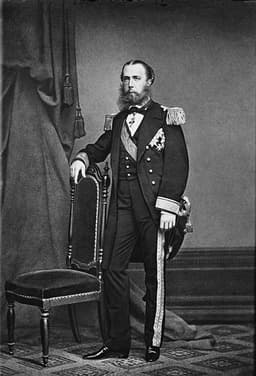
Maximilian I
Emperor · Medieval
58.8Total

Qasim Khan
Emperor · Medieval
51.6Total
Basic Information
Born
1459
1480
Died
1519
1521
Era
Medieval
Medieval
Nationality
Holy Roman Empire
Kazakh Khanate
Occupation
Emperor
Emperor
Civilization
Western
Eastern
Score Comparison
Military (10%)
52.5
45.0
Political (20%)
60.0
53.8
Influence (20%)
72.0
55.7
Legacy (20%)
40.0
46.7
Leadership (15%)
72.0
66.0
Strategy (15%)
58.0
35.0
TOTAL
58.8
51.6
Maximilian I — Complete Timeline
1477 AD
Married Mary of BurgundyPolitical Action
Maximilian married Mary, the only child of Charles the Bold, Duke of Burgundy. This marriage brought the Burgundian Netherlands and Franche-Comt
MarriageHabsburg ExpansionBurgundian Inheritance
Impact: globalconstructive
1479 AD
Battle of GuinegateWar◆ Major
Maximilian led the Burgundian army to victory against French forces at Guinegate. The battle secured the Burgundian Netherlands from French annexation. However, Maximilian's subsequent military campaigns were less successful, and he eventually lost most of Burgundy proper.
BattleBurgundian WarsFranco-Habsburg Conflict
Impact: regional
1486 AD
Elected King of the RomansPolitical Action◆ Major
Maximilian was elected King of the Romans, securing his succession as Holy Roman Emperor. This election confirmed the Habsburg hold on the imperial title and allowed Maximilian to begin centralizing imperial authority, though his power remained limited by the princes.
ElectionHoly Roman EmpireSuccession
Impact: regionalconstructive
1495 AD
Imperial Reform and the ReichstagReform◆ Major
At the Diet of Worms, Maximilian proclaimed the Imperial Reform, establishing the Reichskammergericht (Imperial Chamber Court) and the Reichstag as a permanent legislative body. These reforms aimed to centralize the Holy Roman Empire but were only partially successful due to princely opposition.
ReformHoly Roman EmpireCentralization
Impact: regionalconstructive
1496 AD
Double Marriage Alliance with SpainPolitical Action
Maximilian arranged the marriage of his son Philip the Handsome to Joanna of Castile, and his daughter Margaret to John, Prince of Asturias. This alliance eventually brought Spain and its American colonies into the Habsburg domain under Charles V.
Marriage AllianceHabsburg-Spanish UnionDynastic Policy
Impact: globalconstructive
1508 AD
War of the League of CambraiWar
Maximilian joined the League of Cambrai against Venice, aiming to reclaim imperial territories in Italy. The war initially succeeded but later turned against the Habsburgs. The conflict drained imperial resources and highlighted the limits of Maximilian's military power.
Italian WarsLeague of CambraiVenice
Impact: regionaldestructive
Qasim Khan — Complete Timeline
1500 AD
Consolidation of Kazakh Khanate TerritoryPolitical Action◆ Major
Qasim Khan expanded and consolidated the territory of the Kazakh Khanate, bringing most of the steppe regions under his control. He secured the eastern borders against the Moghulistan and the western borders against the Nogai Horde, establishing the khanate as a major regional power.
Territorial ExpansionKazakh Khanate
Impact: regionalconstructive
1510 AD
Alliance with the Timurid EmpirePolitical Action
Qasim Khan formed a diplomatic alliance with the Timurid ruler Babur, providing military support against the Shaybanid Uzbeks. This alliance helped secure the southern borders of the Kazakh Khanate and facilitated trade along the Silk Road.
DiplomacyAllianceTimurids
Impact: regionalconstructive
1511 AD
Codification of the Qasym Khannyn Qasqa ZholyReform◆ Major
Qasim Khan compiled and codified the first written legal code of the Kazakh Khanate, known as the 'Qasym Khannyn Qasqa Zholy' (Bright Path of Qasim Khan). This code regulated criminal, civil, and military law, establishing a unified legal framework for the nomadic Kazakh tribes and strengthening the khan's authority.
Legal CodeKazakh KhanateReform
Impact: nationalconstructive
Expert Analysis
Origins
Maximilian I was born on March 22, 1459, in Wiener Neustadt, Austria, to Emperor Frederick III and Eleanor of Portugal. As a member of the House of Habsburg, he was raised with a strong sense of dynastic ambition. His education emphasized chivalric ideals and statecraft, preparing him for imperial rule. In contrast, Qasim Khan (also Qasym Khan) was born around 1445 into the ruling dynasty of the Kazakh Khanate, the House of Urus. His father was Janibek Khan, one of the founders of the Kazakh Khanate. Qasim grew up in the steppe, learning nomadic warfare and tribal leadership. His formative years were marked by the struggle to unify Kazakh tribes against external threats like the Shaybanid Uzbeks.
Rise to Power
Maximilian's rise began with his marriage to Mary of Burgundy in 1477, which brought the Burgundian Netherlands under Habsburg control. This was a turning point, as it gave him a wealthy base and rivalry with France. He was elected King of the Romans in 1486, ensuring succession as Holy Roman Emperor. His military campaigns, such as the Battle of Guinegate in 1479, secured Burgundian lands. Qasim Khan rose to power as a military commander under his uncle Burunduk Khan. He consolidated power by forging alliances, notably with the Timurid ruler Babur against the Uzbeks. After Burunduk's death around 1511, Qasim became khan and focused on expanding territory. He united Kazakh tribes and controlled vast steppe regions, from the Syr Darya to the Ural River.
Leadership & Governance
Maximilian I governed the Holy Roman Empire through a complex feudal structure. He initiated Imperial Reform in 1495 at the Diet of Worms, establishing the Reichskammergericht (Imperial Chamber Court) and the Reichstag as a permanent legislative body. This aimed to centralize authority but faced resistance from princes. His leadership relied on dynastic marriages, famously summarized as "Bella gerant alii, tu felix Austria nube" (Let others wage war; you, happy Austria, marry). Qasim Khan's governance was rooted in steppe traditions. His major achievement was codifying the "Qasym Khannyn Qasqa Zholy" (Bright Path of Qasim Khan), a legal code that defined criminal laws, property rights, and tribal responsibilities. This brought stability to the Kazakh Khanate and strengthened central authority. While Maximilian scored 72.0 in leadership and 60.0 in politics, Qasim scored 66.0 and 53.8 respectively, reflecting different contexts.
Triumph & Tragedy
Maximilian's greatest success was the Double Marriage Alliance with Spain in 1496, linking his son Philip to Joanna of Castile and his daughter Margaret to John of Aragon. This positioned the Habsburgs to inherit Spain and its empire, leading to the vast domains of Charles V. His failure included military overreach; his campaigns in Italy and against the Swiss were costly and indecisive. His total score of 58.8 reflects moderate effectiveness. Qasim Khan's triumph was expanding the Kazakh Khanate to its greatest territorial extent and establishing a legal framework that endured for centuries. His tragedy was the lack of a permanent administrative structure; after his death around 1521, the Khanate fragmented under his son Mamash, who died in battle. Qasim's total score of 51.6 indicates a more limited scope of power.
Character & Destiny
Maximilian was a Renaissance prince, interested in art, literature, and self-promotion (he commissioned autobiographical works). He was energetic but often overambitious, leading to financial strains. His character—chivalric yet pragmatic—helped him secure marriages but not decisive military victories. Historian Thomas Brady notes that Maximilian's "reforms were half-measures" due to princely opposition. Qasim Khan was a steppe ruler who combined warrior ethos with legislative vision. His codification shows a desire for order beyond tribal custom. However, his reliance on personal authority meant the khanate depended on his leadership. The score gap of 7.2 points in favor of Maximilian reflects his broader influence on European politics.
Legacy
Maximilian's legacy is the foundation of Habsburg dominance in Europe. His marriage policies created the Habsburg Empire that lasted until 1918. The Imperial Reform influenced German constitutional development. Culturally, he is remembered as the "Last Knight" for his patronage of chivalric culture. Qasim Khan's legacy is the legal code that shaped Kazakh identity. The "Qasym Khannyn Qasqa Zholy" remained a reference until the Russian Empire's expansion. He is revered as a unifier and lawgiver in Kazakhstan. However, his political structure did not survive long-term, while Maximilian's dynastic strategy had lasting continental impact. In scores, Maximilian's influence is 72.0 versus Qasim's 55.7, and legacy 40.0 versus 46.7, showing different types of endurance.
Conclusion
While both leaders shaped their realms, Maximilian I had greater impact on global history through the Habsburg dynasty's rise. His strategic marriages and reforms influenced European power balances for centuries. Qasim Khan's achievements were significant for Kazakh statehood but limited to the steppe. The total score difference of 7.2 points (58.8 vs 51.6) reflects this disparity. Maximilian's political maneuvering and institutional changes had wider and longer-lasting consequences. Therefore, Maximilian I is the more impactful figure.
Rankings
🥇
Maximilian ILeader
Mil: 52.5Pol: 60.0Inf: 72.0
58.8
🥈
Qasim Khan
Mil: 45.0Pol: 53.8Inf: 55.7
51.6
+7.2 behind
How This Comparison Works
Algorithm
Each figure is scored on 6 dimensions (0—100 scale) based on structured historical data: Military (10%), Political (20%), Influence (20%), Legacy (20%), Leadership (15%), Strategy (15%). The weighted total produces the final ranking.
Data Sources
Scores are computed from structured sub-indicators in the database. Scale factors adjust for era (Ancient ×0.85, Modern ×1.0) and civilization size (Eastern ×1.05, Other ×0.80) to account for differences in population and military scale.
Maximum 3 Figures
Comparisons are limited to 2—3 figures to ensure readability and statistical meaningfulness.
Error Margins
±5 points per dimension — Sub-scores are derived from historical records with inherent uncertainty. Two figures within 5 points on a dimension should be considered roughly equivalent in that area.
Total Score Accuracy
±3 points overall — The weighted combination of 6 dimensions produces a total score with approximately ±3 points of uncertainty. Differences of less than 3 points are not statistically significant— the figures are effectively tied.
Known Limitations
- Historical records are incomplete and uneven across civilizations
- Figures from oral-tradition societies may be underrepresented
- Occupation labels can misclassify multi-role figures
- Scores measure capability and impact, not moral character
- Quantitative scoring is a comparison tool, not absolute truth
Capability Radar
Military (10%) — Battles & Warfare
Battles
55
45
Win Rate
50
50
Expansion
60
55
Political (20%) — Governance & Reform
Reform
65
70
Diplomacy
85
50
Economy
60
40
Influence (20%) — Cultural & Global Reach
Cultural
70
45
Global
65
30
Legacy (20%) — Historical Impact
Historical
75
50
Longevity
80
40
Leadership (15%) — Power & Stability
Tenure
75
60
Stability
55
55
Strategy (15%) — Tactics & Innovation
Strategy
65
45
Tactics
60
40
Reform
70
30
Similar Comparisons
Comments & Discussion
No comments yet. Be the first to share your thoughts!