Loading...
Maximilian I vs Napoleon Bonaparte
Napoleon Bonaparte leads by 12.1 pts · 2 figures compared
…
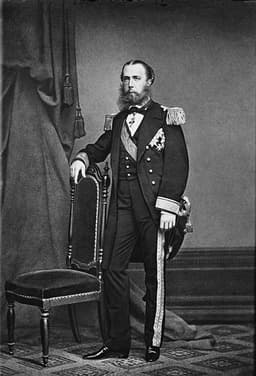
Maximilian I
Emperor · Medieval
58.8Total

Napoleon Bonaparte
General · Modern
70.9Total
Basic Information
Born
1459
1769
Died
1519
1821
Era
Medieval
Modern
Nationality
Holy Roman Empire
France
Occupation
Emperor
General
Civilization
Western
Western
Score Comparison
Military (10%)
52.5
94.0
Political (20%)
60.0
72.0
Influence (20%)
72.0
40.0
Legacy (20%)
40.0
80.0
Leadership (15%)
72.0
78.0
Strategy (15%)
58.0
90.0
TOTAL
58.8
70.9
Maximilian I — Complete Timeline
1477 AD
Married Mary of BurgundyPolitical Action
Maximilian married Mary, the only child of Charles the Bold, Duke of Burgundy. This marriage brought the Burgundian Netherlands and Franche-Comt
MarriageHabsburg ExpansionBurgundian Inheritance
Impact: globalconstructive
1479 AD
Battle of GuinegateWar◆ Major
Maximilian led the Burgundian army to victory against French forces at Guinegate. The battle secured the Burgundian Netherlands from French annexation. However, Maximilian's subsequent military campaigns were less successful, and he eventually lost most of Burgundy proper.
BattleBurgundian WarsFranco-Habsburg Conflict
Impact: regional
1486 AD
Elected King of the RomansPolitical Action◆ Major
Maximilian was elected King of the Romans, securing his succession as Holy Roman Emperor. This election confirmed the Habsburg hold on the imperial title and allowed Maximilian to begin centralizing imperial authority, though his power remained limited by the princes.
ElectionHoly Roman EmpireSuccession
Impact: regionalconstructive
1495 AD
Imperial Reform and the ReichstagReform◆ Major
At the Diet of Worms, Maximilian proclaimed the Imperial Reform, establishing the Reichskammergericht (Imperial Chamber Court) and the Reichstag as a permanent legislative body. These reforms aimed to centralize the Holy Roman Empire but were only partially successful due to princely opposition.
ReformHoly Roman EmpireCentralization
Impact: regionalconstructive
1496 AD
Double Marriage Alliance with SpainPolitical Action
Maximilian arranged the marriage of his son Philip the Handsome to Joanna of Castile, and his daughter Margaret to John, Prince of Asturias. This alliance eventually brought Spain and its American colonies into the Habsburg domain under Charles V.
Marriage AllianceHabsburg-Spanish UnionDynastic Policy
Impact: globalconstructive
1508 AD
War of the League of CambraiWar
Maximilian joined the League of Cambrai against Venice, aiming to reclaim imperial territories in Italy. The war initially succeeded but later turned against the Habsburgs. The conflict drained imperial resources and highlighted the limits of Maximilian's military power.
Italian WarsLeague of CambraiVenice
Impact: regionaldestructive
Napoleon Bonaparte — Complete Timeline
1799 AD
Coup of 18 BrumaireOther◆ Major
Napoleon Bonaparte, with support from his brother Lucien and key political figures, overthrew the Directory in a bloodless coup. He established the Consulate with himself as First Consul, effectively becoming the ruler of France. This event ended the French Revolution's most unstable period.
French RevolutionCoupRise to Power
Impact: regional
1804 AD
Promulgation of the Napoleonic CodeOther◆ Major
Napoleon enacted the Civil Code of the French, known as the Napoleonic Code, a comprehensive set of laws that replaced the fragmented feudal legal systems. The code established legal equality, protected property rights, and secularized law. It became the basis for legal systems in many European and world countries.
Legal ReformNapoleonic CodeCivil Law
Impact: globalconstructive
1805 AD
Battle of AusterlitzWar◆ Major
Napoleon's Grande Arm
Napoleonic WarsBattleDecisive Victory
Impact: global
1812 AD
Invasion of RussiaWar◆ Major
Napoleon led the Grande Arm
Napoleonic WarsInvasionDisaster
Impact: globaldestructive
1815 AD
Battle of WaterlooWar◆ Major
Napoleon's French army was defeated by the combined forces of the Duke of Wellington's Anglo-Allied army and Gebhard Leberecht von Bl
Napoleonic WarsBattleFinal Defeat
Impact: globaldestructive
Expert Analysis
maximilian-i-vs-napoleon-bonaparte
# The Emperor and the General: Two Paths to Power in European History
On a June morning in 1815, Napoleon Bonaparte watched his dreams of empire dissolve in the mud of Waterloo. Less than three centuries earlier, another ruler—Maximilian I of the Holy Roman Empire—had faced no such dramatic end, dying peacefully in his bed at sixty years old after a reign defined not by conquest but by marriage. How could two men, both driven by ambition and both shaping Europe in their image, meet such different fates? The answer lies not just in their talents, but in the worlds they inhabited and the choices those worlds demanded.
Origins
Napoleon Bonaparte was born in 1769 on the island of Corsica, a place that had only recently become French. His family was minor nobility, but poor—his father’s death left the young Napoleon to scramble for education and opportunity in a France still reeling from revolution. He was small, intense, and fiercely ambitious, a product of the Enlightenment who believed that talent could overcome birth. The French Revolution had shattered the old order, and for a man like Napoleon, that chaos was opportunity.
Maximilian I, born in 1459, came from the opposite end of the spectrum. He was a Habsburg, one of Europe’s oldest and most powerful dynasties. His father, Emperor Frederick III, was cautious and methodical, and Maximilian grew up immersed in the medieval world of chivalry, tournaments, and feudal loyalty. He was called "The Last Knight" not because he was nostalgic, but because he genuinely embodied the ideals of a dying age—honor, martial prowess, and the belief that a ruler’s duty was to lead from the front. Where Napoleon’s world was being remade by revolution, Maximilian’s was being slowly undermined by the rise of centralized states and professional armies.
Rise to Power
Napoleon’s ascent was meteoric. In 1796, at just twenty-six, he took command of the French army in Italy and stunned Europe with a series of lightning victories. He was not a nobleman leading by birthright; he was a general who had earned his rank through skill and sheer will. His coup of 1799 made him First Consul, and by 1804 he crowned himself Emperor in Notre Dame, snatching the crown from the Pope’s hands to place it on his own head. The message was unmistakable: power came from him, not from God or tradition.
Maximilian’s rise was slower and more deliberate. His key turning point came in 1477, when he married Mary of Burgundy, the only child of Charles the Bold. This marriage was not a conquest but a contract—it brought the wealthy Burgundian Netherlands into the Habsburg fold without a single battle. In 1486, he was elected King of the Romans, securing his succession as Holy Roman Emperor. Where Napoleon seized power, Maximilian inherited it, then expanded it through a web of alliances. His path was not the battlefield but the marriage bed.
Leadership & Governance
As a ruler, Napoleon was a force of nature. He reformed French law through the Napoleonic Code, centralizing administration and establishing principles of equality before the law that still shape Europe today. He built roads, founded banks, and created a meritocratic system where soldiers could rise from the ranks. But his genius was also his curse: he could not stop conquering. From the sands of Egypt to the snows of Russia, he drove his armies forward, believing that victory would solve all problems. His military score of 94 reflects near-unmatched tactical brilliance, but his political score of 75 shows the limits of a conqueror’s wisdom.
Maximilian governed differently. His Imperial Reform of 1495, proclaimed at the Diet of Worms, established the Reichskammergericht—an imperial supreme court—and created a framework for the Holy Roman Empire to function as a political entity. He was not a conqueror but a consolidator, using diplomacy and marriage to bind territories together. His double marriage alliance with Spain in 1496, pairing his son Philip with Joanna of Castile and his daughter Margaret with the Spanish heir, laid the foundation for the vast Habsburg empire that would dominate Europe for centuries. His leadership score of 87.7 reflects this patient, strategic approach, but his military score of 65 shows he was no Napoleon on the battlefield.
Triumph & Tragedy
Napoleon’s greatest moment was Austerlitz in 1805, where he crushed the combined armies of Russia and Austria in a single day. It was a masterpiece of strategy, the perfect execution of his belief that war was an art. But his tragedy was Russia in 1812. He marched into the vastness with 600,000 men and returned with barely 100,000. His refusal to compromise, his inability to stop, led to exile on Elba, a brief return, and finally Waterloo—where his old magic failed him.
Maximilian’s triumphs were quieter. The Battle of Guinegate in 1479 secured the Burgundian Netherlands, but his real victories were the treaties and marriages that built a dynasty. His tragedy was the fragility of that dynasty—his son Philip died young, and his grandson Charles would inherit an empire so vast it would eventually fracture under its own weight. Maximilian died in 1519, having seen his vision realized but knowing it was only the beginning.
Character & Destiny
Napoleon’s character was his destiny. He was brilliant, restless, and egotistical, believing that he alone could shape history. "Impossible is a word to be found only in the dictionary of fools," he once said. That confidence built an empire, but it also destroyed it. He could not delegate, could not compromise, could not accept limits.
Maximilian was different. He was romantic and chivalric, but also pragmatic. He understood that power was not just about winning battles but about building structures that outlasted him. He wrote extensively, patronized artists, and cultivated an image as the perfect knight. But he also knew when to negotiate, when to marry, when to wait. His character was not about force but about patience.
Legacy
Napoleon’s legacy is everywhere. The Napoleonic Code, the metric system, the modern concept of meritocracy—all bear his imprint. He is remembered as a military genius and a tyrant, a liberator and a conqueror. His influence score of 82 reflects this complexity.
Maximilian’s legacy is less visible but equally profound. He transformed the Habsburgs from a regional dynasty into a global power, laying the groundwork for the empire that would shape Central Europe for four centuries. He is remembered as "The Last Knight," a ruler who tried to preserve a world that was fading, but who also built a new one through patience and strategy.
Conclusion
Standing at Waterloo, Napoleon must have wondered how it all went wrong. Maximilian, dying peacefully in his bed, likely felt no such regret. Their stories remind us that there are two ways to shape history: through force and through patience, through conquest and through marriage, through the sword and through the pen. Both men succeeded beyond measure, but in very different ways. The question is not which path was better, but which path we choose to remember—and why.
Rankings
🥇
Napoleon BonaparteLeader
Mil: 94.0Pol: 72.0Inf: 40.0
70.9
🥈
Maximilian I
Mil: 52.5Pol: 60.0Inf: 72.0
58.8
+12.1 behind
How This Comparison Works
Algorithm
Each figure is scored on 6 dimensions (0—100 scale) based on structured historical data: Military (10%), Political (20%), Influence (20%), Legacy (20%), Leadership (15%), Strategy (15%). The weighted total produces the final ranking.
Data Sources
Scores are computed from structured sub-indicators in the database. Scale factors adjust for era (Ancient ×0.85, Modern ×1.0) and civilization size (Eastern ×1.05, Other ×0.80) to account for differences in population and military scale.
Maximum 3 Figures
Comparisons are limited to 2—3 figures to ensure readability and statistical meaningfulness.
Error Margins
±5 points per dimension — Sub-scores are derived from historical records with inherent uncertainty. Two figures within 5 points on a dimension should be considered roughly equivalent in that area.
Total Score Accuracy
±3 points overall — The weighted combination of 6 dimensions produces a total score with approximately ±3 points of uncertainty. Differences of less than 3 points are not statistically significant— the figures are effectively tied.
Known Limitations
- Historical records are incomplete and uneven across civilizations
- Figures from oral-tradition societies may be underrepresented
- Occupation labels can misclassify multi-role figures
- Scores measure capability and impact, not moral character
- Quantitative scoring is a comparison tool, not absolute truth
Capability Radar
Military (10%) — Battles & Warfare
Battles
55
95
Win Rate
50
90
Expansion
60
95
Political (20%) — Governance & Reform
Reform
65
95
Diplomacy
85
80
Economy
60
85
Influence (20%) — Cultural & Global Reach
Cultural
70
85
Global
65
90
Legacy (20%) — Historical Impact
Historical
75
95
Longevity
80
90
Leadership (15%) — Power & Stability
Tenure
75
85
Stability
55
70
Strategy (15%) — Tactics & Innovation
Strategy
65
95
Tactics
60
98
Reform
70
92
Similar Comparisons
Comments & Discussion
Maximilian's Ghost6/17/2026
Calling Napoleon the better military commander is like comparing a master chef to a microwave dinner. Sure, Napoleon cooked up some flashy campaigns, but Maximilian built a 300-year dynasty through diplomacy and marriage—most durably, his 1477 union with Mary of Burgundy. Waterloo was lost in a day; Maximilian's Burgundian inheritance shaped Europe for centuries. Tactics fade; bloodlines linger.
泥潭看客6/17/2026
拿破仑粉丝总吹嘘他的军事天才,好像滑铁卢只是运气不好似的。但数据不会撒谎:拿破仑在位十四年,打了六年战争,最终帝国灰飞烟灭。马克西米利安一世呢?三十年统治,只打了五年仗,死后哈布斯堡家族掌控欧洲两个世纪。谁的战略更聪明?答案写在历史账簿上。
Europhile Penman6/17/2026
The analysis sells Maximilian short—he wasn't just a "last knight" but a propaganda genius. His 1517 memorial, *Theuerdank*, invented the modern political biography, casting himself as a heroic knight to craft his image. Napoleon had his bulletins; Maximilian had woodcut art. Both knew power is performance, but Maximilian's self-mythologizing lasted longer—no St. Helena exile for him, just a legendary tomb in Innsbruck.
古典智谋师6/17/2026
比较马克西米利安和拿破仑,最大的错误是用军事视角定义伟大。拿破仑是革命之矛,刺向旧制度;马克西米利安是帝国之网,以婚姻和继承权编织霸权。现代人总迷恋战场上的轰鸣,却忘了马克西米利安的战略——通过联姻控制半个欧洲,这才是真正长久的权力艺术。拿破仑的帝国七年崩塌,哈布斯堡的帝国四百年不倒。
Corsican Realist6/17/2026
Show me a "genius" who loses his empire in one battle, and I'll show you a gamble that failed. Napoleon's 1812 Russian campaign—600,000 men marched, fewer than 100,000 returned—wasn't just a mistake; it was hubris masked as strategy. Maximilian, with his 1495 Reichsreform, actually tried to stabilize governance. One man built systems; the other built monuments to himself. History remembers the showman, but I respect the architect.