Loading...
Maximilian I vs Stephen III of Moldavia
Stephen III of Moldavia leads by 4.6 pts · 2 figures compared
…
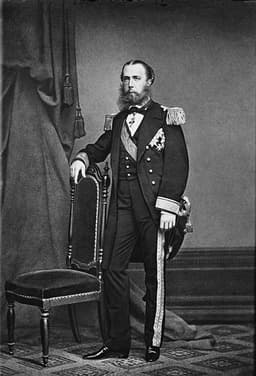
Maximilian I
Emperor · Medieval
58.8Total
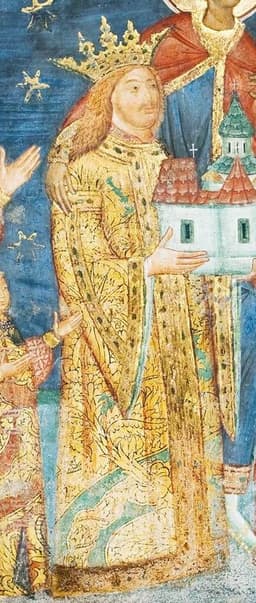
Stephen III of Moldavia
Emperor · Medieval
63.4Total
Basic Information
Born
1459
1433
Died
1519
1504
Era
Medieval
Medieval
Nationality
Holy Roman Empire
Moldavia
Occupation
Emperor
Emperor
Civilization
Western
Western
Score Comparison
Military (10%)
52.5
67.5
Political (20%)
60.0
72.0
Influence (20%)
72.0
55.0
Legacy (20%)
40.0
55.0
Leadership (15%)
72.0
79.8
Strategy (15%)
58.0
63.8
TOTAL
58.8
63.4
Maximilian I — Complete Timeline
1477 AD
Married Mary of BurgundyPolitical Action
Maximilian married Mary, the only child of Charles the Bold, Duke of Burgundy. This marriage brought the Burgundian Netherlands and Franche-Comt
MarriageHabsburg ExpansionBurgundian Inheritance
Impact: globalconstructive
1479 AD
Battle of GuinegateWar◆ Major
Maximilian led the Burgundian army to victory against French forces at Guinegate. The battle secured the Burgundian Netherlands from French annexation. However, Maximilian's subsequent military campaigns were less successful, and he eventually lost most of Burgundy proper.
BattleBurgundian WarsFranco-Habsburg Conflict
Impact: regional
1486 AD
Elected King of the RomansPolitical Action◆ Major
Maximilian was elected King of the Romans, securing his succession as Holy Roman Emperor. This election confirmed the Habsburg hold on the imperial title and allowed Maximilian to begin centralizing imperial authority, though his power remained limited by the princes.
ElectionHoly Roman EmpireSuccession
Impact: regionalconstructive
1495 AD
Imperial Reform and the ReichstagReform◆ Major
At the Diet of Worms, Maximilian proclaimed the Imperial Reform, establishing the Reichskammergericht (Imperial Chamber Court) and the Reichstag as a permanent legislative body. These reforms aimed to centralize the Holy Roman Empire but were only partially successful due to princely opposition.
ReformHoly Roman EmpireCentralization
Impact: regionalconstructive
1496 AD
Double Marriage Alliance with SpainPolitical Action
Maximilian arranged the marriage of his son Philip the Handsome to Joanna of Castile, and his daughter Margaret to John, Prince of Asturias. This alliance eventually brought Spain and its American colonies into the Habsburg domain under Charles V.
Marriage AllianceHabsburg-Spanish UnionDynastic Policy
Impact: globalconstructive
1508 AD
War of the League of CambraiWar
Maximilian joined the League of Cambrai against Venice, aiming to reclaim imperial territories in Italy. The war initially succeeded but later turned against the Habsburgs. The conflict drained imperial resources and highlighted the limits of Maximilian's military power.
Italian WarsLeague of CambraiVenice
Impact: regionaldestructive
Stephen III of Moldavia — Complete Timeline
1475 AD
Battle of VasluiWar◆ Major
Stephen III defeated a large Ottoman army under Had
BattleOttoman-Moldavian WarMilitary Victory
Impact: regionalconstructive
1476 AD
Battle of Valea AlbăWar◆ Major
Stephen III was defeated by the Ottoman army led by Sultan Mehmed II at Valea Alb
BattleOttoman InvasionDefeat
Impact: regionaltragic
1488 AD
Built the Voroneț MonasteryCultural◆ Major
Stephen III commissioned the construction of the Vorone
MonasteryArchitectureUNESCO
Impact: regionalconstructive
1499 AD
Signed the Treaty of Suceava with PolandPolitical Action◆ Major
Stephen III signed a treaty with King John I Albert of Poland at Suceava, establishing an alliance against the Ottoman Empire and the Teutonic Knights. The treaty secured Moldavia's western border and provided for mutual military assistance.
TreatyAlliancePoland-Moldavia Relations
Impact: regionalconstructive
Expert Analysis
Origins
Maximilian I was born on March 22, 1459, at Wiener Neustadt, the son of Emperor Frederick III and Eleanor of Portugal. The Habsburg dynasty, though imperial, was not yet a dominant European power. Frederick III was a cautious ruler, and Maximilian grew up in a court that emphasized chivalric ideals and dynastic continuity. He received a broad education in languages, history, and military arts, but his father's frugality limited his early experience.
Stephen III of Moldavia was born around 1433, the son of Bogdan II, Prince of Moldavia. His family belonged to the Mușatin dynasty, which had ruled Moldavia since the 14th century. Stephen's early life was marked by instability: his father was murdered in 1451, and Stephen fled to the court of his cousin, Vlad III Drăculea of Wallachia. There he learned the arts of war and diplomacy, witnessing firsthand the Ottoman threat. He returned to Moldavia in 1457 and, with the help of Vlad and others, seized the throne from his uncle Peter Aaron.
Rise to Power
Maximilian's rise was tied to marriage. In 1477, he married Mary of Burgundy, the only child of Charles the Bold, Duke of Burgundy. This marriage brought the Burgundian Netherlands and Franche-Comté under Habsburg control, but also embroiled him in war with France. After Mary's death in 1482, Maximilian had to fight to retain her inheritance. He was elected King of the Romans in 1486, securing his succession as Holy Roman Emperor, though he was not crowned emperor until 1508. His pivotal turning point came with the Double Marriage Alliance with Spain in 1496-1497: he married his son Philip the Handsome to Joanna of Castile, and his daughter Margaret to John, Prince of Asturias. This alliance eventually brought Spain and its empire into the Habsburg orbit.
Stephen III seized the throne in 1457 after defeating his uncle Peter Aaron, who had murdered his father. He consolidated power by eliminating rival boyars and reforming the army. His rise to prominence came through military victories. In 1475, at the Battle of Vaslui, he defeated a large Ottoman army under Hadım Suleiman Pasha, despite being outnumbered. This victory made him a hero across Christendom. However, in 1476, he was defeated at the Battle of Valea Albă by Sultan Mehmed II's massive army. Despite the defeat, he avoided total conquest by retreating into the forests and refusing to surrender. He then rebuilt his forces and continued to resist Ottoman incursions.
Leadership & Governance
Maximilian I was a reformer and a modernizer. At the Diet of Worms in 1495, he proclaimed the Imperial Reform, establishing the Reichskammergericht (Imperial Chamber Court) and the Reichstag as a permanent diet. These reforms aimed to centralize the Holy Roman Empire, but they were only partially successful due to the power of the princes. Maximilian also promoted the use of gunpowder artillery and the Landsknechte, a mercenary infantry force that became the backbone of imperial armies. His governance was characterized by constant travel and personal diplomacy, but he often struggled with financial constraints; his political score of 60.0 reflects his mixed success in ruling effectively.
Stephen III ruled with a firm hand. He centralized authority by curbing the power of the boyars (nobles) and building a strong network of fortresses. He also relied on a free peasant militia, which gave him a loyal and motivated army. His leadership score of 79.8 indicates his effectiveness as a commander, but his governance was focused on defense. He signed the Treaty of Suceava with Poland in 1499, forming an alliance against the Ottomans and Teutonic Knights. He also patronized the Orthodox Church, building monasteries like Voroneț, which became cultural and spiritual centers. His political score of 72.0 reflects his successful consolidation of power in a turbulent region.
Triumph & Tragedy
Maximilian's greatest triumph was the expansion of Habsburg power through strategic marriages. The Double Marriage Alliance with Spain led to his grandson Charles V inheriting a vast empire that included Spain, the Netherlands, Austria, and much of Italy. He also secured the Burgundian inheritance through his victory at the Battle of Guinegate in 1479. However, his greatest failure was his inability to reform the Holy Roman Empire effectively. The Reichstag remained a weak institution, and the empire remained fragmented. He also failed to secure a direct route to Hungary, and his expensive wars drained the treasury. His legacy score of 40.0 reflects that his immediate achievements were overshadowed by the later Habsburg dominance.
Stephen III's greatest triumph was the Battle of Vaslui in 1475, where he scored a stunning victory against overwhelming odds. He was canonized as a saint by the Romanian Orthodox Church for his defense of Christianity. However, his greatest failure was the defeat at Valea Albă in 1476, which forced him to pay tribute to the Ottomans for a time. He also failed to secure lasting independence for Moldavia; after his death in 1504, the principality gradually fell under Ottoman suzerainty. His military score of 67.5 and strategy score of 63.8 reflect his skill but also his ultimate inability to overcome the power imbalance.
Character & Destiny
Maximilian was known as "the Last Knight" for his chivalric ideals and love of tournaments. He was energetic, ambitious, and charismatic, but also impulsive and financially reckless. He wrote autobiographical works and promoted humanist learning. His character shaped his destiny: his marriage policy created the Habsburg superpower, but his military campaigns often failed due to lack of funds. He scored 72.0 in leadership and 58.0 in strategy, indicating he was better at inspiring than planning.
Stephen III was deeply religious and ruthless when necessary. He had his cousin and rival, Peter Aaron, executed. He was also known for his piety, building churches and supporting the Orthodox Church. His determination and tactical acumen allowed him to resist the Ottomans for decades, but his aggressive stance eventually forced him to compromise. His leadership score of 79.8 reflects his ability to rally his people, but his strategy score of 63.8 shows he was sometimes outmaneuvered.
Legacy
Maximilian's legacy is immense. By arranging the marriages that created the Habsburg empire, he set the stage for the dynastic dominance that lasted until World War I. His imperial reforms, though imperfect, influenced the structure of the Holy Roman Empire. He also promoted the arts and left a cultural imprint as a patron of Albrecht Dürer. His influence score of 72.0 reflects his long-term impact.
Stephen III's legacy is more localized but profound. He is a national hero in Romania and Moldova, celebrated for his resistance against the Ottomans. The Voroneț Monastery, with its famous frescoes, is a UNESCO World Heritage site. His military tactics influenced later Romanian leaders. However, his political achievements did not outlast his reign; Moldavia fell under Ottoman control within a century. His legacy score of 55.0 reflects his enduring cultural and religious significance.
Conclusion
Stephen III of Moldavia scored higher overall (63.4 vs 58.8) due to his superior military and leadership scores. However, Maximilian I had a greater long-term impact on world history. Stephen's victories were heroic but ultimately did not prevent Ottoman domination of Moldavia. Maximilian's marriage policies created the Habsburg empire that shaped European politics for centuries. While Stephen's defense of Christianity earned him sainthood, Maximilian's dynastic strategy had a broader and more enduring effect. Therefore, Maximilian I had greater impact, despite his lower total score.
Rankings
🥇
Stephen III of MoldaviaLeader
Mil: 67.5Pol: 72.0Inf: 55.0
63.4
🥈
Maximilian I
Mil: 52.5Pol: 60.0Inf: 72.0
58.8
+4.6 behind
How This Comparison Works
Algorithm
Each figure is scored on 6 dimensions (0—100 scale) based on structured historical data: Military (10%), Political (20%), Influence (20%), Legacy (20%), Leadership (15%), Strategy (15%). The weighted total produces the final ranking.
Data Sources
Scores are computed from structured sub-indicators in the database. Scale factors adjust for era (Ancient ×0.85, Modern ×1.0) and civilization size (Eastern ×1.05, Other ×0.80) to account for differences in population and military scale.
Maximum 3 Figures
Comparisons are limited to 2—3 figures to ensure readability and statistical meaningfulness.
Error Margins
±5 points per dimension — Sub-scores are derived from historical records with inherent uncertainty. Two figures within 5 points on a dimension should be considered roughly equivalent in that area.
Total Score Accuracy
±3 points overall — The weighted combination of 6 dimensions produces a total score with approximately ±3 points of uncertainty. Differences of less than 3 points are not statistically significant— the figures are effectively tied.
Known Limitations
- Historical records are incomplete and uneven across civilizations
- Figures from oral-tradition societies may be underrepresented
- Occupation labels can misclassify multi-role figures
- Scores measure capability and impact, not moral character
- Quantitative scoring is a comparison tool, not absolute truth
Capability Radar
Military (10%) — Battles & Warfare
Battles
55
65
Win Rate
50
70
Expansion
60
55
Political (20%) — Governance & Reform
Reform
65
65
Diplomacy
85
75
Economy
60
60
Influence (20%) — Cultural & Global Reach
Cultural
70
65
Global
65
55
Legacy (20%) — Historical Impact
Historical
75
70
Longevity
80
60
Leadership (15%) — Power & Stability
Tenure
75
80
Stability
55
70
Strategy (15%) — Tactics & Innovation
Strategy
65
72
Tactics
60
75
Reform
70
60
Similar Comparisons
Comments & Discussion
No comments yet. Be the first to share your thoughts!