Loading...
Menua vs Ptolemy I Soter
Ptolemy I Soter leads by 13.0 pts · 2 figures compared
…
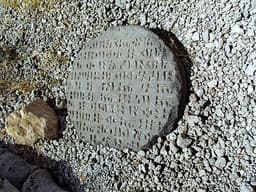
Menua
Emperor · Ancient
53.2Total
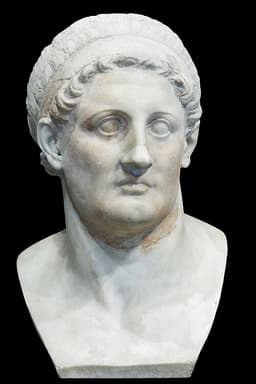
Ptolemy I Soter
Emperor · Ancient
66.2Total
Basic Information
Born
-810
-367
Died
-785
-283
Era
Ancient
Ancient
Nationality
Urartu
Egypt
Occupation
Emperor
Emperor
Civilization
Middle Eastern
Middle Eastern
Score Comparison
Military (10%)
50.0
76.0
Political (20%)
68.0
75.0
Influence (20%)
51.8
40.0
Legacy (20%)
44.2
80.0
Leadership (15%)
53.2
75.0
Strategy (15%)
60.0
61.2
TOTAL
53.2
66.2
Menua — Complete Timeline
805 BC
Military campaigns against AssyriaWar◆ Major
Menua led multiple campaigns against the Assyrian Empire, expanding Urartian territory into the upper Tigris region. He captured several fortresses and imposed tribute on local rulers, strengthening Urartu's position as a rival power.
CampaignAssyriaExpansion
Impact: regionalconstructive
800 BC
Construction of the Menua Canal (Shamiram Canal)Invention◆ Major
Menua ordered the construction of a 72-kilometer-long irrigation canal from the Hrazdan River to the Van region. The canal, still partially in use today, supplied water to the capital Tushpa and surrounding farmlands, boosting agricultural productivity.
IrrigationEngineeringAgriculture
Impact: regionalconstructive
795 BC
Construction of the fortress of MenuahiniliCultural
Menua built the fortress of Menuahinili (modern K
FortressArchitectureAdministration
constructive
Ptolemy I Soter — Complete Timeline
321 BC
Capture of Alexander's BodyPolitical Action◆ Major
Ptolemy I intercepted the funeral cortege of Alexander the Great and brought his body to Memphis, later to Alexandria. This act legitimized his rule over Egypt and made Alexandria a pilgrimage site, enhancing his prestige among the Diadochi.
DiadochiAlexanderEgypt
Impact: regionalconstructive
312 BC
Battle of GazaWar
Ptolemy I defeated Demetrius Poliorcetes, son of Antigonus I, at Gaza. This victory secured Ptolemy's control over Syria and Palestine temporarily, though he later lost these territories. The battle was part of the ongoing Wars of the Diadochi.
DiadochiBattleEgypt
Impact: regional
305 BC
Foundation of the Ptolemaic DynastyPolitical Action
Ptolemy I Soter declared himself king of Egypt, founding the Ptolemaic dynasty. He established a Greek-speaking monarchy that ruled Egypt for nearly 300 years, blending Greek and Egyptian cultures. His reign began the Hellenistic period in Egypt.
DiadochiEgyptHellenistic
Impact: regionalconstructive
295 BC
Founding of the Library of AlexandriaCultural◆ Major
Ptolemy I established the Library of Alexandria as part of the Musaeum, a center of learning. The library aimed to collect all known Greek works and became the largest and most famous library of the ancient world, fostering scholarship.
EgyptLibraryHellenistic
Impact: globalconstructive
Expert Analysis
Origins
Menua was a king of Urartu (9th century BCE), a kingdom centered around Lake Van in the Armenian highlands. He was the son of King Ishpuini and succeeded his father around 810 BCE. Little is known of his early life, but he inherited a growing state that was consolidating its power against the Neo-Assyrian Empire. Menua focused on infrastructure and military expansion, building canals and fortresses to support Urartian control.
Ptolemy I Soter (c. 367–283 BCE) was a Macedonian nobleman, son of Lagus. He was a childhood friend and trusted general of Alexander the Great. He participated in Alexander's campaigns from India to Egypt, where he was appointed satrap of Egypt in 323 BCE after Alexander's death. His early career was marked by military competence and political cunning.
Rise to Power
Menua rose to power through hereditary succession, but his authority was cemented by his ambitious building projects and military campaigns. He launched multiple offensives against Assyria, capturing fortresses in the upper Tigris region. By constructing the Menua Canal (Shamiram Canal), a 72-kilometer-long irrigation channel from the Hrazdan River to Van, he secured water for agriculture and urban centers, boosting his popularity and economic base. His fortress at Menuahinili (modern Körzüt) became a symbol of Urartian might.
Ptolemy I rose to power in the chaotic aftermath of Alexander's death. As satrap of Egypt, he skillfully navigated the Wars of the Diadochi. His pivotal move was intercepting Alexander's funeral cortege and bringing his body to Memphis (later Alexandria), which legitimized his rule as Alexander's successor in Egypt. In 305 BCE, he declared himself king, founding the Ptolemaic dynasty. His victory at the Battle of Gaza (312 BCE) over Demetrius Poliorcetes secured his control over Syria and Palestine temporarily.
Leadership & Governance
Menua's leadership focused on infrastructure and territorial consolidation. He built the Menua Canal, which irrigated vast agricultural lands and supplied water to the capital Tushpa (Van). This canal, still partially in use today, demonstrates his long-term vision. He also constructed fortresses with cyclopean masonry, showcasing Urartian engineering. His governance was typical of ancient Near Eastern monarchies: centralized, with the king as chief priest and military commander. He scored 53.2 in leadership, reflecting his effective but limited scope.
Ptolemy I established a Greek-speaking monarchy in Egypt, blending Hellenistic and Egyptian traditions. He founded the Library of Alexandria and the Musaeum, attracting scholars like Euclid and Manetho. His governance was pragmatic: he maintained Egyptian religious customs while promoting Greek culture. He minted coins with his image, reinforcing his authority. His political score of 75.0 indicates his skill in creating a stable dynasty that lasted nearly 300 years.
Triumph & Tragedy
Menua's greatest triumph was the Menua Canal, an engineering marvel that transformed Urartu's agriculture. His military campaigns expanded Urartian territory, but he failed to decisively defeat Assyria. His tragedy was that his achievements were overshadowed by later Urartian kings like Argishti I, and the kingdom eventually fell to Assyria and later Medes. His total score of 53.2 reflects modest impact.
Ptolemy I's greatest triumph was founding the Ptolemaic dynasty and the Library of Alexandria, which became the intellectual capital of the ancient world. His capture of Alexander's body was a masterstroke of propaganda. However, his tragedy was that his dynasty eventually declined into decadence, and Egypt was annexed by Rome in 30 BCE. His legacy score of 80.0 is high, but his influence score of 40.0 suggests limited direct impact beyond Egypt.
Character & Destiny
Menua was a builder-king, focused on practical projects that ensured Urartu's prosperity. His canal construction shows foresight, but his military campaigns against Assyria were ultimately unsustainable. His destiny was to be a regional power who could not overcome the Assyrian juggernaut. Historians view him as a competent administrator but not a transformative figure.
Ptolemy I was shrewd and ambitious, with a talent for propaganda and institution-building. His decision to seize Alexander's body and found a library were calculated moves to legitimize his rule. His character combined Macedonian military prowess with Egyptian pharaonic traditions. His destiny was to create a dynasty that shaped Hellenistic history.
Legacy
Menua's legacy is primarily the Menua Canal, which continues to irrigate land in modern Armenia and Turkey. His fortresses stand as archaeological sites. However, his name is not widely known outside scholarly circles. His total score of 53.2 places him as a minor historical figure.
Ptolemy I's legacy is immense: the Ptolemaic dynasty ruled Egypt for three centuries, and the Library of Alexandria became a symbol of ancient knowledge. His foundation of Alexandria as a cultural hub influenced later civilizations. He scored 66.2 overall, with high legacy (80.0) and military (76.0).
Conclusion
Ptolemy I Soter had greater impact than Menua. His founding of the Ptolemaic dynasty and the Library of Alexandria created enduring institutions that shaped Hellenistic and Roman history. Menua's canal, while impressive, was a local achievement. The total score gap of 13.0 points (66.2 vs 53.2) reflects Ptolemy's broader influence. While Menua was a capable builder, Ptolemy's political acumen and lasting legacy make him the more significant historical figure.
Rankings
🥇
Ptolemy I SoterLeader
Mil: 76.0Pol: 75.0Inf: 40.0
66.2
🥈
Menua
Mil: 50.0Pol: 68.0Inf: 51.8
53.2
+13.0 behind
How This Comparison Works
Algorithm
Each figure is scored on 6 dimensions (0—100 scale) based on structured historical data: Military (10%), Political (20%), Influence (20%), Legacy (20%), Leadership (15%), Strategy (15%). The weighted total produces the final ranking.
Data Sources
Scores are computed from structured sub-indicators in the database. Scale factors adjust for era (Ancient ×0.85, Modern ×1.0) and civilization size (Eastern ×1.05, Other ×0.80) to account for differences in population and military scale.
Maximum 3 Figures
Comparisons are limited to 2—3 figures to ensure readability and statistical meaningfulness.
Error Margins
±5 points per dimension — Sub-scores are derived from historical records with inherent uncertainty. Two figures within 5 points on a dimension should be considered roughly equivalent in that area.
Total Score Accuracy
±3 points overall — The weighted combination of 6 dimensions produces a total score with approximately ±3 points of uncertainty. Differences of less than 3 points are not statistically significant— the figures are effectively tied.
Known Limitations
- Historical records are incomplete and uneven across civilizations
- Figures from oral-tradition societies may be underrepresented
- Occupation labels can misclassify multi-role figures
- Scores measure capability and impact, not moral character
- Quantitative scoring is a comparison tool, not absolute truth
Capability Radar
Military (10%) — Battles & Warfare
Battles
45
75
Win Rate
50
70
Expansion
55
85
Political (20%) — Governance & Reform
Reform
55
80
Diplomacy
50
85
Economy
65
90
Influence (20%) — Cultural & Global Reach
Cultural
40
85
Global
30
80
Legacy (20%) — Historical Impact
Historical
45
90
Longevity
40
85
Leadership (15%) — Power & Stability
Tenure
60
85
Stability
60
80
Strategy (15%) — Tactics & Innovation
Strategy
45
80
Tactics
40
65
Reform
35
60
Similar Comparisons
Comments & Discussion
No comments yet. Be the first to share your thoughts!