Loading...
Amyntas of Galatia vs Ptolemy I Soter
Ptolemy I Soter leads by 23.1 pts · 2 figures compared
…
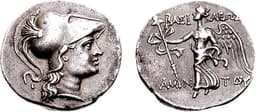
Amyntas of Galatia
Emperor · Ancient
43.1Total
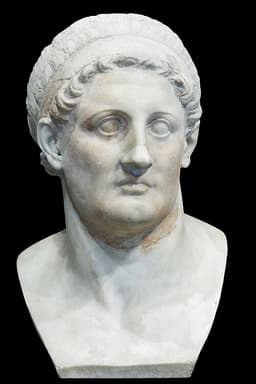
Ptolemy I Soter
Emperor · Ancient
66.2Total
Basic Information
Born
-60
-367
Died
-25
-283
Era
Ancient
Ancient
Nationality
Galatia
Egypt
Occupation
Emperor
Emperor
Civilization
Western
Middle Eastern
Score Comparison
Military (10%)
38.3
76.0
Political (20%)
40.8
75.0
Influence (20%)
45.5
40.0
Legacy (20%)
36.7
80.0
Leadership (15%)
55.3
75.0
Strategy (15%)
43.3
61.2
TOTAL
43.1
66.2
Amyntas of Galatia — Complete Timeline
25 BC
Death in Campaign Against the HomanadesWar◆ Major
Amyntas of Galatia led a military campaign against the Homanades, a rebellious tribe in the Taurus Mountains. He was killed in battle, ending his rule. After his death, Galatia was annexed by Rome as a province.
BattleDeathRoman Annexation
Impact: regionaltragic
Ptolemy I Soter — Complete Timeline
321 BC
Capture of Alexander's BodyPolitical Action◆ Major
Ptolemy I intercepted the funeral cortege of Alexander the Great and brought his body to Memphis, later to Alexandria. This act legitimized his rule over Egypt and made Alexandria a pilgrimage site, enhancing his prestige among the Diadochi.
DiadochiAlexanderEgypt
Impact: regionalconstructive
312 BC
Battle of GazaWar
Ptolemy I defeated Demetrius Poliorcetes, son of Antigonus I, at Gaza. This victory secured Ptolemy's control over Syria and Palestine temporarily, though he later lost these territories. The battle was part of the ongoing Wars of the Diadochi.
DiadochiBattleEgypt
Impact: regional
305 BC
Foundation of the Ptolemaic DynastyPolitical Action
Ptolemy I Soter declared himself king of Egypt, founding the Ptolemaic dynasty. He established a Greek-speaking monarchy that ruled Egypt for nearly 300 years, blending Greek and Egyptian cultures. His reign began the Hellenistic period in Egypt.
DiadochiEgyptHellenistic
Impact: regionalconstructive
295 BC
Founding of the Library of AlexandriaCultural◆ Major
Ptolemy I established the Library of Alexandria as part of the Musaeum, a center of learning. The library aimed to collect all known Greek works and became the largest and most famous library of the ancient world, fostering scholarship.
EgyptLibraryHellenistic
Impact: globalconstructive
Expert Analysis
Origins
Amyntas of Galatia, the last king of Galatia, emerged from the Hellenistic melting pot of Anatolia. Born around 170 BCE, he was a tetrarch who consolidated power among the Galatians, a Celtic people who had settled in central Anatolia. His early life is obscure, but he likely received military training in the Galatian tradition, blending Celtic and Hellenistic elements. In contrast, Ptolemy I Soter was born in 367 BCE in Eordaea, Macedonia, to a noble family. He was a childhood friend and trusted general of Alexander the Great, receiving a Greek education and military training under Philip II. Ptolemy's background was one of privilege and access to the highest echelons of power.
Rise to Power
Amyntas rose to prominence by navigating the complex geopolitics of Anatolia. He initially served as a tetrarch under King Deiotarus, then allied with Rome against Mithridates VI. After Deiotarus' death, Amyntas secured recognition as king of Galatia from Rome in 36 BCE. His rise was marked by political maneuvering and military campaigns against local tribes. Ptolemy I Soter's rise was tied to Alexander's conquests. After Alexander's death in 323 BCE, Ptolemy seized Egypt as satrap, and in 305 BCE he declared himself king, founding the Ptolemaic dynasty. He captured Alexander's body in 321 BCE, using it to legitimize his rule. His victory at the Battle of Gaza in 312 BCE against Demetrius Poliorcetes secured his control over Syria and Palestine. Ptolemy's political acumen and military skill allowed him to outmaneuver rivals like Perdiccas and Antigonus.
Leadership & Governance
Amyntas ruled Galatia as a client king under Roman suzerainty. His leadership was focused on maintaining autonomy while satisfying Roman demands. He expanded his territory by conquering parts of Lycaonia and Pamphylia, but his governance was typical of a Hellenistic monarch, relying on local elites and military force. Ptolemy I Soter, however, established a sophisticated administration in Egypt that blended Greek and Egyptian traditions. He created a centralized bureaucracy, promoted trade, and founded the Library of Alexandria as part of the Musaeum, making Alexandria a cultural hub. Ptolemy's governance was more innovative, with lasting institutions.
Triumph & Tragedy
Amyntas' greatest success was expanding Galatian territory and maintaining independence under Rome. However, his tragic failure was his death in 25 BCE during a campaign against the Homanades, a rebellious tribe in the Taurus Mountains. His death ended the Galatian kingdom, which was then annexed by Rome. Ptolemy's triumphs include founding the Ptolemaic dynasty, which ruled Egypt for nearly 300 years, and creating Alexandria as a center of learning. His capture of Alexander's body was a masterstroke of propaganda. However, his failures include overreaching in Syria and Palestine, leading to conflicts with other diadochi. His dynasty eventually declined, but his immediate legacy was stable.
Character & Destiny
Amyntas was a capable but ultimately unlucky ruler. His decision to personally lead the campaign against the Homanades reflects a warrior ethos but also recklessness. His death cut short his rule, and his kingdom was absorbed. Ptolemy I Soter was pragmatic and shrewd, known for his caution and organizational skills. He prioritized consolidation over expansion, which allowed him to survive the wars of the diadochi. His character shaped Egypt's destiny as a Greek kingdom. Historians note his moderation and wisdom, earning him the epithet "Soter" (Savior).
Legacy
Amyntas' legacy is minor: he was the last Galatian king, and his death led to Roman annexation. His scores reflect this: Military 38.3, Political 40.8, Influence 45.5, Legacy 36.7, Leadership 55.3, Strategy 43.3, Total 43.1. Ptolemy I Soter's legacy is immense: he founded a dynasty that lasted centuries, established Alexandria as a cultural capital, and his line included Cleopatra. His scores are higher: Military 76.0, Political 75.0, Influence 40.0, Legacy 80.0, Leadership 75.0, Strategy 61.2, Total 66.2. The Library of Alexandria became a symbol of ancient knowledge. Ptolemy's impact on history is far greater.
Conclusion
Ptolemy I Soter had a greater impact by any measure. With a total score of 66.2 versus Amyntas' 43.1, the gap of 23.1 points reflects Ptolemy's enduring contributions to politics, culture, and history. While Amyntas was a competent local ruler, Ptolemy shaped the course of the Hellenistic world. His founding of the Ptolemaic dynasty and the Library of Alexandria left a legacy that outlasted his own time. Amyntas' kingdom vanished with his death. Thus, Ptolemy I Soter stands as the more significant historical figure.
Rankings
🥇
Ptolemy I SoterLeader
Mil: 76.0Pol: 75.0Inf: 40.0
66.2
🥈
Amyntas of Galatia
Mil: 38.3Pol: 40.8Inf: 45.5
43.1
+23.1 behind
How This Comparison Works
Algorithm
Each figure is scored on 6 dimensions (0—100 scale) based on structured historical data: Military (10%), Political (20%), Influence (20%), Legacy (20%), Leadership (15%), Strategy (15%). The weighted total produces the final ranking.
Data Sources
Scores are computed from structured sub-indicators in the database. Scale factors adjust for era (Ancient ×0.85, Modern ×1.0) and civilization size (Eastern ×1.05, Other ×0.80) to account for differences in population and military scale.
Maximum 3 Figures
Comparisons are limited to 2—3 figures to ensure readability and statistical meaningfulness.
Error Margins
±5 points per dimension — Sub-scores are derived from historical records with inherent uncertainty. Two figures within 5 points on a dimension should be considered roughly equivalent in that area.
Total Score Accuracy
±3 points overall — The weighted combination of 6 dimensions produces a total score with approximately ±3 points of uncertainty. Differences of less than 3 points are not statistically significant— the figures are effectively tied.
Known Limitations
- Historical records are incomplete and uneven across civilizations
- Figures from oral-tradition societies may be underrepresented
- Occupation labels can misclassify multi-role figures
- Scores measure capability and impact, not moral character
- Quantitative scoring is a comparison tool, not absolute truth
Capability Radar
Military (10%) — Battles & Warfare
Battles
35
75
Win Rate
30
70
Expansion
25
85
Political (20%) — Governance & Reform
Reform
30
80
Diplomacy
45
85
Economy
35
90
Influence (20%) — Cultural & Global Reach
Cultural
20
85
Global
10
80
Legacy (20%) — Historical Impact
Historical
25
90
Longevity
15
85
Leadership (15%) — Power & Stability
Tenure
40
85
Stability
30
80
Strategy (15%) — Tactics & Innovation
Strategy
30
80
Tactics
30
65
Reform
20
60
Similar Comparisons
Comments & Discussion
No comments yet. Be the first to share your thoughts!