Loading...
Mingju vs Yun Posun
Mingju leads by 15.2 pts · 2 figures compared
…
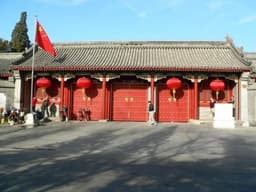
Mingju
Politician · Modern
52.6Total
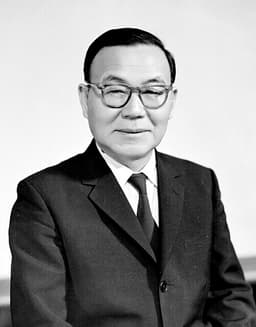
Yun Posun
Politician · Modern
37.4Total
Basic Information
Born
1635
1897
Died
1708
1990
Era
Modern
Modern
Nationality
China
South Korea
Occupation
Politician
Politician
Civilization
Eastern
Eastern
Score Comparison
Military (10%)
14.5
14.0
Political (20%)
68.0
30.8
Influence (20%)
51.8
49.4
Legacy (20%)
45.0
39.2
Leadership (15%)
72.0
38.1
Strategy (15%)
59.5
35.3
TOTAL
52.6
37.4
Mingju — Complete Timeline
1677 AD
Appointed Grand SecretaryPolitical Action◆ Major
Mingju was appointed Grand Secretary of the Qing Empire, serving under the Kangxi Emperor. He became a key figure in the central government, overseeing administrative reforms and military logistics during the early Qing period.
AppointmentGovernmentKangxi Era
Impact: national
1681 AD
Led Suppression of the Revolt of the Three FeudatoriesWar◆ Major
Mingju played a key role in planning and coordinating the Qing military campaign to suppress the Revolt of the Three Feudatories, a rebellion by southern warlords. The campaign succeeded in 1681, consolidating Qing control over southern China.
RebellionMilitary CampaignQing Consolidation
Impact: national
1688 AD
Dismissed from OfficePolitical Action◆ Major
Mingju was dismissed from his position as Grand Secretary following accusations of corruption and factionalism. His removal was part of the Kangxi Emperor's efforts to curb the power of influential officials and reduce bureaucratic corruption.
PurgeCorruptionDownfall
Impact: nationaldestructive
Yun Posun — Complete Timeline
1960 AD
Election as President of South KoreaPolitical Action◆ Major
Yun Posun was elected as the second President of South Korea after the April Revolution overthrew Syngman Rhee. His presidency was short-lived, lasting only nine months, as he was a figurehead with limited power under a parliamentary system.
ElectionApril RevolutionSecond Republic
Impact: national
1961 AD
Overthrow by Park Chung-hee's CoupPolitical Action◆ Major
Yun Posun was forced out of office when Park Chung-hee led a military coup on May 16, 1961. The coup ended the Second Republic and established a military junta, with Yun resigning shortly after in protest.
Military CoupPark Chung-heeEnd of Democracy
Impact: nationaldestructive
1963 AD
Opposition to Park Chung-hee's RegimePolitical Action
After his ouster, Yun Posun became a leading opposition figure against Park Chung-hee's authoritarian rule. He ran for president in 1963 and 1967, losing both times, and was a vocal critic of the Yushin Constitution.
OppositionAuthoritarianismDemocracy Movement
Impact: nationalprogressive
Expert Analysis
Origins
Mingju was born in 1635 into the Manchu Nara clan, part of the Qing imperial elite. His father, Manggūltai, was a prominent general. Mingju received a traditional Confucian education and entered the civil service through the examination system, securing a position in the Hanlin Academy. His early career was marked by administrative competence and loyalty to the Kangxi Emperor.
Yun Posun was born on August 26, 1897, in Asan, Korea, into a wealthy aristocratic family. He studied at Pai Chai School and later at Waseda University in Japan, where he earned a degree in politics. He participated in the March 1st Movement in 1919 and later pursued a career in academia and journalism. He served as a professor and eventually entered politics after Korea's liberation.
Rise to Power
Mingju's rise came through his appointment as Grand Secretary in 1677, a position that made him the emperor's chief advisor. He gained favor by supporting the Kangxi Emperor's centralization efforts and played a key role in the Suppression of the Revolt of the Three Feudatories (1673-1681). Mingju coordinated logistics and strategy, earning the emperor's trust.
Yun Posun's rise was sudden. After the April Revolution in 1960 overthrew Syngman Rhee, Yun was elected President of the Second Republic on August 13, 1960, by the National Assembly. His presidency was short-lived, lasting only until May 16, 1961, when Park Chung-hee's military coup ousted him. Yun's rise was more a product of circumstance than personal political maneuvering.
Leadership & Governance
Mingju governed as a conservative Confucian official. He advocated for fiscal discipline and supported the Kangxi Emperor's policies to stabilize the empire after the Three Feudatories revolt. However, he was involved in factional disputes, particularly with Songgotu, leading to accusations of corruption. His leadership score of 72.0 reflects his effectiveness in administration but also his vulnerability to court intrigue.
Yun Posun's governance was constrained by his brief tenure. As president, he pursued a democratic agenda, reducing presidential powers and promoting civil liberties. However, his government was weak, plagued by political infighting and economic instability. His political score of 30.8 underscores his inability to consolidate power. He was more a figurehead than a decisive leader.
Triumph & Tragedy
Mingju's greatest triumph was his role in the suppression of the Three Feudatories, which solidified Qing control over southern China. He also helped reform the tax system. His tragedy was his dismissal in 1688 after being implicated in corruption scandals. Despite his contributions, he lost imperial favor and died in obscurity in 1707.
Yun Posun's triumph was his election as president, symbolizing a brief democratic interlude in South Korea. His tragedy was his overthrow by Park's coup, which ended democratic governance for decades. He later became an opposition figure, but his influence was limited. His total score of 37.4 reflects his marginal impact.
Character & Destiny
Mingju was ambitious and adept at navigating court politics, but his greed led to his downfall. The Kangxi Emperor valued his skills but eventually saw him as a liability. Mingju's character—loyal yet corrupt—determined his fate: he rose high but fell hard.
Yun Posun was principled but indecisive. He believed in democracy but lacked the ruthlessness to defend it. His character—idealistic and passive—made him ill-suited for the turbulent politics of 1960s Korea. He was a victim of forces he could not control.
Legacy
Mingju is remembered as a capable but corrupt official. His administrative reforms had some lasting impact, but his legacy is overshadowed by his dismissal. He scored 45.0 in legacy, indicating moderate historical significance.
Yun Posun is remembered as the first democratically elected president of South Korea, albeit briefly. His legacy is tied to the short-lived Second Republic and his role as an opposition figure. He scored 39.2 in legacy, reflecting his symbolic importance but limited achievements.
Conclusion
Mingju had a greater impact than Yun Posun. Mingju's total score of 52.6 versus Yun's 37.4 reflects his more significant role in Qing governance. While both were ultimately unsuccessful in their careers, Mingju's contributions to the Kangxi Emperor's consolidation of power were more substantial. Yun Posun, despite being a symbol of democracy, failed to effect lasting change. Mingju's higher leadership (72.0) and political (68.0) scores underscore his greater influence.
Rankings
🥇
MingjuLeader
Mil: 14.5Pol: 68.0Inf: 51.8
52.6
🥈
Yun Posun
Mil: 14.0Pol: 30.8Inf: 49.4
37.4
+15.2 behind
How This Comparison Works
Algorithm
Each figure is scored on 6 dimensions (0—100 scale) based on structured historical data: Military (10%), Political (20%), Influence (20%), Legacy (20%), Leadership (15%), Strategy (15%). The weighted total produces the final ranking.
Data Sources
Scores are computed from structured sub-indicators in the database. Scale factors adjust for era (Ancient ×0.85, Modern ×1.0) and civilization size (Eastern ×1.05, Other ×0.80) to account for differences in population and military scale.
Maximum 3 Figures
Comparisons are limited to 2—3 figures to ensure readability and statistical meaningfulness.
Error Margins
±5 points per dimension — Sub-scores are derived from historical records with inherent uncertainty. Two figures within 5 points on a dimension should be considered roughly equivalent in that area.
Total Score Accuracy
±3 points overall — The weighted combination of 6 dimensions produces a total score with approximately ±3 points of uncertainty. Differences of less than 3 points are not statistically significant— the figures are effectively tied.
Known Limitations
- Historical records are incomplete and uneven across civilizations
- Figures from oral-tradition societies may be underrepresented
- Occupation labels can misclassify multi-role figures
- Scores measure capability and impact, not moral character
- Quantitative scoring is a comparison tool, not absolute truth
Capability Radar
Military (10%) — Battles & Warfare
Battles
54
16
Win Rate
56
17
Expansion
59
17
Political (20%) — Governance & Reform
Reform
55
20
Diplomacy
60
25
Economy
50
15
Influence (20%) — Cultural & Global Reach
Cultural
30
15
Global
20
10
Legacy (20%) — Historical Impact
Historical
40
20
Longevity
30
15
Leadership (15%) — Power & Stability
Tenure
65
15
Stability
55
10
Strategy (15%) — Tactics & Innovation
Strategy
60
23
Tactics
62
26
Reform
64
29
Similar Comparisons
Comments & Discussion
No comments yet. Be the first to share your thoughts!