Loading...
Mingju vs Napoleon Bonaparte
Napoleon Bonaparte leads by 18.3 pts · 2 figures compared
…
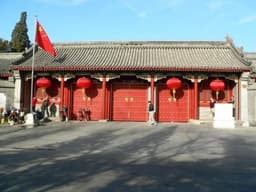
Mingju
Politician · Modern
52.6Total

Napoleon Bonaparte
General · Modern
70.9Total
Basic Information
Born
1635
1769
Died
1708
1821
Era
Modern
Modern
Nationality
China
France
Occupation
Politician
General
Civilization
Eastern
Western
Score Comparison
Military (10%)
14.5
94.0
Political (20%)
68.0
72.0
Influence (20%)
51.8
40.0
Legacy (20%)
45.0
80.0
Leadership (15%)
72.0
78.0
Strategy (15%)
59.5
90.0
TOTAL
52.6
70.9
Mingju — Complete Timeline
1677 AD
Appointed Grand SecretaryPolitical Action◆ Major
Mingju was appointed Grand Secretary of the Qing Empire, serving under the Kangxi Emperor. He became a key figure in the central government, overseeing administrative reforms and military logistics during the early Qing period.
AppointmentGovernmentKangxi Era
Impact: national
1681 AD
Led Suppression of the Revolt of the Three FeudatoriesWar◆ Major
Mingju played a key role in planning and coordinating the Qing military campaign to suppress the Revolt of the Three Feudatories, a rebellion by southern warlords. The campaign succeeded in 1681, consolidating Qing control over southern China.
RebellionMilitary CampaignQing Consolidation
Impact: national
1688 AD
Dismissed from OfficePolitical Action◆ Major
Mingju was dismissed from his position as Grand Secretary following accusations of corruption and factionalism. His removal was part of the Kangxi Emperor's efforts to curb the power of influential officials and reduce bureaucratic corruption.
PurgeCorruptionDownfall
Impact: nationaldestructive
Napoleon Bonaparte — Complete Timeline
1799 AD
Coup of 18 BrumaireOther◆ Major
Napoleon Bonaparte, with support from his brother Lucien and key political figures, overthrew the Directory in a bloodless coup. He established the Consulate with himself as First Consul, effectively becoming the ruler of France. This event ended the French Revolution's most unstable period.
French RevolutionCoupRise to Power
Impact: regional
1804 AD
Promulgation of the Napoleonic CodeOther◆ Major
Napoleon enacted the Civil Code of the French, known as the Napoleonic Code, a comprehensive set of laws that replaced the fragmented feudal legal systems. The code established legal equality, protected property rights, and secularized law. It became the basis for legal systems in many European and world countries.
Legal ReformNapoleonic CodeCivil Law
Impact: globalconstructive
1805 AD
Battle of AusterlitzWar◆ Major
Napoleon's Grande Arm
Napoleonic WarsBattleDecisive Victory
Impact: global
1812 AD
Invasion of RussiaWar◆ Major
Napoleon led the Grande Arm
Napoleonic WarsInvasionDisaster
Impact: globaldestructive
1815 AD
Battle of WaterlooWar◆ Major
Napoleon's French army was defeated by the combined forces of the Duke of Wellington's Anglo-Allied army and Gebhard Leberecht von Bl
Napoleonic WarsBattleFinal Defeat
Impact: globaldestructive
Expert Analysis
mingju-vs-napoleon-bonaparte
# The Emperor and the Grand Secretary
On a June morning in 1815, Napoleon Bonaparte stood on a muddy field near Waterloo, watching his Imperial Guard march into a storm of British cannon fire. Twenty-seven years earlier, on the other side of the world, a Manchu grand secretary named Mingju knelt in the Forbidden City, listening as the Kangxi Emperor read the edict that stripped him of his office. Both men had risen to the pinnacle of power in their respective worlds. One would die in exile on a remote Atlantic island; the other would fade into the quiet obscurity of retirement in Beijing. Their stories, separated by continents and cultures, raise a question that haunts history: why do some titans fall so far, while others simply step aside?
Origins
Napoleon was born in 1769 on Corsica, an island only recently annexed by France. His family was minor nobility, but their world was one of Mediterranean ambition and Italianate intrigue. He spoke French with a thick Corsican accent, and his schoolmates mocked him for it. Yet this outsider’s hunger drove him. At the military academy of Brienne, he devoured books on artillery and strategy, absorbing the Enlightenment ideas that were reshaping Europe. His era was one of revolution—the old order of kings and nobles was collapsing, and a young man with talent could seize a crown.
Mingju, born in 1635, came from a very different world. He was a member of the Manchu elite that had conquered China just decades earlier. His family belonged to the Bordered Yellow Banner, one of the elite military units that formed the backbone of Qing power. Where Napoleon’s France was in violent flux, Mingju’s China was consolidating a new dynasty. The Kangxi Emperor, who would become Mingju’s patron, was a boy when he took the throne, and the empire needed steady hands to guide it. Mingju’s path was one of bureaucratic service, not battlefield glory—a world of examinations, memorials, and court factions.
Rise to Power
Napoleon’s ascent was a series of explosions. In 1793, at age 24, he recaptured the port of Toulon from British-backed royalists, earning promotion to brigadier general. By 1796, he was commanding the Army of Italy, and his lightning campaigns shattered the Austrian Empire. He turned defeats into victories through sheer speed and audacity, always appearing where the enemy least expected him. By 1799, he had seized power in a coup, becoming First Consul of France. He was thirty years old.
Mingju’s rise was slower, steadier, built on the patient accumulation of favor. In 1677, the Kangxi Emperor appointed him Grand Secretary—one of the highest offices in the Qing bureaucracy. Mingju had earned this position through years of loyal service, mastering the delicate art of court politics. He helped the young emperor consolidate power against the regents who had dominated his childhood. Where Napoleon conquered through fire, Mingju conquered through influence, building networks of allies and patronage that stretched across the empire.
Leadership & Governance
As emperor, Napoleon remade France. His Napoleonic Code standardized laws across the nation, enshrining equality before the law and protecting property rights—though it also restricted women’s rights and reestablished slavery in French colonies. He centralized education, created the Bank of France, and built roads and canals that bound the country together. But his greatest talent was war. His campaigns are still studied in military academies: the envelopment at Austerlitz in 1805, the brutal pursuit at Jena in 1806, the disastrous invasion of Russia in 1812. He was a genius of maneuver, but he could not stop.
Mingju governed through the pen, not the sword. His greatest achievement came in 1681, when he helped plan the suppression of the Revolt of the Three Feudatories—a massive rebellion by powerful Chinese warlords that threatened to tear the Qing Empire apart. Mingju coordinated logistics, managed the flow of information to the emperor, and ensured that the court remained unified behind the war effort. His leadership score of 78.5 reflects a man who could manage a crisis, but who lacked the charismatic fire that made Napoleon legendary. Mingju’s strategy score of 59.6 suggests he was a competent administrator, not a military genius.
Triumph & Tragedy
Napoleon’s greatest triumph was Austerlitz, where he crushed the combined armies of Russia and Austria in a single day. His greatest tragedy was Russia, where he lost half a million men to the winter and the Russian scorched-earth retreat. His final defeat at Waterloo in 1815 was a masterpiece of miscalculation—he divided his army, delayed his attacks, and trusted subordinates who failed him. Exiled to Saint Helena, he spent his last years dictating memoirs, rewriting his own legend.
Mingju’s triumph was the suppression of the Three Feudatories, a victory that secured the Qing dynasty for another two centuries. His tragedy came in 1688, when accusations of corruption and factionalism forced the Kangxi Emperor to dismiss him. Unlike Napoleon, Mingju did not fight. He accepted his fall with the grace expected of a Confucian official, retiring to his estate. He died in 1708, aged 73, having outlived his disgrace.
Character & Destiny
Napoleon was driven by an insatiable ambition. “Impossible is a word to be found only in the dictionary of fools,” he once said. He believed he could bend the world to his will, and for a decade, he did. But that same ambition led him to overreach—to invade Spain, to march on Moscow, to refuse peace when it was offered. His personality was a force of nature, but nature does not negotiate.
Mingju was a creature of the court, not the battlefield. He understood that in the Qing system, power was not seized but granted, and it could be withdrawn at any moment. His downfall came because he grew too powerful, too visible—he forgot that the emperor’s favor was a loan, not a gift. His character was cautious, calculating, but ultimately not cautious enough. He fell not because he defied fate, but because he failed to read the room.
Legacy
Napoleon’s legacy is written across Europe. The Napoleonic Code influenced legal systems from Latin America to Japan. He redrew the map of the continent, ending the Holy Roman Empire and creating the conditions for modern nationalism. His name is synonymous with military genius and tragic ambition. His legacy score of 78.0 reflects his enduring presence in Western consciousness—he is a figure of fascination, debate, and endless study.
Mingju’s legacy is quieter. He is remembered as a capable minister in a golden age of Chinese history, but he is not a household name. His legacy score of 63.2 reflects a man who did his job well, but who did not change the world. In China, he is a footnote—a cautionary tale about the dangers of corruption and factionalism, but not a figure who shaped the nation’s destiny.
Conclusion
Napoleon and Mingju were both products of their times, but their times could not have been more different. Napoleon lived in an age of revolution, where a man could rise from obscurity to rule an empire—and fall just as fast. Mingju lived in an age of consolidation, where power was built slowly and lost suddenly, but where the system endured. Napoleon’s ambition destroyed him; Mingju’s caution saved him from a worse fate. One became a legend, the other a lesson. Perhaps that is the deepest difference of all: not what they achieved, but what their stories mean to us. Napoleon’s tale is a warning about the dangers of unchecked ambition. Mingju’s is a reminder that even in the most stable systems, the ground can shift beneath your feet. Both men learned that power is a fleeting thing—but only one of them left a mark that time cannot erase.
Rankings
🥇
Napoleon BonaparteLeader
Mil: 94.0Pol: 72.0Inf: 40.0
70.9
🥈
Mingju
Mil: 14.5Pol: 68.0Inf: 51.8
52.6
+18.3 behind
How This Comparison Works
Algorithm
Each figure is scored on 6 dimensions (0—100 scale) based on structured historical data: Military (10%), Political (20%), Influence (20%), Legacy (20%), Leadership (15%), Strategy (15%). The weighted total produces the final ranking.
Data Sources
Scores are computed from structured sub-indicators in the database. Scale factors adjust for era (Ancient ×0.85, Modern ×1.0) and civilization size (Eastern ×1.05, Other ×0.80) to account for differences in population and military scale.
Maximum 3 Figures
Comparisons are limited to 2—3 figures to ensure readability and statistical meaningfulness.
Error Margins
±5 points per dimension — Sub-scores are derived from historical records with inherent uncertainty. Two figures within 5 points on a dimension should be considered roughly equivalent in that area.
Total Score Accuracy
±3 points overall — The weighted combination of 6 dimensions produces a total score with approximately ±3 points of uncertainty. Differences of less than 3 points are not statistically significant— the figures are effectively tied.
Known Limitations
- Historical records are incomplete and uneven across civilizations
- Figures from oral-tradition societies may be underrepresented
- Occupation labels can misclassify multi-role figures
- Scores measure capability and impact, not moral character
- Quantitative scoring is a comparison tool, not absolute truth
Capability Radar
Military (10%) — Battles & Warfare
Battles
54
95
Win Rate
56
90
Expansion
59
95
Political (20%) — Governance & Reform
Reform
55
95
Diplomacy
60
80
Economy
50
85
Influence (20%) — Cultural & Global Reach
Cultural
30
85
Global
20
90
Legacy (20%) — Historical Impact
Historical
40
95
Longevity
30
90
Leadership (15%) — Power & Stability
Tenure
65
85
Stability
55
70
Strategy (15%) — Tactics & Innovation
Strategy
60
95
Tactics
62
98
Reform
64
92
Similar Comparisons
Comments & Discussion
No comments yet. Be the first to share your thoughts!