Loading...
Mithridates VI vs Vologases IV of Parthia
Mithridates VI leads by 6.2 pts · 2 figures compared
…

Mithridates VI
Emperor · Ancient
64.8Total
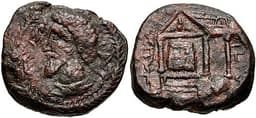
Vologases IV of Parthia
Emperor · Ancient
58.6Total
Basic Information
Born
-135
130
Died
-63
191
Era
Ancient
Ancient
Nationality
Pontus
Parthian Empire
Occupation
Emperor
Emperor
Civilization
Middle Eastern
Middle Eastern
Score Comparison
Military (10%)
78.0
67.5
Political (20%)
70.0
68.0
Influence (20%)
61.0
52.5
Legacy (20%)
52.0
44.2
Leadership (15%)
72.0
72.0
Strategy (15%)
75.0
66.3
TOTAL
64.8
58.6
Mithridates VI — Complete Timeline
89 BC
First Mithridatic WarWar◆ Major
Mithridates VI invaded the Roman province of Asia, conquering much of Anatolia. He ordered the massacre of an estimated 80,000 Roman and Italian residents in the Asiatic Vespers, provoking a Roman response under Sulla. The war ended with the Treaty of Dardanos in 85 BC.
Mithridatic WarsRoman RepublicMassacre
Impact: regionaldestructive
83 BC
Second Mithridatic WarWar
Mithridates VI fought the Roman general Lucius Licinius Murena, who had invaded Pontus without authorization. Mithridates defeated Murena and forced a return to the status quo, but the war weakened his position and allowed Rome to regroup.
Mithridatic WarsRoman RepublicPontus
Impact: regional
73 BC
Third Mithridatic WarWar◆ Major
Mithridates VI launched a major war against Rome, initially achieving successes. However, the Roman general Lucullus defeated him at the Battle of Cabira in 72 BC, forcing Mithridates to flee to Armenia. The war continued under Pompey, who finally defeated Mithridates in 66 BC.
Mithridatic WarsRoman RepublicPontus
Impact: regional
72 BC
Battle of CabiraWar◆ Major
Mithridates VI was decisively defeated by the Roman general Lucullus at Cabira in Pontus. Mithridates fled to Armenia, losing his kingdom and much of his army. This battle marked the turning point of the Third Mithridatic War.
Mithridatic WarsBattlePontus
Impact: regionaltragic
63 BC
Death by suicidePolitical Action◆ Major
After being betrayed by his son Pharnaces II and besieged by Roman forces, Mithridates VI attempted suicide by poison. Having built immunity to poisons, he ordered a bodyguard to kill him with a sword. His death ended the Mithridatic Wars and the Kingdom of Pontus.
DeathPontusMithridatic Wars
Impact: regionaltragic
Vologases IV of Parthia — Complete Timeline
162 AD
War with Roman Emperor Marcus AureliusWar◆ Major
Vologases IV invaded Armenia and Syria, triggering a major war with the Roman Empire under Emperor Marcus Aurelius. The Parthians initially captured Armenia and invaded Syria, but were later pushed back by Roman counter-offensives.
Roman-Parthian WarInvasionMarcus Aurelius
Impact: regionaldestructive
165 AD
Roman Sack of CtesiphonWar◆ Major
Roman general Avidius Cassius led a campaign that sacked the Parthian capital Ctesiphon. The city was looted and the royal palace destroyed. This was a major defeat for Vologases IV and weakened Parthian prestige.
BattleCapital SackedRoman-Parthian War
Impact: regionaldestructive
Outbreak of the Antonine PlagueOther◆ Major
Roman soldiers returning from the Parthian campaign brought back a devastating plague, known as the Antonine Plague, which spread throughout the Roman Empire. This pandemic killed millions and severely weakened both Rome and Parthia.
PandemicAntonine PlagueConsequences of War
Impact: globaltragic
191 AD
Last Strong Parthian KingOther
Vologases IV is considered the last strong Parthian king. After his death, the Parthian Empire entered a period of decline marked by civil wars and internal strife, eventually leading to the rise of the Sassanid Empire.
End of EraParthian DeclineHistorical Assessment
Impact: regional
Expert Analysis
Origins
Mithridates VI was born in 134 BC in Sinope, Pontus, to King Mithridates V and Queen Laodice VI. He was of Persian and Greek descent. After his father's assassination in 120 BC, the young prince fled into the wilderness, where he reportedly built immunity to poisons by ingesting sublethal doses. He returned to claim his throne at age 13, executing his mother and brother to secure power. His education included Greek philosophy and military tactics, shaping him into a multilingual strategist who spoke 22 languages.
Vologases IV ascended the Parthian throne in 147 AD, likely a son of Mithridates IV. His early life is poorly documented, but he inherited a stable empire built by his predecessor Vologases III. He was trained in Parthian martial traditions and Zoroastrian governance, but lacked the formative hardships that forged Mithridates. His reign began with a focus on consolidating Parthian control over Armenia and Mesopotamia.
Rise to Power
Mithridates VI's rise came through aggressive expansion. By 110 BC, he had conquered Colchis and the Bosporan Kingdom, extending Pontic influence around the Black Sea. He formed alliances with neighboring kingdoms and married his daughters to local rulers. His first major confrontation with Rome occurred in 89 BC when he invaded the Roman province of Asia. He ordered the massacre of 80,000 Roman and Italian residents, a calculated move to unite Greek cities against Rome. This sparked the First Mithridatic War (89-85 BC), where he drove Roman forces out of Anatolia.
Vologases IV rose to power through dynastic succession, but his major claim to fame was his war with Rome. In 161 AD, he invaded Armenia, installing his own candidate on the throne. This violated the Treaty of Rhandeia (63 AD), which had established Roman-Parthian spheres of influence. The Roman emperor Marcus Aurelius responded by sending legions under Statius Priscus, who recaptured Armenia. Vologases then invaded Syria in 162 AD, capturing the city of Edessa and defeating Roman forces. His early successes forced Rome to mount a massive counteroffensive.
Leadership & Governance
Mithridates VI ruled as an absolute monarch with a Hellenistic court. He centralized power, implemented land reforms to win peasant support, and minted coins that projected his image as a defender of Greek civilization against Roman barbarism. He was a hands-on commander, often leading troops personally. His political acumen scored 70.0, reflecting his ability to forge alliances with Scythians, Armenians, and even pirates. However, his governance was marred by paranoia; he executed many nobles and family members, including his own sons.
Vologases IV governed as a traditional Parthian king, relying on a feudal system of vassal kings and nobles. He struggled to maintain control over the powerful Suren and Karen families. His leadership score of 72.0 is comparable to Mithridates' 72.0, but his political score of 68.0 is slightly lower. Vologases failed to prevent infighting among his subordinates, which hampered his war effort. He delegated military command to generals like Chosrhoes, who lost key battles. Unlike Mithridates, Vologases did not personally lead campaigns after the initial invasion.
Triumph & Tragedy
Mithridates' greatest triumph was his ability to challenge Rome for over 40 years. He won major victories at the Battle of the River Amnias (89 BC) and the Battle of Protopachium (89 BC). He also successfully besieged Cyzicus in 73 BC, though it ultimately failed. His greatest failure was the Third Mithridatic War (73-63 BC). After initial gains, he was defeated by Lucullus at Cabira (72 BC) and later by Pompey at the Lycus River (66 BC). His own son Pharnaces II betrayed him, leading to his suicide in 63 BC. His attempt to poison himself failed due to his immunity, so he had a soldier stab him—a tragic end for a king who had built an empire.
Vologases IV's triumph was his initial invasion of Armenia and Syria, which forced Rome to commit significant resources. His war with Marcus Aurelius was the most serious Parthian conflict since Trajan's campaign. However, his tragedy was the Roman sack of Ctesiphon in 165 AD. General Avidius Cassius captured the Parthian capital, looted the royal palace, and destroyed the city. This humiliation weakened Parthian prestige. Additionally, the returning Roman legions brought the Antonine Plague, which killed millions across the Roman Empire, indirectly harming Parthian trade and stability.
Character & Destiny
Mithridates VI was cunning, ruthless, and resilient. He cultivated a persona as a poison-proof, multilingual king who defied Rome. His paranoia led him to eliminate rivals, but also alienated allies. His decision to massacre Romans in 88 BC ensured eternal Roman enmity. He was a skilled diplomat who married his daughters to neighboring kings, but his trust issues ultimately caused his downfall. His character scored 72.0 in leadership, reflecting his ability to inspire loyalty, but his strategy score of 75.0 shows he was a brilliant tactician who lacked long-term strategic vision.
Vologases IV was more cautious and less charismatic. He relied on traditional Parthian military tactics, such as heavy cavalry and horse archers, but failed to adapt to Roman siege warfare. His decision to invade Syria without securing Armenia first was a strategic error. He also failed to consolidate gains diplomatically, allowing Rome to regroup. His character was marked by indecision; after the sack of Ctesiphon, he did not mount a counteroffensive. Historians like Cassius Dio describe him as a competent but not exceptional ruler.
Legacy
Mithridates VI left a lasting legacy as one of Rome's most formidable enemies. His name became synonymous with anti-Roman resistance. He introduced the practice of taking sublethal poisons to build immunity, which later gave the term "mithridatism." His wars drained Roman resources and contributed to the late Republic's instability. However, his empire collapsed after his death, and his son Pharnaces II was quickly defeated by Julius Caesar. His influence score of 61.0 reflects his impact on Roman military reforms and his cultural legacy.
Vologases IV is remembered as the last strong Parthian king. After his death in 191 AD, the empire descended into civil war, leading to the rise of the Sassanid Empire. His war with Rome weakened both empires, but the Antonine Plague had a greater demographic impact than any political outcome. His legacy score of 44.2 is low because he failed to achieve lasting territorial gains or institutional reforms. The Parthian Empire survived only 30 more years after his reign.
Conclusion
Mithridates VI had a greater impact than Vologases IV, as reflected in his higher total score of 64.8 versus 58.6. Mithridates challenged Rome for decades, forced military innovations, and created a legendary persona that endured in culture. Vologases, while competent, presided over a war that ended in disaster and plague. Mithridates' political and strategic scores (70.0 and 75.0) exceed Vologases' (68.0 and 66.3). Although both fought Rome, Mithridates' wars were more consequential for Roman history, contributing to the end of the Republic. Vologases' legacy is overshadowed by the plague and the subsequent decline of Parthia. Thus, Mithridates VI stands as the more significant historical figure.
Rankings
🥇
Mithridates VILeader
Mil: 78.0Pol: 70.0Inf: 61.0
64.8
🥈
Vologases IV of Parthia
Mil: 67.5Pol: 68.0Inf: 52.5
58.6
+6.2 behind
How This Comparison Works
Algorithm
Each figure is scored on 6 dimensions (0—100 scale) based on structured historical data: Military (10%), Political (20%), Influence (20%), Legacy (20%), Leadership (15%), Strategy (15%). The weighted total produces the final ranking.
Data Sources
Scores are computed from structured sub-indicators in the database. Scale factors adjust for era (Ancient ×0.85, Modern ×1.0) and civilization size (Eastern ×1.05, Other ×0.80) to account for differences in population and military scale.
Maximum 3 Figures
Comparisons are limited to 2—3 figures to ensure readability and statistical meaningfulness.
Error Margins
±5 points per dimension — Sub-scores are derived from historical records with inherent uncertainty. Two figures within 5 points on a dimension should be considered roughly equivalent in that area.
Total Score Accuracy
±3 points overall — The weighted combination of 6 dimensions produces a total score with approximately ±3 points of uncertainty. Differences of less than 3 points are not statistically significant— the figures are effectively tied.
Known Limitations
- Historical records are incomplete and uneven across civilizations
- Figures from oral-tradition societies may be underrepresented
- Occupation labels can misclassify multi-role figures
- Scores measure capability and impact, not moral character
- Quantitative scoring is a comparison tool, not absolute truth
Capability Radar
Military (10%) — Battles & Warfare
Battles
85
65
Win Rate
60
55
Expansion
80
60
Political (20%) — Governance & Reform
Reform
75
55
Diplomacy
85
60
Economy
70
55
Influence (20%) — Cultural & Global Reach
Cultural
65
40
Global
60
35
Legacy (20%) — Historical Impact
Historical
75
45
Longevity
70
40
Leadership (15%) — Power & Stability
Tenure
90
70
Stability
50
60
Strategy (15%) — Tactics & Innovation
Strategy
85
65
Tactics
90
60
Reform
70
50
Similar Comparisons
Comments & Discussion
No comments yet. Be the first to share your thoughts!