Loading...
Khosrow I vs Vologases IV of Parthia
Khosrow I leads by 12.9 pts · 2 figures compared
…

Khosrow I
Emperor · Ancient
71.5Total
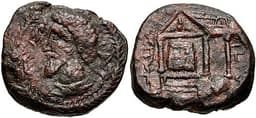
Vologases IV of Parthia
Emperor · Ancient
58.6Total
Basic Information
Born
-501
130
Died
—
191
Era
Ancient
Ancient
Nationality
Sassanid Empire
Parthian Empire
Occupation
Emperor
Emperor
Civilization
Middle Eastern
Middle Eastern
Score Comparison
Military (10%)
72.0
67.5
Political (20%)
72.0
68.0
Influence (20%)
65.0
52.5
Legacy (20%)
72.0
44.2
Leadership (15%)
80.0
72.0
Strategy (15%)
72.0
66.3
TOTAL
71.5
58.6
Khosrow I — Complete Timeline
531 AD
Reign of Khosrow I (Anushirvan)Political Action◆ Major
Khosrow I ascended the throne after the death of his father Kavad I. His reign, lasting until 579, is considered the golden age of the Sassanid Empire, marked by administrative reforms, military expansion, and cultural flourishing.
ReignGolden AgeSassanid Empire
Impact: globalconstructive
540 AD
War with the Byzantine Empire (540-562)War◆ Major
Khosrow I invaded Byzantine Syria, sacking Antioch and other cities. The war continued for over two decades, ending with the Peace of 562, which required the Byzantines to pay annual tribute to Persia and recognized Sassanid control over Lazica.
Roman-Persian WarsByzantineSassanid Empire
Impact: regional
Administrative and Tax ReformsReform◆ Major
Khosrow I implemented a comprehensive reform of the tax system, replacing arbitrary levies with a fixed land tax and a poll tax. He also reorganized the bureaucracy and military, strengthening central control and increasing state revenue.
Tax ReformAdministrationSassanid Empire
Impact: nationalconstructive
550 AD
Patronage of Philosophy and ScienceCultural◆ Major
Khosrow I welcomed Greek philosophers and scholars fleeing the closure of the Academy of Athens. He sponsored translations of Greek and Indian works into Middle Persian, fostering a cultural renaissance that influenced later Islamic civilization.
PatronageTranslationSassanid Empire
Impact: globalconstructive
560 AD
Construction of the Great Wall of GorganOther
Khosrow I ordered the construction of the Great Wall of Gorgan, a massive defensive barrier in northeastern Persia. The wall, stretching over 195 km, protected the empire from nomadic incursions and demonstrated Sassanid engineering capabilities.
FortificationEngineeringSassanid Empire
Impact: regionalconstructive
Vologases IV of Parthia — Complete Timeline
162 AD
War with Roman Emperor Marcus AureliusWar◆ Major
Vologases IV invaded Armenia and Syria, triggering a major war with the Roman Empire under Emperor Marcus Aurelius. The Parthians initially captured Armenia and invaded Syria, but were later pushed back by Roman counter-offensives.
Roman-Parthian WarInvasionMarcus Aurelius
Impact: regionaldestructive
165 AD
Roman Sack of CtesiphonWar◆ Major
Roman general Avidius Cassius led a campaign that sacked the Parthian capital Ctesiphon. The city was looted and the royal palace destroyed. This was a major defeat for Vologases IV and weakened Parthian prestige.
BattleCapital SackedRoman-Parthian War
Impact: regionaldestructive
Outbreak of the Antonine PlagueOther◆ Major
Roman soldiers returning from the Parthian campaign brought back a devastating plague, known as the Antonine Plague, which spread throughout the Roman Empire. This pandemic killed millions and severely weakened both Rome and Parthia.
PandemicAntonine PlagueConsequences of War
Impact: globaltragic
191 AD
Last Strong Parthian KingOther
Vologases IV is considered the last strong Parthian king. After his death, the Parthian Empire entered a period of decline marked by civil wars and internal strife, eventually leading to the rise of the Sassanid Empire.
End of EraParthian DeclineHistorical Assessment
Impact: regional
Expert Analysis
Origins
Khosrow I, born around 501 AD, was the son of Sassanid King Kavad I. His early life was marked by his father's struggles with the nobility and the Mazdakite religious movement. Khosrow was educated in statecraft and military affairs, and he played a role in suppressing the Mazdakites before his accession. In contrast, Vologases IV of Parthia ascended the throne around 147 AD, the son of Mithridates V. Little is known of his early life, but he inherited a Parthian Empire that had been weakened by internal strife and Roman pressure. Vologases IV was determined to restore Parthian prestige, focusing on military campaigns against Rome.
Rise to Power
Khosrow I's rise was facilitated by his father's death in 531 AD. He immediately consolidated power by executing Mazdakite leaders and implementing reforms that curbed noble influence. His early reign saw a successful war against the Byzantine Empire, where he sacked Antioch in 540 AD, demonstrating his military capability. Vologases IV came to power during a period of relative stability, but his major turning point was the invasion of Armenia in 161 AD, which triggered a war with Rome. He initially succeeded, capturing Armenia and invading Syria, but his success was short-lived.
Leadership & Governance
Khosrow I is renowned for his administrative and tax reforms. He replaced arbitrary levies with a fixed land tax and poll tax, standardized the bureaucracy, and divided the empire into four military districts. He also patronized philosophy and science, welcoming Greek scholars from Athens and sponsoring translations. His leadership scored 80.0, reflecting efficient governance. Vologases IV, with a leadership score of 72.0, relied on traditional Parthian feudal structures. He focused on military campaigns but failed to implement lasting reforms. His governance was less systematic, and his reliance on vassal kings weakened central control.
Triumph & Tragedy
Khosrow I's greatest triumphs include the successful war with Byzantium (540-562), which secured tribute payments, and the construction of the Great Wall of Gorgan, a 195-km defensive barrier. His reforms stabilized the economy and fostered cultural flourishing. However, his later campaigns against the Turks and Byzantines were less successful, and his empire faced challenges from nomadic incursions. Vologases IV's initial victories against Rome were his greatest success, but the Roman sack of Ctesiphon in 165 AD was a devastating tragedy. The Antonine Plague, spread by returning soldiers, caused widespread death. His reign ended with the empire weakened, scoring only 44.2 in legacy.
Character & Destiny
Khosrow I was pragmatic and visionary, earning the epithet "Anushirvan" (Immortal Soul). He balanced military strength with cultural patronage, ensuring long-term stability. His decisions shaped a golden age, but his later years saw overextension. Vologases IV was ambitious and aggressive, but his lack of administrative focus led to vulnerability. His character was that of a warrior king, but he failed to secure his gains. The Roman response destroyed his capital, and his empire never recovered, leading to eventual Sassanid takeover.
Legacy
Khosrow I's legacy endures through his reforms, which influenced later Islamic administrations. The Academy of Gondishapur became a center of learning. His cultural patronage preserved Greek and Indian knowledge. He scored 72.0 in legacy. Vologases IV's legacy is mixed: he is remembered as the last strong Parthian king, but his failures hastened the empire's decline. The Antonine Plague had lasting demographic effects on Rome. However, his impact was less enduring, with a legacy score of 44.2.
Conclusion
Khosrow I had greater impact, with a total score of 71.5 versus Vologases IV's 58.6. His administrative and cultural reforms transformed Persian society, while Vologases IV's military focus led to short-term gains but eventual collapse. Khosrow I's legacy shaped the region for centuries, while Vologases IV's reign marked the beginning of the end for Parthia. The data supports Khosrow I as the more effective ruler.
Rankings
🥇
Khosrow ILeader
Mil: 72.0Pol: 72.0Inf: 65.0
71.5
🥈
Vologases IV of Parthia
Mil: 67.5Pol: 68.0Inf: 52.5
58.6
+12.9 behind
How This Comparison Works
Algorithm
Each figure is scored on 6 dimensions (0—100 scale) based on structured historical data: Military (10%), Political (20%), Influence (20%), Legacy (20%), Leadership (15%), Strategy (15%). The weighted total produces the final ranking.
Data Sources
Scores are computed from structured sub-indicators in the database. Scale factors adjust for era (Ancient ×0.85, Modern ×1.0) and civilization size (Eastern ×1.05, Other ×0.80) to account for differences in population and military scale.
Maximum 3 Figures
Comparisons are limited to 2—3 figures to ensure readability and statistical meaningfulness.
Error Margins
±5 points per dimension — Sub-scores are derived from historical records with inherent uncertainty. Two figures within 5 points on a dimension should be considered roughly equivalent in that area.
Total Score Accuracy
±3 points overall — The weighted combination of 6 dimensions produces a total score with approximately ±3 points of uncertainty. Differences of less than 3 points are not statistically significant— the figures are effectively tied.
Known Limitations
- Historical records are incomplete and uneven across civilizations
- Figures from oral-tradition societies may be underrepresented
- Occupation labels can misclassify multi-role figures
- Scores measure capability and impact, not moral character
- Quantitative scoring is a comparison tool, not absolute truth
Capability Radar
Military (10%) — Battles & Warfare
Battles
85
65
Win Rate
80
55
Expansion
75
60
Political (20%) — Governance & Reform
Reform
95
55
Diplomacy
85
60
Economy
95
55
Influence (20%) — Cultural & Global Reach
Cultural
85
40
Global
70
35
Legacy (20%) — Historical Impact
Historical
80
45
Longevity
70
40
Leadership (15%) — Power & Stability
Tenure
90
70
Stability
85
60
Strategy (15%) — Tactics & Innovation
Strategy
85
65
Tactics
80
60
Reform
90
50
Similar Comparisons
Comments & Discussion
No comments yet. Be the first to share your thoughts!